AI Is Exposing Major SMB Marketing Gaps
AI has taken up a lot of the bandwidth in SMB marketing. But almost paradoxically, the swift adoption of AI on both the marketing and

AI has taken up a lot of the bandwidth in SMB marketing. But almost paradoxically, the swift adoption of AI on both the marketing and

Yelp’s Q1 earnings showed flat revenue growth and other marginal gains, but it beat estimates given a challenged SMB macroeconomic environment. Its earnings also tell a compelling story about non-advertising revenues and – like several others we’ve been watching – revenue diversification.

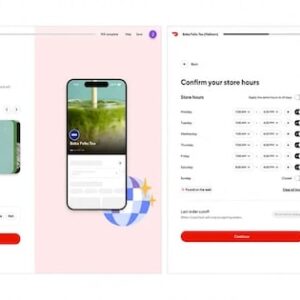
Doordash has announced a new suite of tools designed to onboard SMBs to its platform in streamlined and automated ways. Highlighting things like pre-populating their business details, menus, and other relevant info, the endgame is to attract more SMBs to the platform by lowering friction.

The holy grail of SMB SaaS is to be an all-in-one (AIO) provider. Spanning several SMB functions – from marketing to operations – AIO providers can gain ARPU and lower churn. The latter happens as they’re embedded deep into critical operations such as payroll and point-of-sale payments.

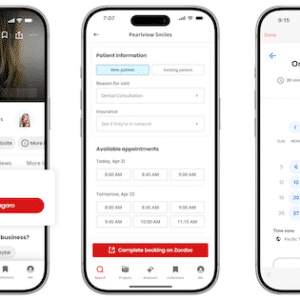
Yelp this week announced its Spring product release. This comes every year with a treasure trove of updates across Yelp’s products and functions. This year’s theme is unsurprisingly AI – including user-facing features to find local businesses, and SMB-facing features for automated task completion.

Amidst all the AI excitement, one reality check we continue to raise is how the technology is held back by trust issues. Yes, AI is effective and impressive… but that doesn’t mean much if users don’t trust it en masse. These AI trust issues were quantified this week by a new study from Yelp.

Back in January, Yelp acquired Hatch for $300 million. One thing that jumped out was the pre-money valuation and purchase price. Given Hatch’s $25 million ARR, the purchase price reflected a 12x ARR multiple. This begged the question: Are Covid-era software multiples back? The answer is yes and no.

Google Maps just got smarter. The company announced that Maps will get a new Gemini-powered ‘Ask Maps’ feature that makes the UX more conversational. This is just the latest in a sequence of updates that bring more AI to Google Maps, and the latest development in the ongoing mapping wars.

Vcita is out this week with a new report that validates and further quantifies what we’ve largely observed and suspected: SMBs want automation. Known as the 2026 Small Business Adoption Report, it points to heightened demand levels for anything that can help SMBs automate marketing and operations.

New research from Scorpion reveals a widening AI adoption gap between consumers and small businesses—raising urgent questions about local discovery, visibility, and marketing readiness.

The last two years of AI’s rise have been scored by a chorus of punditry that goes something like: “AI is here, and it changes everything.” It’s a familiar tune in hype cycles that eventually morphs into “XYZ will change some things.” So jumping ahead, it’s a question of where AI works… and where it doesn’t.

New research from Yext reveals the inner workings of the AI engines increasingly used by consumers in place of traditional search. Though this usage continues to grow, the rules of engagement for companies seeking visibility remain unclear. But according to Yext, AI SEO may be harder than it looks.

AI continues to morph into new forms and flavors as the enterprise software world figures out where it sticks. SMB SaaS is a subset or microcosm of that equation as AI is being applied to everything from email marketing to SEO gruntwork. The latest trend we’ve encountered is automated lead response.

As Google continues to flex its muscles with Gemini, the latest search product getting an AI infusion is mapping and navigation. By bringing Gemini to Google Maps, users can have conversational dialogues, a la AI Mode, as they’re out shopping or looking for something to eat in a new neighborhood.

Among the many angles surrounding the AI discussion these days, one that’s seldom discussed is how the technology is integrated into a given organization. We’re not talking about product integrations – though that’s closely related – but rather AI’s integration into company culture.

Expanding from the AI receptionist that it launched back in August, and the marketing agent it rolled out just a few weeks ago, Vendasta is out with its latest AI employee: a reputation management specialist.

Amazon recently showed its hand with respect to local commerce. It will launch apps within Alexa+ for local commerce staples, such as Angi, Square, Yelp, OpenTable, and Thumbtack.

A new data dump from Digiday has begun to quantify AI’s zero-click effect. The short version is that there’s good news and bad news. The net result is likely negative for anyone relying on referral traffic… but it’s also an opportunity for AI SEO early movers.

Yext this week hosted a who’s who of search experts, including Local SEO Guide’s Andrew Shotland, Sterling Sky’s Joy Hawkins, and Search Lab’s Greg Gifford. These are some of the biggest hitters in local SEO and we have the summarized takeaways.

Expanding from the AI receptionist Vendasta launched back in August, Custom AI Employees now join its arsenal. These functions are housed in Vendasta’s AI Customer Acquisition and Engagement Platform, automating various aspects of SMB operations.