
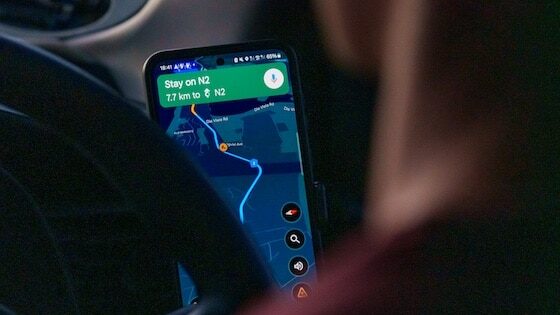
Google Maps just got smarter. The company announced that Maps will get a new Gemini-powered ‘Ask Maps’ feature that makes the UX more conversational. This is just the latest in a sequence of updates that bring more AI to Google Maps, and the latest development in the ongoing mapping wars.
So what is Ask Maps? In short, it lets users ask complex and multi-part questions using natural language. If that sounds familiar, it’s the philosophy behind Google’s ‘AI mode, and much of the AI search world these days. So you can think of Ask Maps as what you’d get if Google Maps and AI Mode had a baby.
To be fair, Gemini has already seen various levels of integration in Google Maps. And many of these were about making the UX more conversational. The latest integration doubles down and unlocks greater natural language capabilities and use cases. For example, Google emphasizes travel-planning abilities.
Here, the query example Google offers is “I’m headed to the Grand Canyon, Horseshoe Bend, and Coral Dunes, any recommended stops along the way?” And a non-travel local search query could sound something like “My phone is dying, where can I charge it without having to wait in a long line for coffee?”
Google also emphasizes that “Ask Maps” will have a memory – a key tenet of AI Mode. This doesn’t just apply to questions that build on each other in a given session, but also cross-session personalization. For example, it can remember things relevant to mapping and search, like food allergies or EV ownership.
Google Embeds Gemini Deeper into Maps … and Search Gets More Conversational
Casual Tone
In addition to natural-language inputs, Google is making outputs more conversational. Its voice guidance will have a more casual tone. The example Google gives is if you’re getting off the highway in two exits, you’ll hear something like, “Go past this exit and take the next one for Illinois 43 South.”
The same casual tone can do things like explain your routing options, and tradeoffs. For example, it will explain that one route will result in a longer overall trip in highway traffic, versus saving five minutes to endure frenetic surface streets. Drivers can then state their preference verbally and get their route.
Lastly, this round of updates to Google Maps includes a new “immersive map” feature. This Apple-Maps-like UX involves more 3D visuals and 45-degree birds-eye views that show specific buildings along a given route. The goal is to align the mapping interface with the physical world for intuitive navigation.
Stepping back, one common theme in all the above is nuance. For example, conversational UX aligns with recent Soci data that quantifies AI queries as ~6x traditional search queries in length. As consumers continue to get conditioned by AI engines, they’ll increasingly expect natural language dialogues like this.
This latest integration is also a logical progression for Google Maps, given its AI infusions over the past year. It also represents an AI overhaul across Google in general. As Gemini rapidly evolves, Google has to integrate it in waves over its various products and user touchpoints. And Maps is high on that list.