AI continues to reach deeper into the world of SMB marketing. After fulfilling role-based agentic functions like receptionists, graphic designers, copy writers, and scheduling assistants, it’s starting to expand further into end-to-end ad campaign creation tools. It was only a matter of time.
The latest product in the prolific Google Labs does just this. Known as Pomelli, the joint effort from Google Labs and DeepMind automatically assembles ad campaign creative assets like banner ads. Like several multi-step agentic AI tools that are developing, it turns detailed prompts into action and output.
But the kicker is that the focus of Pomelli is social ad campaigns. Given that it sprouts from Google soil, it’s surprising that it’s geared towards ad campaigns on social apps, which are increasingly Google’s competition for mindshare, and even local search (more on Google’s possible motivations in a bit).
Creative Method
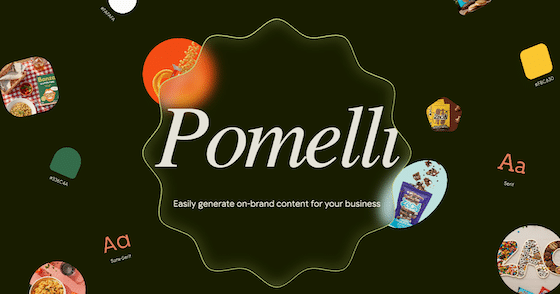
So what does Pomelli do specifically, and how does it look from a user perspective? SMB marketers can simply enter their business URL. From there, Pomelli trains itself on a site’s public pages to then creates a “Business DNA.” This includes things like tone of voice, color schemes, fonts, and images.
It then works on social campaign assets. It can even generate a business logo if you don’t already have one (or don’t like what you already have). Other assets include images, social post copy, calls to action, and other ingredients. These can all be edited manually, which is meant to offer a balance of control.
As a sidenote, this reminds us of a creative method gaining steam in the AI era. For example, Creatify has a similar user-friendly first step to start building SMB marketing videos. By simply entering a URL, it can quickly train itself on a business’s vibes and branding elements, then build things accordingly.
Themes & Threads
After formulating visual assets, Pomelli will then come up with campaign ideas. These are themes and threads around which creative assets orbit. They include things like catch phrases or brand taglines. Marketers can also enter their own campaign ideas as prompts, which Pompeii will incorporate.
But after outputting these campaign ideas and assets, it’s unclear what comes next, given that Google isn’t integrated with social apps. Presumably, marketers can take Pomelli’s outputs and manually upload them to social campaign tools on apps like Facebook and Instagram (TikTok is its own native beast).
Usually, AI campaign creation tools are just the opposite – first-party tools that are directly integrated into the provider’s ad engine. For example, Amazon offers an AI ad creation tool for creating ads on Amazon. And Google continues to roll out AI tools for AdWords creation and targeting workflows.

The Light of Day
Pomelli’s inverse approach of building ads for other channels is, again, peculiar. And that brings us back to Google’s possible motivations. Pomelli’s deviation from Google’s business interests means it may never see the light of day. That would make its core purpose some sort of exercise or training ground.
For example, feeling out UX elements of AI-driven campaign creation could be something that eventually flows into AdWords or other products. Meanwhile, though Google has swung and missed at social media a few times, a la Google Wave, Pomelli could be a long-shot sign that it’s sticking its toe back in the water.
All the above isn’t a bad thing for Google — nor users who get a free tool for social ad creation. But, as it often goes with Google Labs projects, users can swim at their own risk of the product going away at some point. Most of this is speculation, of course, and we’ll have to watch closely to see where it actually goes.