
One of the many things being disrupted by AI is the creator economy. Like other sectors vulnerable to that disruption and displacement, the high-level advice is to stop complaining and lean into it. It’s coming either way, so creators – and marketers that utilize them – should figure out ways to leverage it.
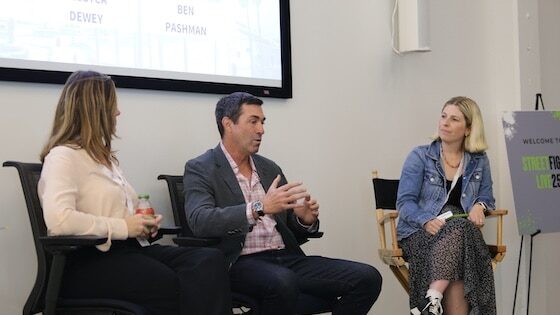
Creatify head of business development Ben Pashman compares this set of factors to the web’s emergence 25 years ago, and its impact on print media. As a once-shunned digital media sales guy at Conde Nast, he saw then what he’s seeing now: resistance to an inevitable emerging-tech takeover.
If we’re to take any lessons from that period – and extrapolating the web’s adoption trajectory from then until now – AI shouldn’t be dismissed. Though we’re likely in a bubble and looming correction, as we recently examined, the longer-term integration into business and life could be pervasive.
With that broader backdrop, and returning to the creator economy, UGC-based marketing could be transformed in the coming months. And though statements like that are generally subject to backlash or denial from entrenched interests, the next era’s winners will tap into AI’s democratization potential.
That brings us back to Creatify. Whether it’s SMBs, creative agencies, or multi-location brands – all of which are Creatify segments – AI and automation brings video marketing within reach for the first time. We’re talking everything from spokesperson videos to product-centric clips. (see our recent analysis).
Adoption Gap
The reason that all the above is a potentially-potent sweet spot is the longstanding gap between SMB demand and adoption for video marketing. Video has been the holy grail of local marketing for a few decades and has powered the rise of the creator economy. It checks several boxes for typical SMB appeal, including being tangible and personality-based.
However, it’s always been out of reach for most SMBs because it requires production expertise, cash, and time — all rare qualities for SMBs. So automating video production — including drag & drop creation and editing workflows — will likely be one of the likely killer apps discovered in AI’s market evolution.
Bring it all together, and we’re talking about a massive opportunity to close the longstanding demand/adoption gap in SMB video marketing. And beyond SMBs — erstwhile stalled by time and cost — deeper-pocketed entities can benefit from tools like Creatify to better scale existing video production.
That last part translates to giving smaller agencies the firepower of larger brands that create thousands of video assets and variants for social media and other flood-the-zone purposes. With production time and cost diminishing, that once-scarce capability shifts down market to anyone smart enough to grab it.
Similarly for multi-location brands, centralized marketing departments can empower their far-flung franchisees with tools to make local-flavor variants to brand-approved frameworks. We’re talking templates, fonts, logos, and other things that franchisees can run with, and infuse their local voices.
Rote versus Real
Panning back, though AI needs to be embraced for all the above reasons, it’s not a silver bullet. There needs to be emphasis on quality, consistency, and other longstanding fundamentals. In fact, these things are even more critical in the age of AI, given the technology’s quirks and self-inflicted trust issues.
Beyond the need to stay on top of the technology, basic laws of marketing will apply to AI-generated marketing of any form, not just video. For example, consumers will be the arbiters of quality and provide the proper checks. Low standards will be rejected and, in the aggregate, subject to market correction.
There, we go back to historical lessons. Y Collective’s Jessyca Dewey recalls her early-career work at Demand Media — the poster child of the circa-2010 rise and fall of content farms. Both human and algorithmic (Google ranking factors) forces pushed back and drove them into irrelevance.
That lesson will prove itself again in the AI era, and is already doing so. The fact that we already have a term for it – AI slop – is telling of the fact that we’re entering another cycle when quality and quantity will be at odds. Consumer demand for the former will keep AI in check — an invisible hand of sorts.
But though that’s the case, says Hummingbirds’ Emily Steele AI (or any technology’s emergence), is unavoidable. Ignore it at your own risk. The sweet spot will be in adopting the technology in the right places. Those places will involve some combination of streamlining the rote, while preserving the real.