As part of the ritual of examining local commerce and SMB Saas strategies, Localogy goes right to the source: SMBs themselves. How do they feel about marketing and operational software? What features do they want? And how has their hunger changed in a pandemic?
Localogy’s latest Pro Perspectives report dives into the social media aspects of the above questions. Entitled, Pro Perspectives: Social is Here to Stay, it examines original SMB sentiments and behavior for social media marketing. We dive in for this week’s Benchmark Bytes.
Specifically, after examining the degree to which SMBs were affected by Facebook’s recent high-profile outage, we shift gears this week to examine their ad budget shifts. Putting their money where their mouths are, how do SMBs plan to re-allocate ad budgets for the next year, especially with social media?
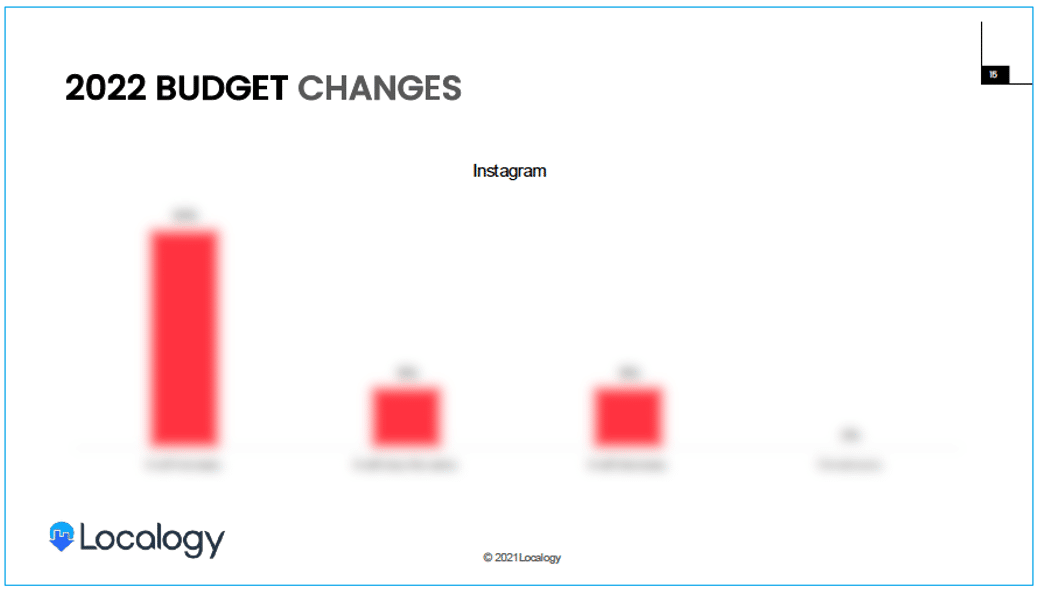
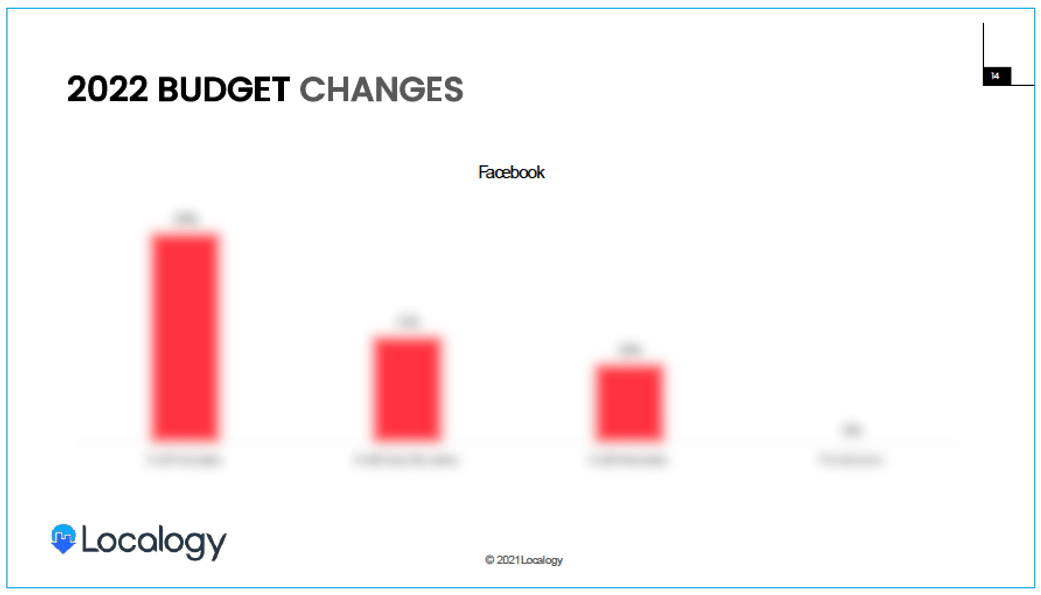
The short answer is social is largely growing, with Facebook benefiting most. Specifically, 53 percent of SMBs that buy Facebook ads will increase spend, while 27 percent will maintain current spending and 20 percent will decrease. Intagram fared even better with 64 percent of SMBs increasing spend.
Localogy members can access full charts and SMB survey reports. Non-members can purchase reports.
What Does it All Mean?
Going a bit deeper, a few things jump out at us:
– Like the data points we examined last week, these results are favorable towards social media marketing.
– As noted, the majority (53 percent) of SMBs that pay for Facebook ads will increase their spend next year.
– Instagram could be Facebook’s ace up its sleeve, given even greater SMB affinity and greater spending aspirations (74 percent).
– These figures bode well for Facebook despite media attention and doomsday characterization of the company.
– This is further evidence that the media’s schadenfreude coverage of Facebook isn’t translating to an exodus of advertisers, especially among SMBs. They’re largely insulated from the tech news cycle.
– Beyond that insulation, Facebook’s continued maneuvering and branding (e.g. Meta) could further propagate goodwill among SMBs. This includes the positive associations with its other brands such as WhatsApp and Instagram.
Time to Shine
Stepping back, SMB online marketing – social or otherwise – continues to grow rapidly. SMB SaaS startups and online services providers are correspondingly thriving as it continues to grow as a leading subsector of the broader SaaS universe.
Meanwhile, new SMB SaaS users could represent permanent adopters – a concept that’s accelerated in the Covid era as SMBs are forced to boost their digital transformation. This sends them into the arms of SaaS providers to accomplish a range of marketing functions.
We’ll return in the next installment to go deeper on SMB social marketing behavior. That will include their goals and success factors. Let us know what additional insights jump out at you from the above data, and stay tuned for more breakdowns in our Benchmark Bytes series.