Yext Chief Data Officer, Christian Ward, believes agentic AI will fundamentally change how businesses interact with software. In the world of API and AI connectors, the login screen may no longer be the center of the SaaS experience.
As agentic AI permeates our digital domains and desktops, it could require a shift in the way that we interact with software. Connectors between AI engines like Claude Cowork and the various platforms that they unify and automate could mean that logging in as a SaaS subscriber is a thing of the past.
This notion has gained momentum as agentic AI itself does. And it burned brighter on our radar screen after a recent discussion with Yext Chief Data Officer & EVP, Christian Ward. He believes that the marks of success of any good software platform won’t follow traditional engagement metrics like user logins.
This requires not only rethinking KPIs but software interaction models themselves. Though there will be holdouts to the pre-AI world – as there always are in periods of tech disruption – growing segments of users won’t be logging in to gather data or access a given function. The software will come to them.
“I think the two greatest compliments for most software platforms about to happen,” said Ward, “are that your customers never log into it…and they can’t live without it.”
Elevated or Eviscerated
The way this could play out is that your AI of choice runs processes locally and in the cloud, while orchestrated through a combination of connectors that you set up. Sticking with the example of Claude Cowork, you may connect it to WordPress and Constant Contact to compose your weekly newsletter.
The irony is that this orientation will result in software tools being used more rather than less. AI’s ability to scale workflows and not require breaks or weekends means that all these connectors could get more out of the software than was ever done previously. That could boost SaaS usage, revenue, and retention.
Of course, software margins only improve in this new world if pricing changes alongside it. And that’s already underway, as the SaaS world continues its ongoing shift – accelerated recently – towards tokenized and usage-based pricing. Power users will become revenue drivers, not cost drivers.
Replace “power users” in the previous sentence with “agents” and the software industry’s next inflection starts to become evident. This is one counterpoint to the hot take echoed on CNBC and elsewhere that software is dead – the notion that AI engines replace all the specialized tasks software currently handles.
What could end up happening instead is that agentic AI amps up software usage and value. Sure, hardcore developers will ditch off-the-shelf software and vibe code their way to operational nirvana. But for the rest of us, the Salesforces and Snowflakes of the world will be elevated rather than eviscerated.
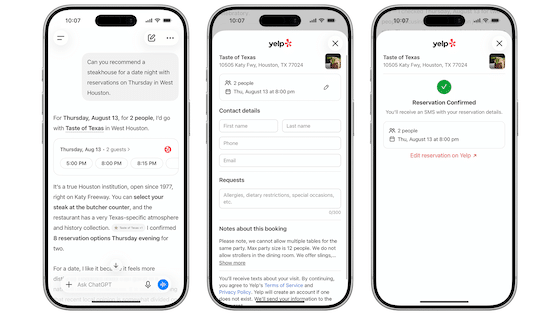
Of course, that’s just one view on the trajectory. In the meantime, the strategy for software players is becoming clear: make yourself available where the user – and their AI engine – live. That translates to APIs and MCPs for your software. Unlock and enable your software to live in any AI environment.
The API is the New UI
That brings us back to Ward, as this is the thinking behind Yext’s latest move. As we examined a few weeks ago, Yext’s platform expansion brings its full capabilities to the user’s environment. There, it will not only get used more but find new endpoints and outcomes as data is cross-pollinated with others’
“It inspires questions like, ‘What if we had all our data and these third-party data assets? What can we build?,” said Ward. “Our team is having a field day building new ways of considering local visibility: What is your competition doing? What does your staff say? – combined with all these other assets.”
Another advantage is the deviation from problematic practices of the past. For example, data connectors often require businesses to upload their pertinent data – think: CRM or sales data – to a given platform to gain dimensional insights. This caused friction for users and liability for platforms, says Ward.
“The problem with that thinking, which I view as medieval, is that there are issues in governance and privacy,” he said. “Platforms should question whether that’s really what they want to do. The moment you do that and you onboard those assets, you’ve raised your compliance and legality exposure.”
Conversely, letting users operate in their own environment reduces friction and trust-plagued adoption barriers. With that friction lessened, more data mashups could flow, and platforms like Yext could be unlocked to the extent of their capabilities. After all, as Mark Benioff recently said, the API is the new UX.
“Nobody wants to log into Salesforce. Nobody wants to log into Yext,” said Ward. “I’m not picking on my own product, but a little dose of humility in all of our lives is necessary. You log in because you have to. But if there’s one conversational node or interface, I think that’s what ends up winning.”