This is the latest in Localogy’s Skate To Where the Puck is Going series. Running semi-weekly, it examines the moves and motivations of tech giants as leading indicators for where markets are moving. Check out the entire series here, and its origin here.
Google’s G Suite is now Google Workspace. For those unfamiliar, G Suite was Google’s answer to MS Office — a productivity suite that includes premium versions of its web apps like Docs, Sheets, Gmail, Drive and Meet. For prices that range from $6 – $18 per month, users get various functionality and storage.
The new name is part rebranding and part repositioning, including new features and functionality. As for the rebranding aspects, the idea is to put Google’s brand more front & center and reflect the “work” productivity benefits of the paid package. In other words, Google wants the name to say what it does.
“By selecting Google Workspace, we get the brand association with Google, which is really important to us,” Google GM for Workspace Javier Soltero told Techcrunch “These are flagship products for Google.”
On the Fly
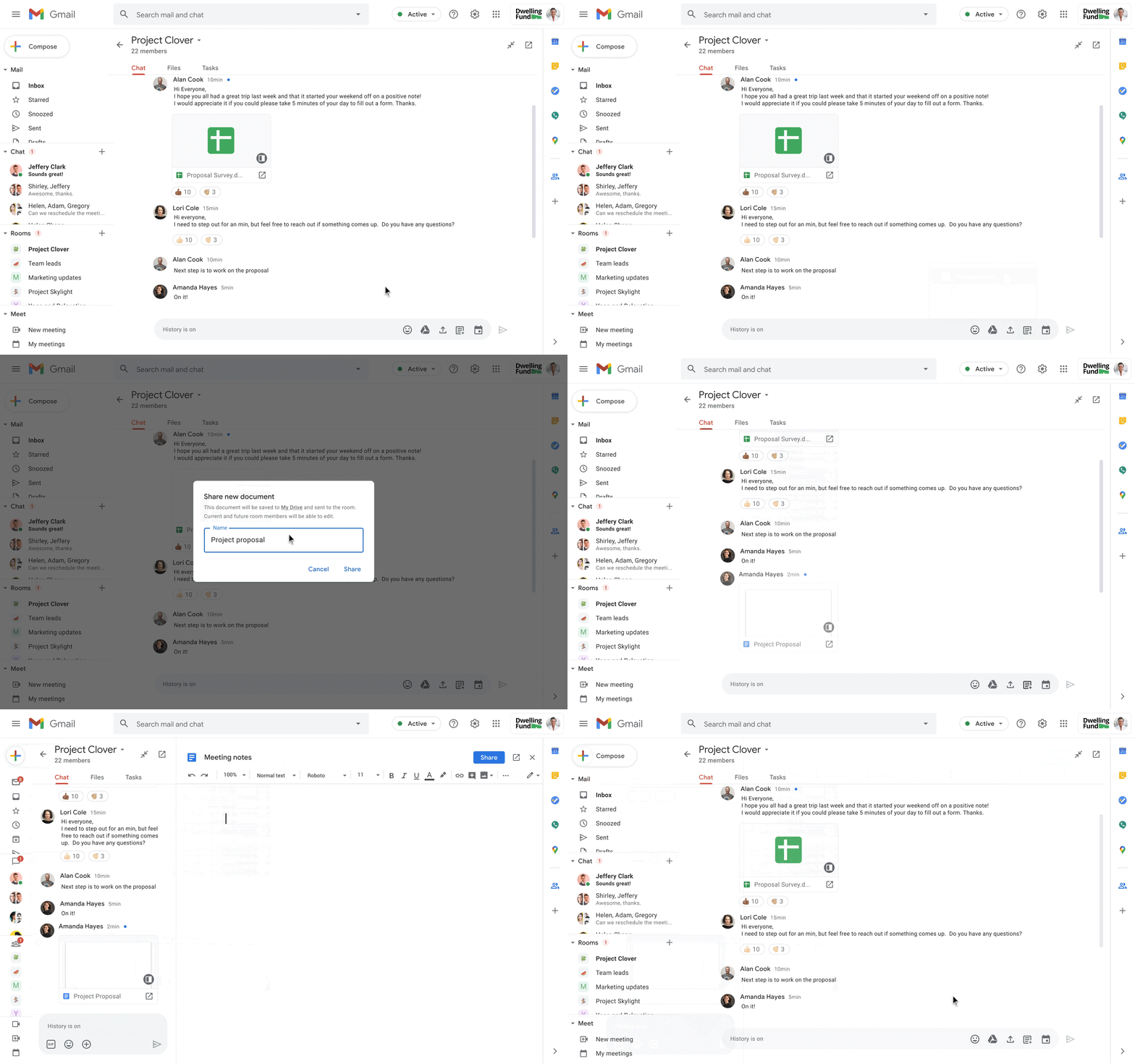
But more impactful and material than the rebranding are Workspace’s functional upgrades. These include deeper integration of communications and collaboration tools like Meet (formerly Hangouts), Chat and Rooms. They’ll all now be more accessible from all Workspace apps, most notably Gmail.
For example, while operating in Gmail, users can jump to a Meet video call for impromptu discussions to expand on the content of an email. The idea is that this replicates pre-Covid real-life work interactions where you can walk down the hall to talk to someone for deeper engagement than email can offer.
These actions were available before for GSuite users, but the latest updates make them easier to launch on the fly. Buttons for chat sessions for Meet calls are now planted in logical places such as within an email window, or other places where the above “deeper engagement” opportunities may arise.
Another example is the ability to collaborate on documents (Docs, Sheets or Slides) through Chat. This lets colleagues see and edit documents together from within a Chat window — where they might be discussing a given document — rather than jumping to a separate window or tab to open the document.

Optionality
Similarly, colleagues can @mention each other within documents, which then prompts communication options. Known as smart chips, these are popups with suggested actions like launching a video call, chat session or even an email if the query is less urgent. The key here is contextually-appropriate optionality.
Notably, pricing remains the same as it did in G Suite: Business Starter,starts at $6/user/month and Business Standard is $12/user/month. A new Business Plus plan launches with Workspace, including additional storage, security and mobile device management. Workplaces is used by 6 million businesses.
Questions that remain: Will new branding achieve the desired effect of simplifying its marketing? Will that and new features help Google acquire more enterprise users? And will new integrations create more satisfied subscribers and reduce churn? These are all possibilities and we’ll be watching for evidence.