In the smartphone era, another device has started to emerge as the ultimate mobile device: your car. That’s being driven (excuse the pun) by Tesla and others that innovate driving experiences. But the next inflection in that evolutionary path is autonomous vehicles (AVs) that can see their surroundings via computer vision.
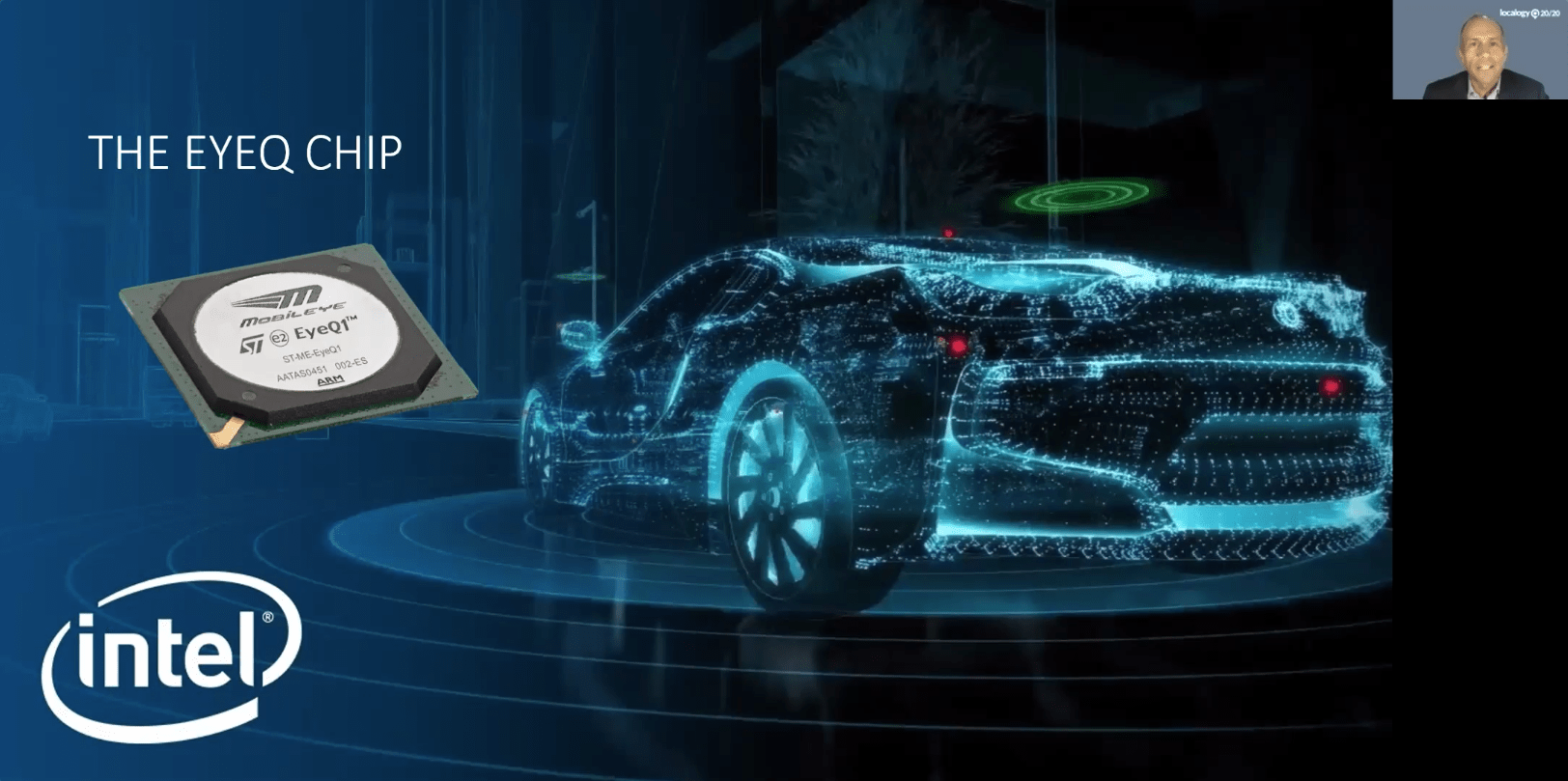
This is where Intel’s Mobileye division lives, and where its ASIC Dept. Project Manager Mois Navon focused his Localogy 20/20 presentation today. As backround, Navon is one of the founding engineers at Mobileye before it was acquired by Intel, where he designed the EyeQ chip that has powered much of the AV revolution.
Far-Reaching Impact
What does this have to do with local commerce? As a “mobile device” the car can be the ultimate digital touchpoint to search for, discover, and shuttle us to local experiences. At least that’s the vision. But a lot has to converge to bring us that reality, as related and requisite technologies continue to develop in parallel.
Those other moving parts include artificial intelligence, as well as the 5G revolution. The latter is particularly important for low-latency communications (see earlier presentation by Ericson’s Jake Moskowitz) between autonomous vehicles and the network edge. Put another way, reliability will be critical at 70mph.
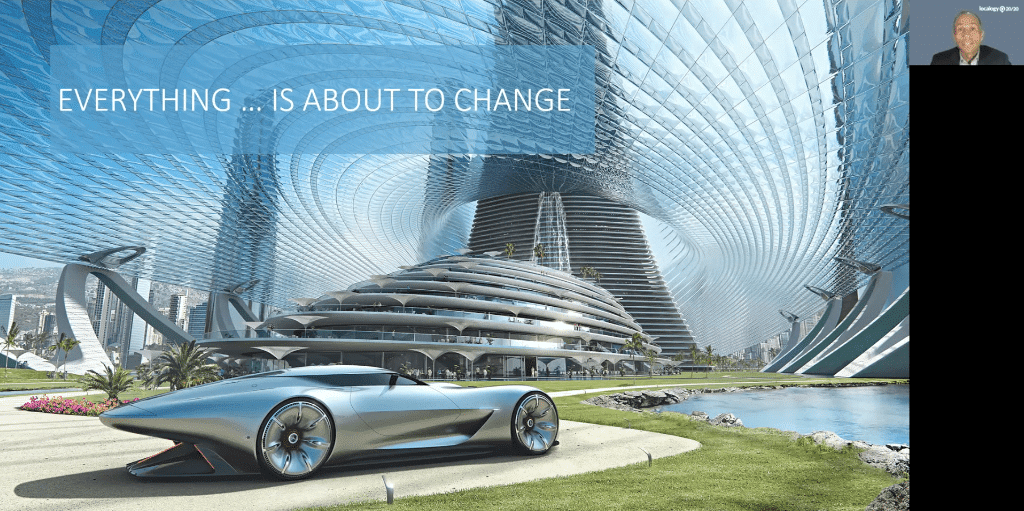
Backing up (get used to the auto puns), Navon believes that the innovations that are coming in the world of AV’s will have fairly extreme and far-reaching changes on our lives. In his words, “everything is about to change,” which reflects AVs’ potentially-disruptive impact on everything from travel (obviously) to culture.
Those disruptions are manifold says Navon. At the top of the list is reducing traffic accidents. with 136,000 traffic accidents and 3,400 deaths, reducing the human error that can bring these numbers down is a primary driving force for the AV revolution. The projection is for AV’s to achieve a 90 percent reduction in fatalities.
The Crash Economy
Potential disruption also lies in adjacent areas such as what Navon calls the “crash economy” — all of the industries that orbit the reality of car crashes. That includes the $247 billion auto insurance industry. The projection there is that if AVs do their job, they’ll shrink the auto insurance sector 71 percent by 2025.
The crash economy also includes auto repair and parts. And it includes legal subsectors such as the sometimes-parasitic field of personal injury law. So just like other tech revolutions (and pandemics), there are beneficiaries and disrupted parties. On either side of that fence, now is the time to prepare for the revolution.
For more from Navon, see the full on-demand session by registering for Localogy 20/20. And stay tuned for lots more session coverage.
Autonomous Automobiles
5G’s greatest impact might be on how we get from physical location point A to physical location B. With lightning speed an essential component of safe autonomous driving, how will the automobile software developers write code that keeps pace with the explosion of speed offered by 5G. Will a rush to autonomous driving and fast adoption actually choke the safe roll-out of the next wave of driverless experiences?
Mois Navon, Mobileye (an Intel Company)