As the number of connected devices (smartphones, tablets, voice assistants, etc.) grows, so does the amount of location data derived from these devices. Collecting and analyzing this data can prove incredibly beneficial for understanding how, when and where consumers use their devices and how this usage impacts the path-to-purchase.
The State of Location Intelligence 2018 report by CARTO surveyed over 200 C-level executives representing organizations with at least 500 employees. The study found that 94% of respondents said that their organization collects and/or stores location data.
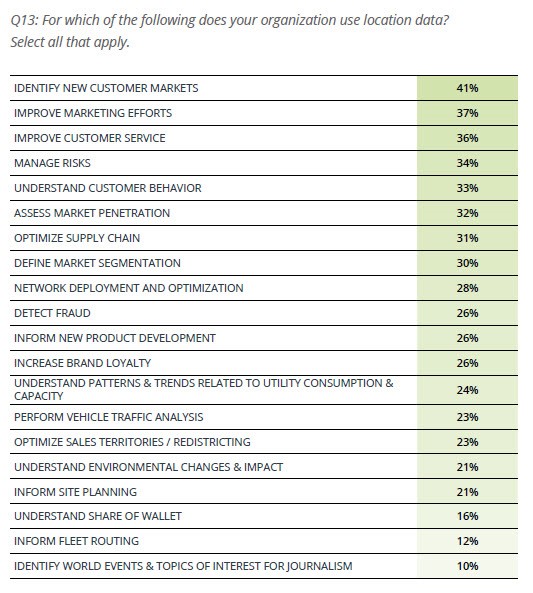
The most common uses of the data were marketing related, with 37% saying that they use location data to improve marketing efforts. Other notable marketing-related or marketing-supported uses of the data include identifying new customer markets (41%), improving customer service (36%), understanding customer behavior (33%) and assessing market penetration (32%).
The report also detailed 66% of respondents saying location intelligence was ‘very’ or ‘extremely important’ today, and that 78% plan to invest in it in the next year. Although an overwhelming 92% of respondents were familiar in some capacity with location intelligence, according to the survey, many organizations are unsure of best practices and methods for utilizing this data.
The challenges lie in both the collection of data, as well as the analysis. The number one challenge organizations face when collecting data is ensuring data quality and accuracy (49%), followed by gathering the data in real time (40%).
During the analysis stage, respondents reported that extracting, cleaning and transforming the data into a workable format (41%), and ensuring sufficient data is available for actionable analytics (38%) as the greatest obstacles faced.
Location data has become increasingly more available and subsequently more important as mobile devices and the Internet of things (IoT) proliferate. Understanding how this data can benefit organizations and developing a strategy with this data offers a number of competitive advantages, especially for local marketers.