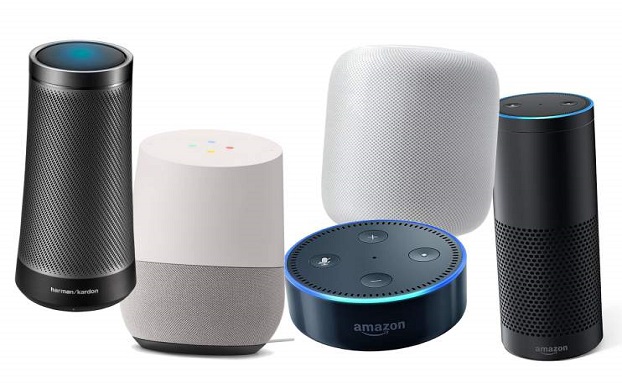
As the popularity of smart speakers like Amazon Alexa and Google Home continues to grow, marketers are asking: How will these devices impact consumer-shopping behaviors? What about local search and discovery?
A recent study from NPR and Edison Research offered some new insights into how smart speaker ownership impacts a consumer’s purchasing habits. This is the second study on smart speakers from NPR.
Titled “The Smart Audio Report,” the new survey found one in six Americans (16%) currently own a smart speaker, and 42% say the device is now “essential” to everyday life. Alexa ownership was roughly 3X that of Google Home.

Smart speakers are reducing the amount of time users spend engaging with other media and devices. As the data above show, the disruption isn’t limited to traditional media, with smartphones, tablets and computers seeing declines in usage among these smart speaker owners.
When it comes to purchasing behaviors, 31% of smart speaker users added an item to their cart so they could review it later for purchase, while 29% researched an item they may have wanted to purchase. Not only are users conducting research on potential purchases, but they are re-ordering previously purchased items (22%) and ordering new products (22%) via their smart speaker device.

Household items, electronics, health and beauty products, pet supplies and groceries were the top five most purchased items using a smart speaker (above). It is likely consumers know what brand names they want within these categories, making it easier to dictate than a consumer with no product or brand in mind. It is also likely most of these purchases are happening on Amazon, given Alexa’s market share.
As adoption grows, the impact of these devices on the path to purchase will too. Consumers are buying and using smart speakers in their homes at a rapid pace, and Gartner predicts that 75% of US households will have at least one by 2020. As a practical matter, that would mean more than 180 million devices in US homes, beginning to rival smartphone ownership.
In addition to media time spent and purchase behaviors, smart speakers, among other voice-activated devices, are helping transform search. According to comScore, 50% of all searches will be generated from a voice-activated device by 2020. However, a survey from BrightEdge found that 62% of marketers said they were “not likely” to make voice search part of the marketing strategy.
Despite this finding, a growing number of marketers are taking this “voice shift” seriously. A range of best practices for voice search optimization, including schema markup, is emerging. The takeaway is that voice search and smart speakers are going to have a big impact on media usage, purchase decisions and search behaviors. Are you ready?
Voice search and the impact of smart speakers on local marketing will be on the agenda at LSA18. Join the biggest names in local this April 30 – May 2 in Chicago.