

Shoppers who buy both online and in-store have a 30% greater lifetime value to a business than those who use just one channel according to Google. This has driven the demand for cross-media marketing as well as online to offline attribution that businesses are asking of marketers.
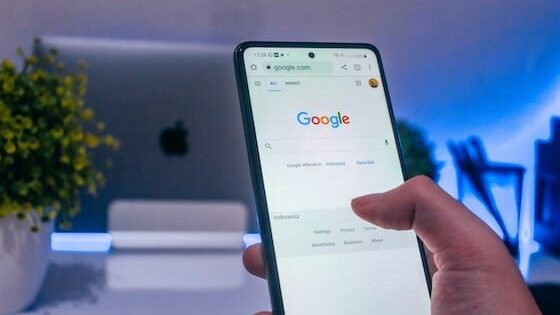
Yet multi-channel marketing is evolving further as consumers’ use and consumption of media blurs the lines separating channels. It appears to be driven by smartphones that pack more power and diversity of media into one device than ever before. Now, online search, social media, texts and calls, email, video streaming, e-commerce and mobile payments can all be performed on a single device that rarely leaves a customer’s side.
As a result, consumers don’t distinguish between various channels and instead use them interchangeably or even simultaneously. Designing different marketing strategies for separate channels or a linear path across channels is limiting and does not match how consumers shop.
Imagine a buyer that sees an online listing of a house for sale. She calls the listing agent who informs her the house just sold but will email if any others come up that match her criteria. The buyer provides an email address and the agent adds her to his email contact list. An auto-generated email is sent out later in the day that was scheduled and created previously and that includes the property the buyer inquired about listing it as available. Siloed channel management such as this results in inconsistent and confusing information to customers who increasingly expect real-time and seamless experiences.
The solution is to merge management of channels. Integrating all platforms, media and channels together is called an omni-channel strategy. While the term hasn’t garnered much use, the concept is becoming a necessity, even for local businesses.
Learn more about omni-channel marketing and check out five tips to creating a seamless search-to-purchase experience to attract customers and sales for your local business in my latest Search Engine Land column: ‘Omnichannel’ may never catch on, but it’s the next big thing for local.



One Response
Merely having multiple channels does not translate into a multi-channel strategy. This approach runs the costly and ineffective risk of trying to be “everything to everyone”. A true multi-channel strategy involves each channel playing a core role and a defined value for the customer. While they exist within a world containing multiple interaction channels, they are still ONE consumer.