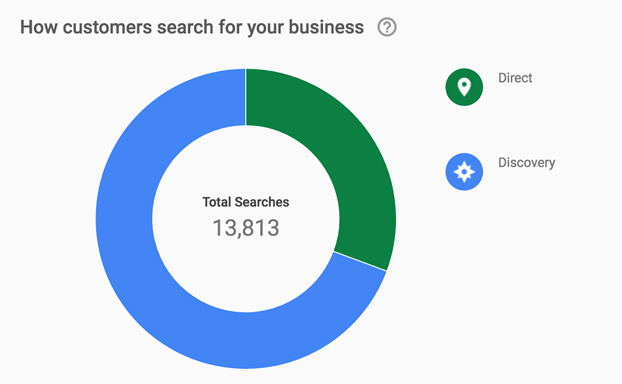
According to Google, 82% of consumers use search engines to find information about local businesses. In an effort to help businesses understand how consumers conduct these searches, Google announced that it has updated its Google My Business (GMB) platform to incorporate search behavior data as it relates to the GMB user’s business.
The update brings users two primary insights: how customers search for a business and whether they engage with listings in search results or in maps. Given Google’s share of search traffic, these insights are helpful in determining optimization strategies for search.
The insight around how customers search is particularly interesting. Google breaks it up into two categories: direct and discovery. Direct is the number of customers who find a listing when searching for a particular business name or address. Discovery is the number of customers who find a listing when searching more generically for a category, product or service.
Answering the “how” as it relates to customer search behavior can lead to some powerful knowledge for a business. For instance, if the majority of traffic is coming from direct business searches it suggests that name recognition is strong among customers or that there is a solid repeat customer base searching for a business.
On the other hand, a majority of direct search traffic suggests there are opportunities for greater visibility in category search results. Google recommends that users consider promoting listings via AdWords Express if they are looking to grow “discovery” or category specific searches.
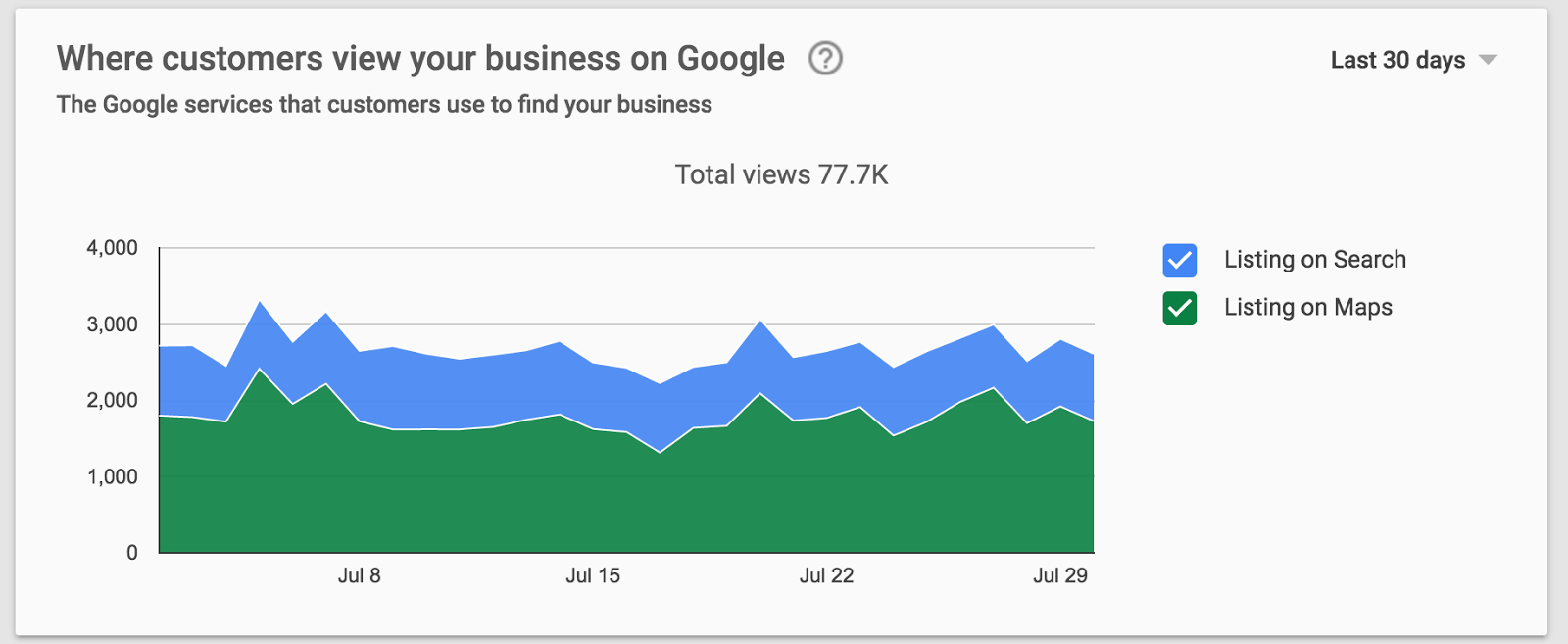
Understanding whether customers are using listings in search or maps (above) provides some different conclusions. When layered with mobile vs. desktop search share, a business could start to understand what kind of customer is looking for its business.
The majority of Google Map usage happens on mobile devices as consumers are on the go, seeking directions to businesses and places of interest. Businesses with greater map usage vs. usage of listings in searches may suggest an on-the-go, mobile customer base.
The updates introduce some interesting insights for marketers and small businesses alike and highlights the company’s move away from Google+ statistics.