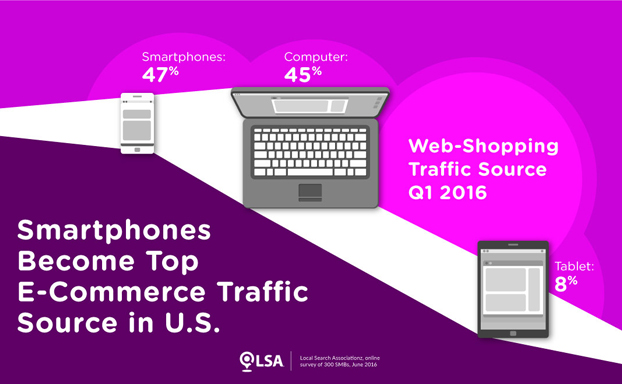
Data: Smartphone Web-Shopping Traffic Passes PC in Q1

Mobile has tranformed the way consumers buy both online and offline. As it relates to e-commerce web traffic, a new study found that smartphones have officially overtaken computers as the primary device U.S. consumers use when web-shopping.

The study found that 47% of web-shopping traffic was coming from smartphones in the U.S. for Q1 this year, 45% from computers and 8% from tablets. If we group tablets and smartphones together, the “mobile” category drove 55% of all e-commerce web traffic.

However, traffic is not synonymous with online purchases or orders. The study found that 66% of orders still came from computers while 24% came from smartphones and 10% from tablets. This suggests that consumers are using mobile to research online purchases, but complete the order via desktop, a finding other studies have uncovered about consumer behavior.

The data comes from Demandware’s Shopping Index Q1 2016 which analyzes the activity of more than 400 million shoppers. To access the graphic above, click here.

Share Article...

Follow Us...

Stay ahead of the curve and get the latest on Local straight to your inbox.

By submitting this form, you agree to receive communications from Localogy. You can unsubscribe at any time.

Leave a Reply

Related Resources

Amex Ventures Investment in Pie Fuels SMB Intelligent Automation

Amex Ventures Investment in Pie Fuels SMB Intelligent Automation

SMB growth platform Pie today announced that it has secured funding from Amex Ventures. This follows quickly behind the company’s June launch and $19.5 million series A round led by Lightspeed Venture Partners. Other backers in that round included Capital One Ventures and Max Levchin’s SciFi VC.

What's Yelp's Position on its Antitrust Suit Against Google?

Is AI Search Google’s New Default?

Google continues to phase in AI-powered search and AI-centric SERPs. It’s doing so even though it massively disrupts its core business. But the question is the optimal pace of that rollout in terms of user acclimation, demand, and revenue. Evidence now points to AI’s pace in approaching default status.