
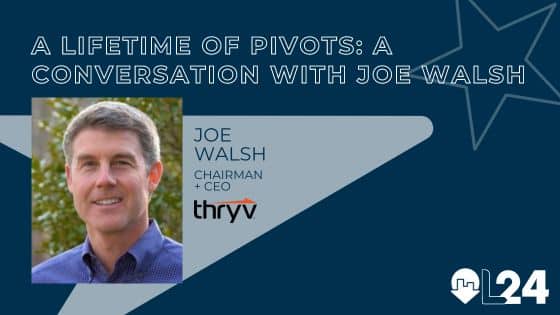
The career of Joe Walsh has been a lesson in weathering the looming storms of market disruption, and in seeing around corners. What’s his framework for doing so, and what can we all learn from that?
Key Takeaways
- Joe Walsh’s business challenges started early-on in launching and running an independent (non-telecom funded) yellow pages outfit that was undercapitalized relative to its incumbent competitors.
- Through M&A, that became Yellowbook, which defined the emerging independent yellow pages entities in the late 80s, 90s, and early 2000s.
- Walsh then spent some time consulting, which included a strategic repositioning of Cambium Learning Group. He led a process of shifting from textbook-based learning to digital in-classroom curriculum that was gamified.
- Student engagement skyrocketed but Walsh’s real lightbulb moment was the virtues of SaaS (though it wasn’t called that at the time). This was subscription-based material… which engendered recurring revenue.
- This SaaS-based thinking preempted several things that came next.
- Next steps included helping Dex Media weather continued disruption by Google et al. (Cue the “analog dollars turning into digital pennies” axiom).
- Walsh reframed the opportunity around helping SMBs follow big businesses (it often goes in that order) into the cloud.
- This was around the time of the rise of Salesforce. SMBs weren’t there yet… but they were empowered by the devices (read: smartphones).
- From that thinking (and much more maneuvering), Dex Hub was born.
- What followed was the incubation of the Thryv brand, where the Dex product was gradually moved, with the thinking that Dex had yellow-pages vibes, and thus brand baggage.
- Fast forward, and the Thryv product messaging became “software for small businesses,” including presence, promotion, and an expanding suite of functions (what we at Localogy now call SMB SaaS).
- Thryv also had the advantage of existing SMB relationships. The SMB market is huge and opportune. But the fragmented last mile means you have to fight for conversations with the SMB… Thryv already had those relationships in place.
- Meanwhile, in the background was some corporate and financial maneuvering, including taking the company public in 2022 (it had previously been taken private given heavy debt and the need for restructuring).
- It should also be noted that in all of this digital transition, Thryv still has print directories globally. It’s a meaningful part of the business but Walsh’s secret weapon is a realistic sense of its decline, and in managing that decline in the transition to more SMB SaaS.
- The goal is for these to flip in terms of revenue share.
- Here, it’s all about moving to where the food is. SMB SaaS is the growth market that will be bigger than print directories ever were. The goal is to develop the muscles to outrun anyone, so that Thryv is the market leader when that market matures. And it’s well on the way…
- Lastly, what about AI – the hot topic of the day? Joe Walsh is having everyone in the company use tools like ChatGPT, from legal to HR.
- The goal for this field testing is for bottom-up innovation and lightbulb moments about how and where AI applies. That means internal savings and productivity gains, as well as integrating AI into the Thryv product.
- The latter can be things like automating rote marketing tasks and social media for SMBs… which is well aligned with the broader North Star of assisting them in their digital transitions.
–
A Lifetime of Pivots: A Conversation with Joe Walsh
Throughout his career, Thryv CEO and Chairman, Joe Walsh has made timely decisions on when to change course. Joe will walk us through the major pivot points for his companies, explain how he thought each through and how he decides when it is time to pull the trigger.
Joe Walsh, Thryv