The COVID-19 crisis has forced doctors, dentists, and other healthcare providers to find ways to continue delivering care while minimizing the risk of spreading the virus.
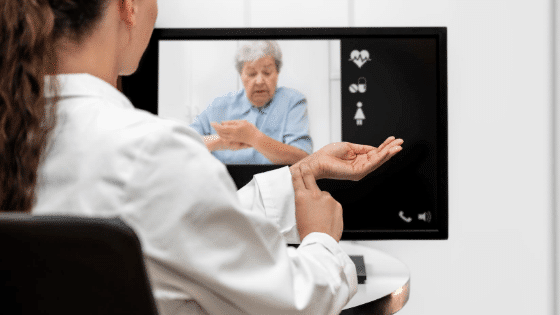
One obvious choice is using telemedicine to diagnose ailments and recommendations for at-home treatments, when appropriate. And as technology improves, the definition of what is considered “appropriate” will inevitably shift.
Writing recently in CIO Magazine, Paddy Padmanabhan, co-author of the book Healthcare Digital Transformation: How Consumerism, Technology, and Pandemic are Accelerating the Future, said the following:
“Digital transformation time horizons have shrunk from years to months for health systems in the wake of the pandemic.”
During the crisis, local medical and dental practices used telemedicine to do consultations, prescribe medications, and walk patients through treatments for minor ailments.
Telemedicine has more robust longer-term ambitions as a powerful diagnostic and treatment tool. Imagine doctors located around the world participating in a highly complex surgical procedure. Or providing quality diagnostic care to people in remote locations, far from the nearest hospital.
In the short term, telemedicine helped smaller health care practices get through the crisis.
Socially Distant Triage
On a May Localogy webinar sponsored by Agentz.ai, California dentist Hema Patel described how her practice used telemedicine during the peak of the crisis to determine which patients needed to come in for treatment and which could wait a day, a week, or longer.
As the lockdown hit in mid-March, Patel’s practice faced the challenge of only being allowed to administer emergency care. And it had to do so with limited personal protective equipment. This forced Patel to make some tough choices on who to treat. She said telemedicine’s value is more limited for dentists than it is for other types of health care providers.
“There is only so much we can do as a dentist with telehealth,” Patel said.”Other than doing a visual exam and consultation. We can’t do the treatment. But at least it helps us decide the nature of urgency and the type of treatment they might need.”
This may have felt limited to Patel during the crisis. Yet we can see how these tools can help to improve her practice’s efficiency beyond the crisis.
Dental and medical practices could supplement in-person care with telemedicine to keep waiting rooms clear and shorten visits. This may help physicians more than dentists, at least in the near term, but it could help make any practice more time-efficient.
Investors Swarming
As noted, telemedicine has seen its adoption accelerated, perhaps by years, by the crisis. As a result, investors are circling around anything that falls under the telemedicine umbrella.
The planned $38 billion merger of digital healthcare companies Livongo and Teledoc further validates that the future of medicine is digital and remote. This deal, announced in early August, will be the largest digital healthcare deal in history.
Another telemedicine company, Boston-based American Well Corp., has drawn in a $100 million investment from Google. The company also just filed for an IPO.
Telemedicine will never completely replace hands-on treatments — from stitching cuts to pulling teeth. But its potential is tremendous. And even today it offers a great opportunity for small local practitioners to improve their efficiency and deliver a better customer experience.
If telemedicine’s only achievement is to save patients the time they now waste on routine visits, it will have achieved a lot.