
Is Ring a sleeping giant in the world of local media, advertising, and commerce? This is a field that’s led by the Googles, Yelps, and Metas of the world. But does the Amazon-owned Ring have an underutilized set of assets that it could activate at any time to compete with these incumbent giants in local media?
This question started to emerge recently as we considered Ring’s many moving parts. As a home security system, it has cameras pointed in several directions. This is no longer just doorbells, but “stick-up” cams and other formats increasingly used by homeowners to build modular security systems.
It’s not just the cameras themselves that signal Ring’s potential, but the fact that they comprise networks of localized vantage points. For example, in national news coverage of manhunts in the recent past, Ring footage has become a staple of the collective efforts to piece together events and evidence.
But it also goes beyond the surveillance angle. Ring’s potential as a local media powerhouse rests more with its hyperlocal commerce implications. And for Ring, this is grounded in users who have formed into zip-code level groups to actively engage around everything from lost cats to neighborly advice.
Yelp’s $300M Hatch Deal Signals a Bigger Bet on AI for SMB Operations
Finding Fido
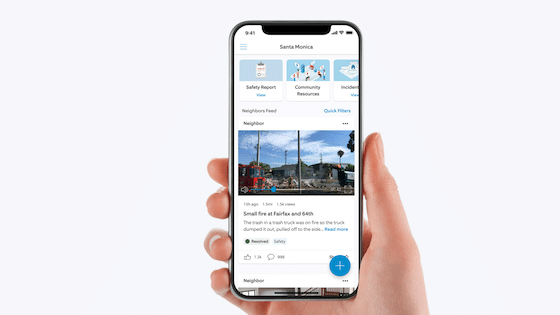
That last part – housed in Ring’s in-app “Neighbors” feature – makes Ring’s engagement and user experience similar to that of NextDoor. Starting as a sort of networked Neighborhood Watch, the Neighbors feature has evolved and expanded into general discussions between community residents.
However, one factor that holds Ring back from competing with NextDoor and others is that there’s a cap on its scale and potential network effect. Anyone can’t just sign up… You have to be a Ring camera owner to join the Neighbors network. From there, it’s become a popular feature for hyperlocal news & alerts.
But all of this took an interesting turn this week when we learned that Ring is now spinning out some of the Neighbors functions for anyone to use. Specifically, its Search Party feature is now available to non-Ring Camera owners. This is a feature that’s dedicated to broadcasting and finding lost pets.
It makes sense that Ring is uncapping access to this feature because finding Fido is all about amplifying awareness and strength-in-numbers. This will include AI image matching, where uploaded images from pet owners can be automatically scanned against captured footage from the Ring camera network.
But the fact that Ring made this move got us thinking: Could it uncap all the functions that sit under its Neighbors feature, thus unlocking its scale, network effect, and potential as a player in local media? Again, this would be most directly-competitive with Nextdoor, but it could impact Yelp and Google.
Best of Both Worlds
If Ring were to take this path, it would have a strong foundation to build on, given the levels of engagement already in its app. As Nextdoor knows well, the hardest part of building hyperlocal marketplaces is starting from scratch and stimulating network effects in thousands of zip codes.
Ring already has that part taken care of, as the Neighbors network is fairly robust in our anecdotal research on the app in various locales. From there, it’s a question of business model, including ample opportunity for sponsored content that’s hyper-targeted based on contextual and location signals.
But the question isn’t just can it, but should it? Though Amazon is a big fan of revenue diversification – and ad revenue in particular – would such pivots be detrimental to Ring’s core business? One could argue that it strips away or at least alters some of the features that drive and keep Ring camera owners.
In other words, one of the perks of owning one or more Ring devices is exclusive access to Neighbors, where you find out about things like power outages or coyote sightings. Ring would have to weigh the cost/benefit tradeoffs of turning that into a NextDoor-like free-for-all of local commentary and ads.
The right answer could be somewhere in the middle. Ring could open the floodgates with a standalone Neighbors app. It could be available for free with ads for the public, while camera owners get the clean version they’re used to. Could that approach strike the best of both worlds? We’ll see what Ring does.