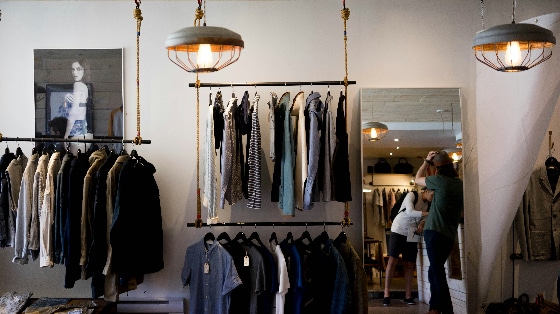
We continue to observe an uptick in companies that are bringing a cocktail of AI-based technologies — machine learning, computer vision, etc. — to physical retail. The thought is that store aisles can be searchable and stores themselves can be smarter, optimizing product placement and real-time inventory.
This is the case with Augmodo, a company we recently examined. It equips store personnel with visual sensors on lanyards so that they can passively scan store interiors as they go about their jobs. The result is constantly-refreshed spatial maps to achieve some of the above inventory and merchandising ends.
Auki Labs is another player that entered our radar screen. It similarly uses commodity hardware (RGB cameras) to ingest product and geometric data that’s used to optimize logistics. This is the starting point for several endpoints, such as helping stores understand ways to boost foot traffic and basket sizes.
One valuable outcome, according to Auki CEO Nils Pihl, is retail optimization. Once you have a digital twin of a given store, you can then rapidly prototype configurations and optimize store layouts for optimal flow and profitability. All the above can be further unlocked through partnerships and data integrations.
For example, Auki’s partnership with a company called Akuret will reveal action items that boost retail revenue by eliminating sales “blockers.” Altogether, Auki wants to mingle its data with myriad sources — everything from CRM to IOT to POS inventory systems — to unlock cross-pollinated insights.
Convergence Point
One of the concepts Auki Labs espouses as a product north star is the concept of bringing AI to the physical world. If you think about it, the recent age of AI and all the excitement/investment surrounding it, has been limiting. In other words, its training and intelligence outputs are confined to digital domains.
But given that we occupy physical space — and that’s where most consumer spending happens — syncing AI systems to the physical world has more meaningful potential. To be fair, this isn’t an entirely new concept as well-funded projects like Nvidia’s Omniverse is based on digital twins of the physical world.
Back to Auki, Augmodo, and others like them, one common trait is starting in store-facing ways, with ambitions to expand to customer-facing apps or APIs. For example, Auki Labs and Augmodo have a strong business case for retailers, which will have stronger adoption than consumers in early stages.
But those consumer endpoints are potentially more exciting and a much larger addressable market. For example, using the same underlying data and AI systems these companies are developing on the retail-facing end, they can expand into things like in-store wayfinding apps via mobile devices or smartphones.
For the latter, we’re not there yet. But things are pointed in that direction, given recent inflections in smart glasses. But that’s just the interface. The heavy lifting will be done by AI, IoT, and the growing list of companies that are fusing them together. Expect to see a lot more action at that convergence point.
Header image: Clark Street Mercantile on Unsplash