
When it comes to mobile devices where high-intent local searches are conducted, your car is an opportune vessel. The buying intent that’s often correlated to mobility is spun into overdrive (excuse the bad pun), when you’re out and about in your car, and searching for commercial destinations.
That commercial intent is obviously valuable for search players, from Google to Yelp, given that it leads to higher CPCs and other performance metrics that drive their core businesses. But despite these advantages, we’ve seen relatively few local search integrations – OEM or aftermarket – in cars.
Of course, the exception is mapping and navigation, where Google Maps is a common tool in cars – either through a mounted smartphone or in-dash integrations like Apple Carplay and Android Auto. The latter has seen some bespoke features like helping EV owners locate the nearest charging station.
One recent inflection in all the above is the advancement and excitement around conversational commerce. And at the center of that world is ChatGPT, which smart car proponents are salivating over. After all, ChatGPT 4.o is fitting for a driving experience. In other words, it’s hands-free.
Already Underway
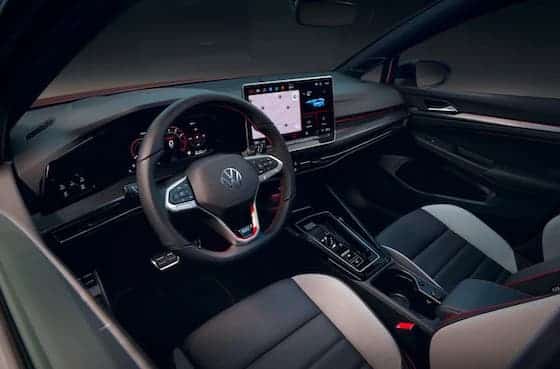
The latest company to jump on this opportunity is Volkswagen. At CES this year, it announced a few initiatives to bring ChatGPT to its latest car models as an in-dash informational resource. But when it comes to the amped-up attention economy of CES, you never know what’s real and what’s “concept.”
Now, it appears that the announcement wasn;t vapor, and Volkswagen is actually following through. Specifically, it’s adding ChatGPT functionality to all new car models that are equipped with its IDA voice assistant technology. And it’s extending availability to the U.S. in addition to its native Germany.
So what are the use cases? These will develop in time as drivers build habits around the AI agent, but it could start with all of the things you currently ask ChatGPT. That could be navigational or commercial in nature, and it could develop into assistant functions tied to car functions like turning up the heat.
The rollout started on September 6, so is already underway. Volkswagen is starting with 2025 Jetta GLI models and expanding from there. The feature will first be available within the existing Plus Speech function, which is a voice assistant in many cars. It will now be known as Plus Speech with AI.
Making Inroads
Backing up, the question that emerges from all the above is whether or not this is a natural integration. Put another way, will people use it or see it as a tech-for-tech’s sake play? The latter is often the case with all-things AI, as companies look to ride the buzzworthiness of the technology while it’s still hot.
That could be the case here, but we see some natural correlations that could make this a good fit. As noted, ChatGPT is inherently voice-enabled so it’s fitting to any hands-free scenarios. And ChatGPT has received so much buzz that it’s broadly recognizable. Average drivers may see the appeal and buy in.
Another question is if this will disintermediate whatever inroads (more bad puns) that Google and Apple have made in the automobile. Apple is likely safe based on its OEM integrations for Car Play. Meanwhile, Google (and Apple for that matter) haven’t been adequately challenged by ChatGPT in mapping.
And we can’t forget Google and Apple’s own AI integrations across their platforms. Apple Intelligence (which has some ChatGPT baked in) could soon infiltrate Car Play, making it a competitive option versus ChatGPT integrations from the likes of Volkswagen. We’ll be watching closely to see where this goes.