
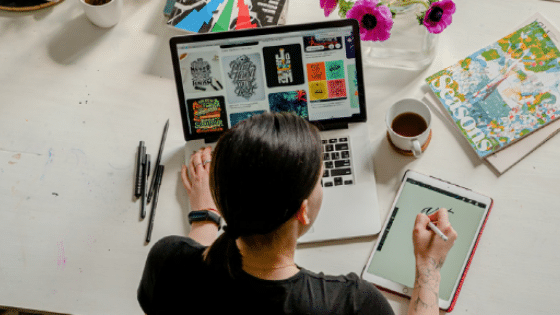
Adobe’s annual Max event is happening this week in LA – its first physical rendition since Covid lockdowns sidelined the event world. Max is all about the creator economy, the emerging crop of individuals and SMBs that create content. This has been Adobe’s target market for two decades.
This all manifests in the ever-growing Creative Cloud… a Saas bundle that started years ago with Photoshop and has expanded into other areas such as video production (Premier) and democratized photo editing (Lightroom). It’s even now expanding into 3D and AR with Aero and Substance 3D.
Back to the creator economy, this is a notable subset of the broader SMB world that Localogy tracks through its original data (Modern Commerce Monitor), reports, events, and this publication. The thought is that SMBs increasingly do their own creative production throughout their digital marketing.
That includes everything from social posts to store signage, the creation of which has come within the grasp of SMBs thanks to tools like Creative Cloud (and others such as Canva). And beyond SMB marketing, creative output is sometimes the product itself, in the case of the Etsy artists of the world.
Earning Power
Outside of Adobe Max (which we’ll cover in greater depth in a follow-up post), there are several other signals for the creator economy’s growth. One data point that crossed our desks recently comes from Adobe itself. It reports that more than 50 percent of non-professional creators monetize their content.
In other words, outside of the ranks of professional content creators (television networks, movie studios etc.), half of creators are making money from their content. This brings in the above SMB segments such as Etsy Artists or upstart cooking shows. The latter continues to gain steam with live-streaming options.
Not only are a large number of people earning money from their original content creations but also that their earning power has grown. Currently, 48 percent of creators say that revenue from this work represents more than half of their income. 68 percent believe the metaverse will expand that income.
Here are a few more highlights from the study:
– 40 percent of creators that monetize their content make more money now than they did two years ago. 80 percent believe they’ll make more in the next two years.
– Creators that monetize their content earn $43 per hour on average, which is 6x the U.S. minimum wage.
– Gen Z respondents make even more, averaging $58 per hour. Most Gen Z respondents also say they’d rather start their own creative businesses than attend college.
– 77 percent of creators say they’ve experienced the metaverse at least once (including experiences like Fortnite or Roblox). 34 percent do so weekly.
Joining Adobe’s data is a report from IAB that shows creator content is starting to outpace professional entertainment when it comes to consumers’ time. This means that the demand side of the equation is meeting (or fueling) all of the above supply. This bodes well for the creator economy’s ongoing growth.
Digitally-Distributed Pros
The timing is also right for the creator economy. It has grown in the Covid era as SMBs like yoga instructors and music schools were forced to join the ranks of digitally-distributed pros. Correspondingly, the trend breathed new life into a new breed of software providers that build production tools.
Meanwhile, broader tech-world evolutions have addressed the creator economy, resulting in a sort of perfect storm. These include TikTok and creator-targeted features from more established players like Instagram (Reels) and Snap (Spotlight). The race is on to be the go-to creator platform.
That brings us back to Adobe, which is the original creator-economy play. Even before it was a multidimensional SaaS offering, Creative Cloud components have been synonymous with the creator economy – everything from photographers using photoshop to graphic designers using Illustrator.
And the latest function to be added to the mix is Figma, given Adobe’s recent $20 billion acquisition. What value does that add to Creative Cloud and the creator economy? Much of this came to light at Adobe Max this week, which we’ll break down in a follow-up post. Stay tuned for that soon.