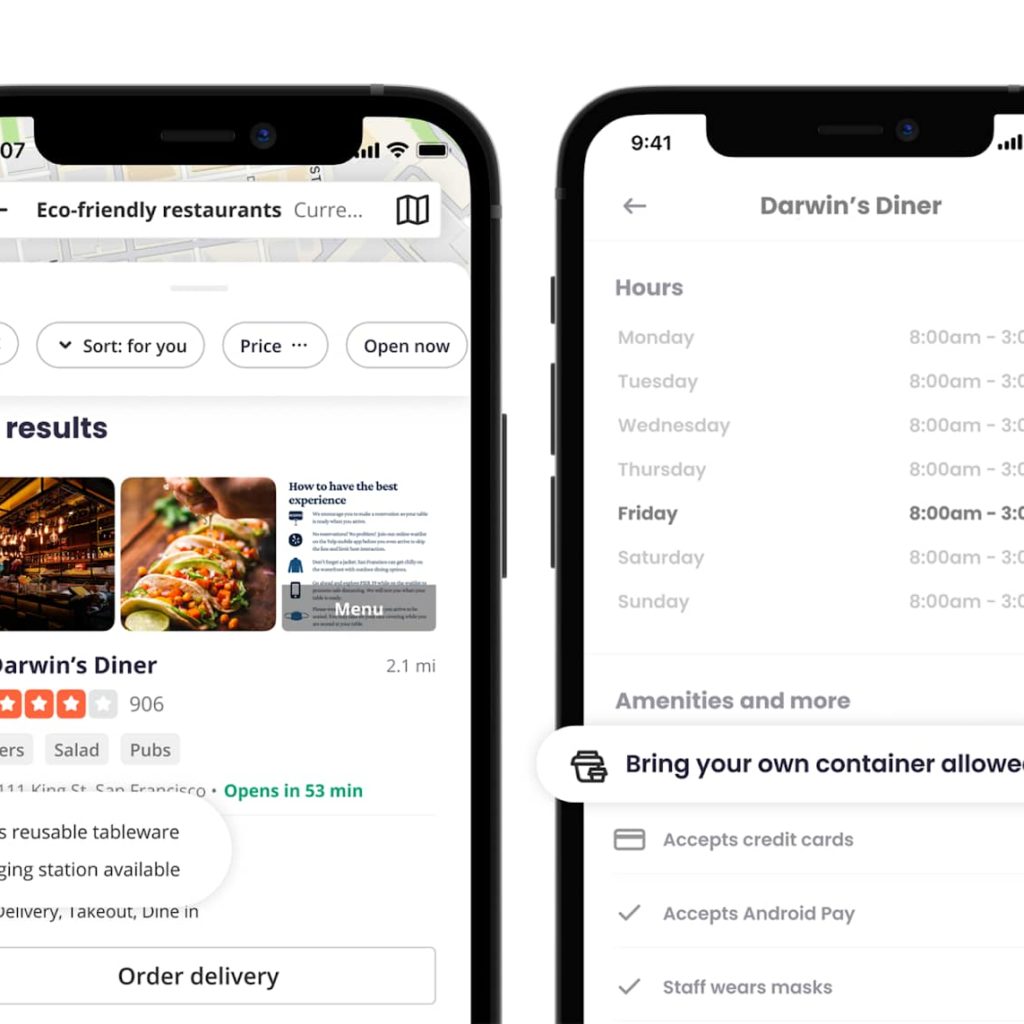

To commemorate the upcoming Earth Day, Yelp is out today with a blitz of new announcements and initiatives to support eco-friendliness. First and foremost, it’s launching new business attributes like plastic-free packaging. This joins Yelp’s expanding list of filters to find and evaluate local businesses.
In parallel, Yelp launched the “Sustainability Resource Hub,” a business-facing resource that helps SMBs boost their eco-friendliness. Together these moves are a bit of a one-two punch: The eco-friendly attributes incentivize businesses to improve… and the Sustainability Hub helps them do so.
“Eco-friendly business attributes, business resources, community events, and more are the latest steps from Yelp to encourage and support business owners, consumers, and employees to take action in the fight against climate change,” Yelp VP of Consumer Product, Akhil Kuduvalli Ramesh told Localogy.
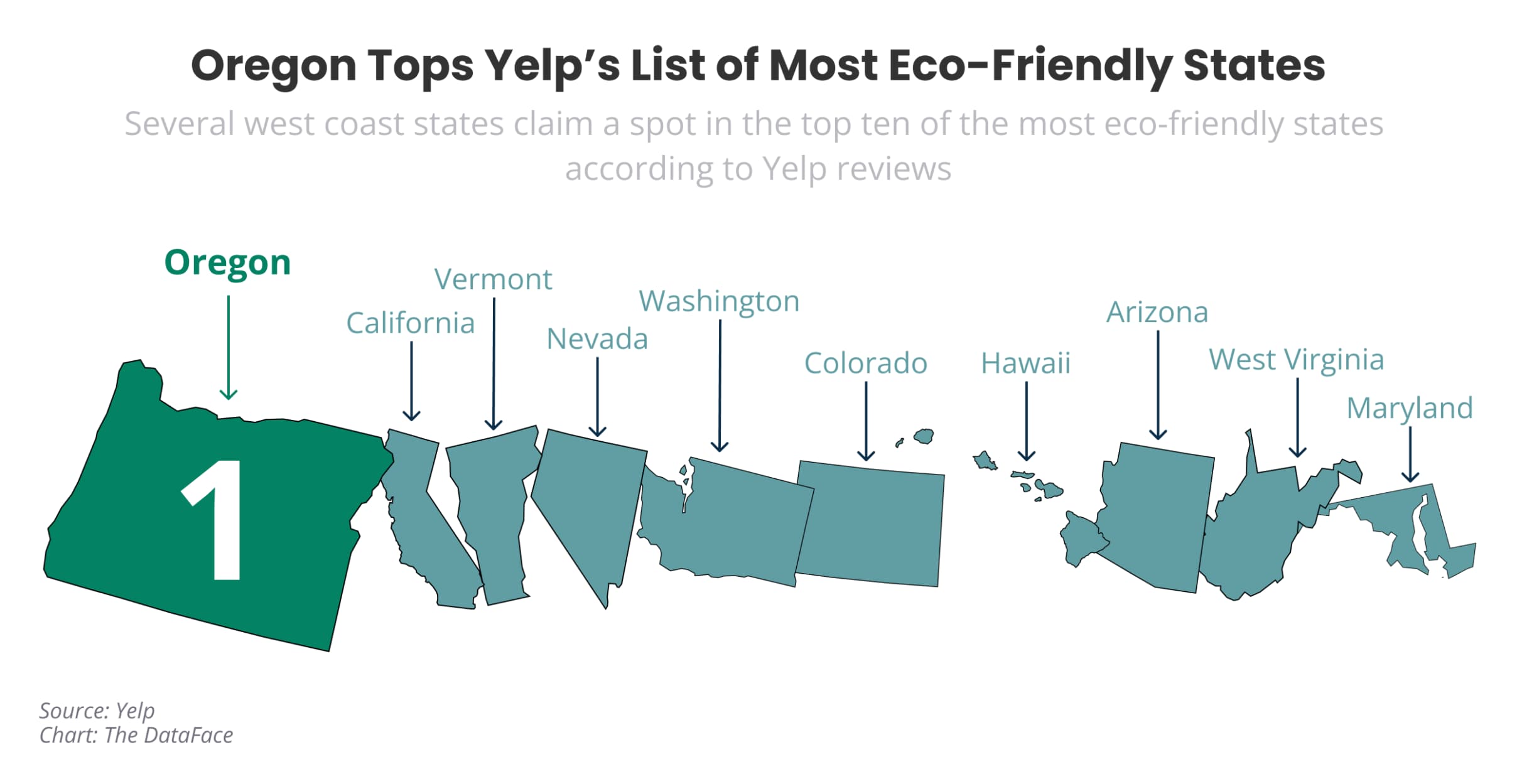
Thirdly, Yelp is amplifying the awareness of all of the above with a good-old listicle. It has ranked the most eco-friendly states based on aggregated Yelp data. Oregon, California, Vermont, Nevada, and Washington topped the list, which you can see in the below graphic and in full here.
Demand Driven
Going deeper into the new eco-friendly ratings and filters, Yelp has partnered with Plastic Pollution Coalition to carve out the new business attributes. These will be both searchable and highlighted in Yelp search results and individual business pages. At launch, these attributes include:
- EV charging stations available
- Plastic-free packaging
- Provides reusable tableware
- Bring your own container allowed
- Compostable containers available
- Bike parking
- Vegan
From an SMB perspective, claimed-listings owners can add these attributes in their Yelp for Business dashboard. Designations can then be vetted by Yelp users, who can also provide feedback on additional eco-friendly attributes that they value. This suggests that the above list will grow over time.
As for Yelp’s motivation beyond altruistic drivers, these eco-moves represent ongoing evolution in its search utility (more on that below). But it’s also demand-driven, as Yelp has observed and internalized a rise in eco-friendly user searches. Today’s move formalizes those attributes in its taxonomy.
“We know consumers are increasingly seeking out more sustainable options, whether they are dining in or out, shopping, or driving,” said Ramesh. “In fact, searches for “plant-based” have increased 56% each year from 2018 to 2021, and searches for “EV charging” have increased 41% each year.”

Depth & Dimension
Stepping back, one thing that jumps out about this announcement is Yelp’s rapid-fire pace for elevating search utility. This often comes in the form of attributes and filters. As these grow in number, Yelp adds depth and dimension to its ability to help consumers find and evaluate local businesses.
Just last week, it added health & safety data so searchers could filter restaurants based on local health board ratings. As we wrote at the time:
This is just the latest data integration that represents new local search use cases. […] The challenge there is to provide useful information to local searchers without cluttering the UX in a “paradox of choice.” Yelp has walked that fine line through things like search filters and other space-saving design moves that we’ll continue to see.
We’ll double down on that statement with today’s announcement: eco-friendly filters are just the latest in Yelp’s evolving taxonomy. Expect more evolution on that front.
“With these new attributes, we’re able to better serve our growing environmentally conscious audience by connecting them with eco-friendly businesses,” said Ramesh, “while supporting and celebrating the local businesses that put sustainability first.”