
User-Generated Content (UGC) is content created by individual people (not brands) and published to an online channel. In today’s landscape, a happy customer that raves about your clients’ products and services online is a powerful asset for attracting more customers.
Customer reviews can be the cornerstone of a UGC strategy – content that is created when customers write reviews for a company. 88% of consumers trust online reviews as much as personal recommendations, so this form of UGC has a significant influence on the purchasing decisions of prospects. However, the benefits of UGC go further and can help boost search engine rankings.
The impact of user-generated content
Jaw-dropping conversion rates
Consumers trust what customers have to say about a business more than any other form of marketing. They allow fellow shoppers to get honest, unfiltered opinions about products and services. That’s why the vast majority of today’s consumers (93%) read reviews before making a purchase.
Reviews help to build significant trust and credibility with new customers which are attributes that are pivotal for driving conversions. Businesses see a staggering 161% average uplift in conversions among consumers who engage with UGC.
Boost search rankings and build social proof
Search engines rank websites based on how relevant and useful content is for a specific search query. Having a steady flow of fresh user-generated content across multiple sites helps to improve search ranking.
Additionally, good reviews can improve your ranking for targeted keywords. Search engines crawl reviews, identify keywords, and thanks to Natural Language Processing (NLP), understand the context of those keywords directly related to a company.
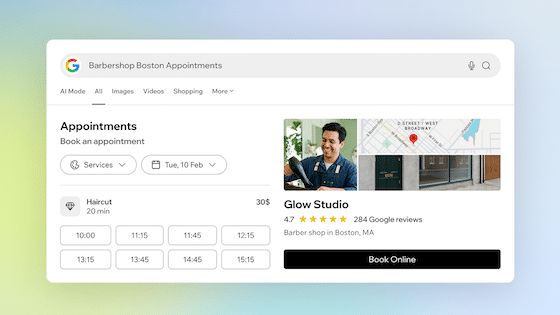
For example, if one of your clients is a spa business, and a large portion of their customer reviews rave about their Swedish massages, Google will infer that the business offers great Swedish massages. Google will then present that business as a local option when someone looks for ‘best Swedish massage near me’.
The more reviews a business gets, the more user-generated content is created. This content, in turn, is loaded with keywords that your clients will want to rank for.
It’s free!
UGC provides businesses with free, word-of-mouth promotion which is marketing gold. When customers organically write a positive review, they’re doing the lion’s share of the advertising legwork for you – for free. When compared to common marketing tactics such as paid advertising, events, etc. UGC is extremely cost-effective and can deliver incredible ROI.
How to get more reviews to fuel your UGC marketing strategy
As an agency, you likely already understand the value of online reviews, yet it can be a struggle to collect them. Here are some key best practices to quickly generate reviews at scale.
Automated review requests – With an automated system, timely review requests can be sent without overwhelming staff.
Make it easy to give a review – Include the appropriate link within the review request so that customers don’t need to do anything more than click and respond.
Ask for reviews on relevant sites – Google is the go-to site for most consumers. However, vertical-specific sites are of equal importance for relevant businesses such as Zocdoc for healthcare practices, FindLaw for lawyers, etc.
Promote reviews as part of your UGC strategy
Marketing reviews effectively increases brand visibility and significantly boosts conversions by a stunning 350%. Be sure to showcase customer reviews on relevant marketing channels.
Social media has become one of the most effective channels for businesses to share reviews. That’s because 1 in 3 consumers use social media to discover new products and brands.
Include reviews in marketing campaigns to boost click-through rates. 88% of consumers believe ads with online reviews are more trustworthy.
Promote reviews on your client’s website – 63% of consumers are more likely to make a purchase from a site that offers customer reviews. Add a reviews widget to your client’s website to easily display a feed from multiple review sources.
Conclusion
Today’s savvy consumers know better than to take a business’s word over other customers. Due to this, user-generated content is more powerful than any other brand-driven content. By capitalizing on customer reviews, your clients can build trust with consumers leading to higher conversions and retention. Regularly collecting and promoting customer reviews is the foundation of any effective UGC marketing strategy. Be sure to equip your clients with powerful tools that will help them find the right mix of requesting reviews, referrals, and direct feedback through smart surveys.