The way we pay for things continues to transform. This isn’t a new trend, as smartphone ubiquity was the catalyst for years of ongoing payments disruption. But we’re also seeing new systems develop such as the rise of buy-now-pay-later (BNPL). That alone could meaningfully impact credit card companies.
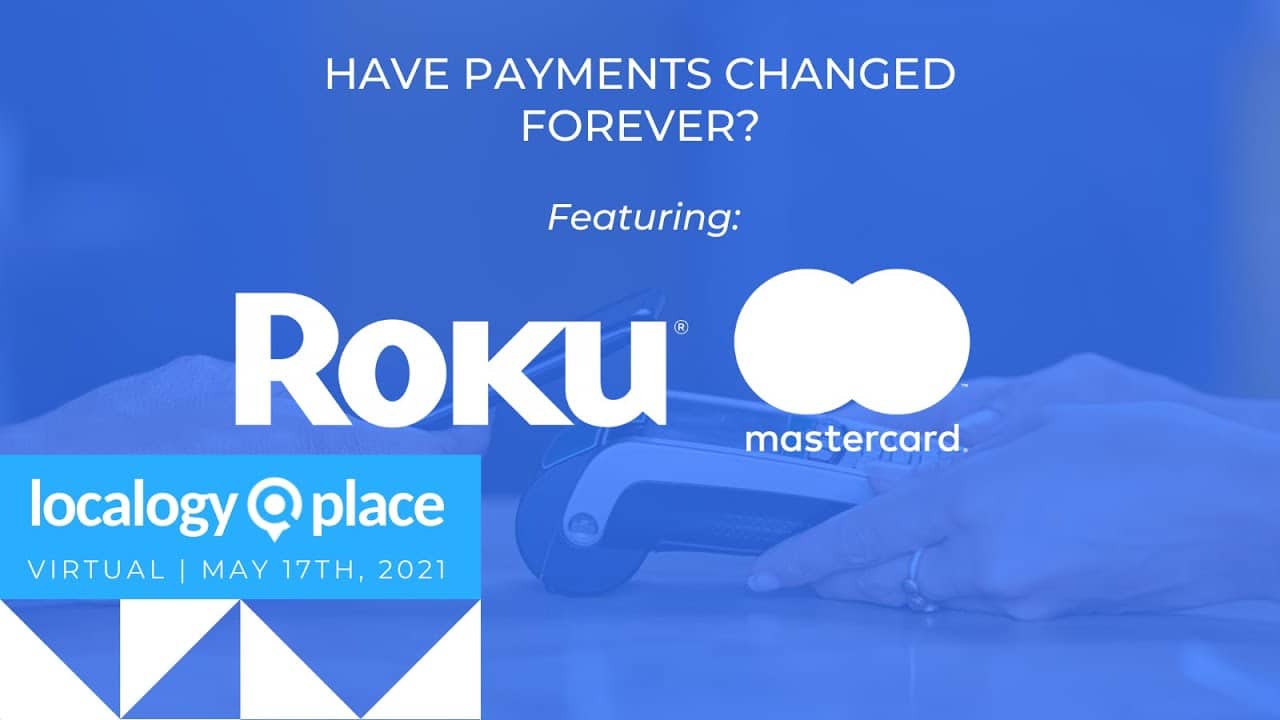
Speaking of credit card companies, they continue to innovate in several ways as they navigate a shifting environment. We heard as much from Mastercard’s Elina Greenstein at Localogy Place. Joined by Roku’s David Weis, it’s also evident that transactional endpoints continue to expand to places like streaming video.
This is the topic of this week’s Place Rewind, with video and strategic takeaways below.
Steady Constant
Transformation in payments has been a steady constant for the past decade, as noted. But like many things, it was accelerated in the Covid era. One of the tenets of mobile payments — especially at the point of sale — is touchless interaction. This never really carried weight as an adoption accelerant, until now.
But beyond consumer demand and acclimation — which are key factors for any activity tied to security and comfort — the hardware infrastructure needs to be in place. For example, tap to pay involves various standards from retailers and the payment tech they operate (think: Walgreens & Apple Pay).
This is slowly being worked out as players like Apple Pay become ubiquitous at the point of sale. Mastercard is advantaged in that it sits beneath many tap-to-pay systems as the credit card company. For example, when you use Apple Pay, it’s likely tied to a credit or debit card (unless of course you’re using Apple Card).
But there are deeper structural evolutions beyond the POS terminal says Greenstein. For example, the on-demand and delivery economies compel logistical reworking. Taking a page from Amazon, many retail players are expanding physical stores to digital fulfillment centers in addition to transactional endpoints.
Overlaying all of the above is the shifting privacy and data-security environment. As a company with much to lose from inadequate data security, MasterCard is on top of its data game and treats it as a core priority says Greenstein: “Data responsibility is at the center of everything we do at Mastercard”
Compressing the Funnel
On to the streaming opportunity, Roku’s integration of transactional functionality into the TV experience is one sign of the continued expansion of payment-enabled media. Here it’s particularly relevant as lean-back entertainment carries a degree of user intent and situational relevance for shopping moments.
In fact, the living room TV experience has always been infused with advertising… but the technology didn’t enable the funnel to be compressed from awareness to action. The closest thing we had was picking up a nearby shopping catalog, driving to the store… or Googling a product. Connected TV closes the loop.
Practically speaking, the way this works is through calls to action that accompany ad spots. Those calls to action can launch shoppable content, including the payment information already stored in your Roku account. Weis asserts that this makes the connected TV screen the next frontier in direct commerce.
But he admits there’s work to do. Though it’s situationally relevant as noted, there are cultural barriers in that people aren’t yet fully acclimated to this mode of shopping. Related to those user comfort levels, there are interface evolutions that can be made, as shopping with a TV remote can feel unnatural.
And like with Mastercard (and nearly everyone these days), privacy and data security are factors. Roku considers itself a good actor in privacy practices such as using behavioral data without personally identifiable info to target ads. If you don’t need data, don’t collect it… utilize Tokenization, Weis says.
We’ll pause there and cue the video for more color from the panel. See the interview in full below and stay tuned for periodic installments of the Place Rewind series with more insights and session coverage.