

Data Scout is Localogy’s series that curates and draws meaning from third-party data. Running semi-weekly, it adds an analytical layer to the industry data that we encounter in daily knowledge building. For Localogy original data, see the separate Modern Commerce Monitor™️ series.
A question we continue to ponder is what’s the marketing play for SMBs when it comes to reaching Gen-Y (Millennials) and Gen-Z? This can include things like Stories in social channels like Snapchat and Instagram. TikTok also looms with massive usage but a fair amount of geopolitical uncertainty.
To resurface this question, Snap has released new data that characterize these younger generations’ affinity for various content formats. It commissioned the National Research Group to study their engagement levels. (n=1000). Unsurprisingly, they’re all about short-form multimedia.
They’re also drawn to mobile as a touchpoint. Daily engagement with mobile video has grown 40 percent in 2020 according to the study. Furthermore, half of Gen-Y and Z consumers consume premium video on their smartphones daily. 73 percent are watching more mobile video than they did last year.
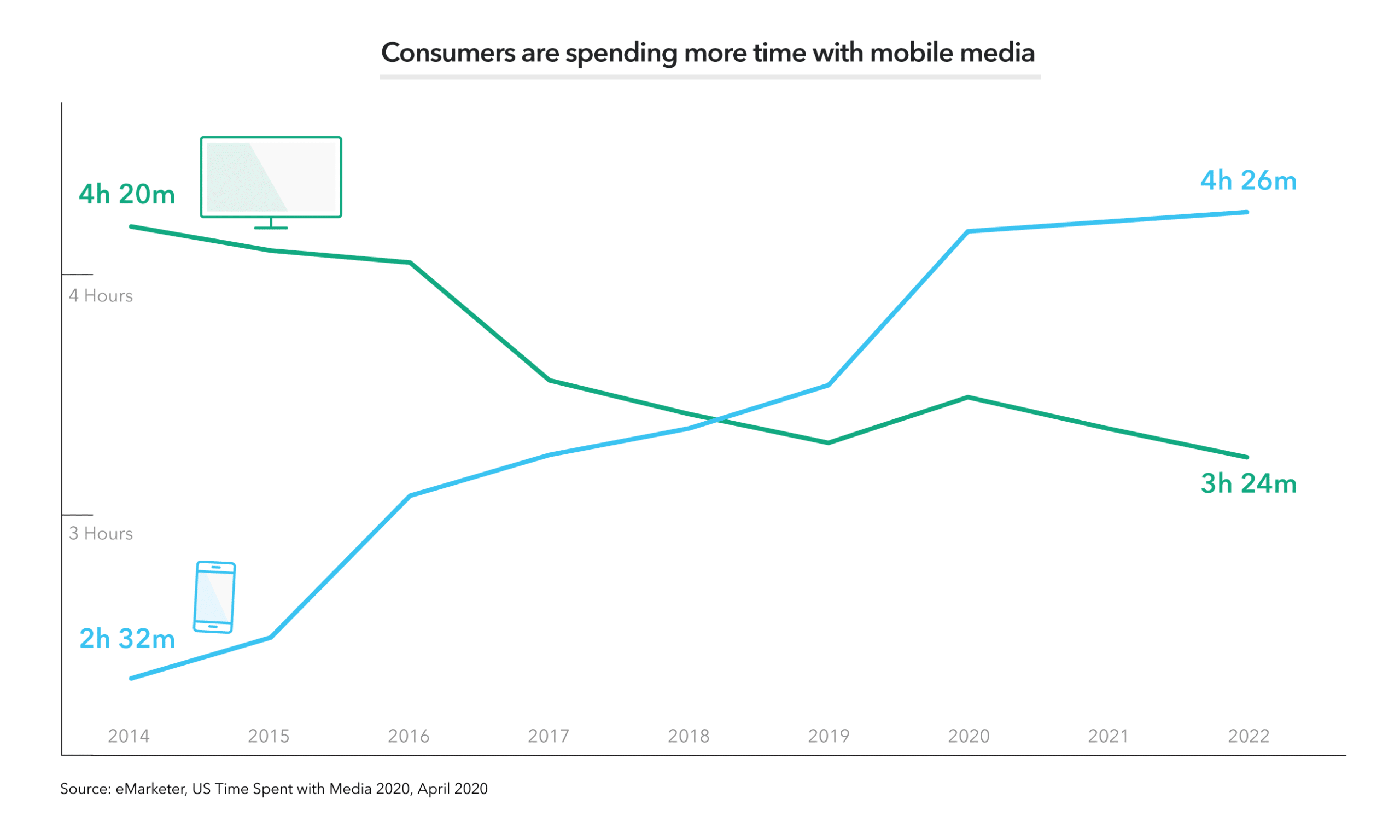
Overall smartphone time among these generations clocks in at a whopping 4 hours and 26 minutes per day on average — eclipsing the 3 hours and 24 minutes spent watching television. 47 minutes of that total is spent watching mobile video — slightly less than the 50 minutes spent watching video on OTT devices.
Snackable Fare
But the types of viewing on these devices is the key distinction. OTT video is more long-form, while mobile video is all about snackable fare. 80 percent of Gen-Y and Z consumers turn to short-form content to get their news. 55 percent report that full-length TV shows are too much of a time commitment.
In addition to its lower friction, short-form video is more shareable, which is a key consideration for creating content that can have viral propulsion. 77 percent of Gen Y and Z consumers say that shareable short-form video content makes them feel like they’re part of a community.
To that end, 86 percent of Gen-Y and 85 percent of Gen-Z value video and communication platforms that let them contribute to the cultural conversation. Snapchat users value vertical video for a more intimate experience, with 81 percent saying that it feels more personal. 77 percent say it feels more immersive.
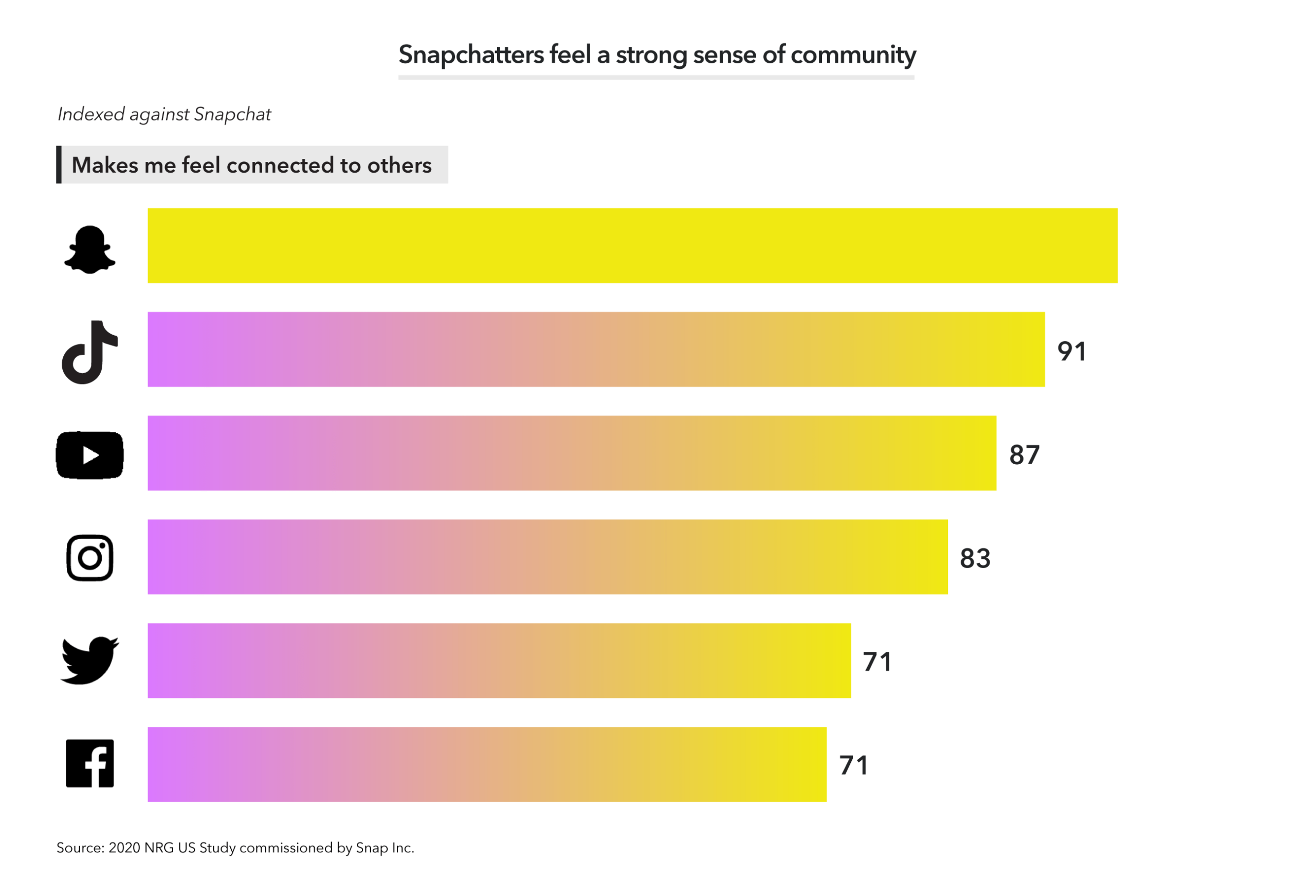
All of this is amplified in the Covid-era, given that 86 percent of Gen-Y and Z consumers report that mobile video helps them cope with anxiety and stay socially connected during lockdown. As for channels, Snapchat is ranked highest among social video platforms (keep in mind, it commissioned the report).
Brand Equity
This all points to the fact that short videos or Stories resonate with these younger generations as a streamlined format for consuming, creating and/or sharing expressive content. That can involve news-driven and practical/informative content, as well as things that are purely entertainment.
Back to the question of SMB marketing, what does this mean for them? As we’ve examined, SMBs’ challenge is to educate consumers of their existence. Big brands don’t have that educational barrier, and its more about exposure and repetition. Stories could be a tool for SMBs to establish that brand equity.
Another thought is that low production barriers for Stories represent a path to gaining TV ad-like exposure. So it’s a way for SMBs to gain multimedia benefits in a more streamlined way. And given the results above, it’s likewise a path to the hearts and minds of increasingly buying-empowered Gen-Y and Z.