This is the latest in Localogy’s Skate To Where the Puck is Going series. Running semi-weekly, it examines the moves and motivations of tech giants as leading indicators for where markets are moving. Check out the entire series here, and its origin here.
For the past decade, Facebook has been on a slow & steady path towards facilitating e-commerce. That includes various flavors of local, marketplaces and events-based fiefdoms of the Facebook kingdom. Though it’s been effective with Pages and paid advertising, lower-funnel direct commerce remains underdeveloped.
The most successful play so far has arguably been the shopping and transactional use case it’s cultivated on Instagram, with continued integrations of buy buttons and direct commerce tools for brand advertisers. That shines so far in fashion, but there’s lots of room to move into other categories and verticals, including local.
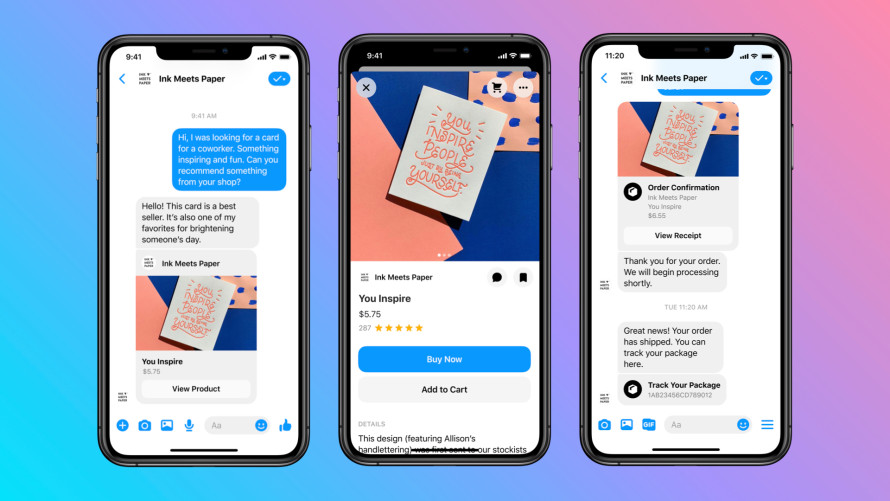
With that backdrop, Facebook took a big step forward this week with the launch of Facebook Shops. These will take form in existing Facebook Pages or Instagram profiles. The difference is that they’ll now allow SMBs and larger companies to set up a full-fledged e-commerce shop. Users can correspondingly browse & buy.
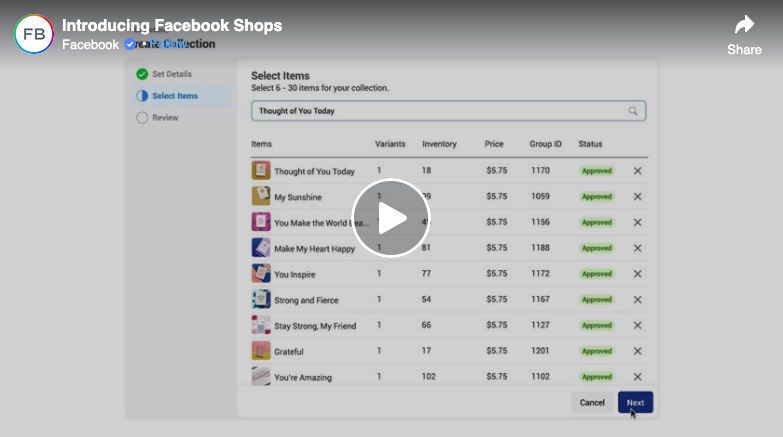
SMBs can activate Facebook Shops for free, then upload product catalogs. Once they do that, they can personalize the UX with a cover image, accent colors and other customization. Intagram VP of Product Vishal Shah told Techcrunch that 1 million businesses have already signed up.
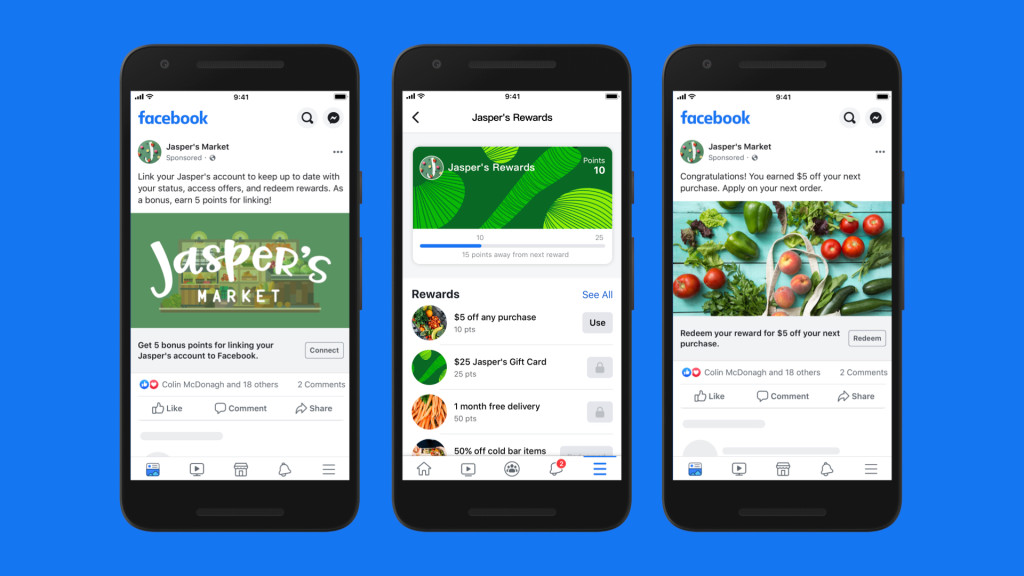
Shops could also serve as connective tissue in e-commerce efforts across Facebook properties, including News Feed, Instagram, Messenger, Whats App and Portal. Ad formats endemic to these channels — video, display, Instagram Explore, Messenger threads, etc. — can be linked to Shops to close the transactional loop.
To pull this off Facebook is working with eCommerce players like Shopify, WooCommerce and Channel Advisor. These integrations will allow for, say, Shopify-run merchants to have an auxiliary channel on Facebook that ties into their inventory management and shipping. This will eliminate some SMB friction.
As for our perennial question of why?, clues can be seen in how Facebook will monetize Shops . Though the pages are free to set up, Facebook will take affiliate fees on transactions. Indirectly, it’s also hoping that the commerce functionality will engender more demand for Facebook ads to drive traffic to these digitals shops.
In a Facebook Live session earlier this week, Mark Zuckerberg positioned this as a move that was prompted (or accelerated) by Covid-19’s impact on local business. There’s been a clear pivot towards product development and venture funding for all things eCommerce, as we’ve examined around companies like Shopify.
“I do think we’re going to continue living more of our lives online and doing more business online,” said Zuckerberg during the address. This follows several Facebook moves over the past 60 days to support SMBs. That includes new profile features that help them communicate to customers, and direct grants.

Like many moves we’ve been watching, this is part altruistic and part opportunistic. It certainly has a component of helping SMBs, but it also helps ensure they’ll survive to be future Facebook customers. And it redirects the product road map to meet the “new-normal” demand signals for greater e-commerce activity.
That alone has been a notable subtopic of Covid-era tech industry dynamics. In addition to several other changing variables and operating procedures, the product development cycle itself has been upended. The name of the game is to pivot quickly, and we’ll continue to see some products fast-tracked and others shelved.
Meanwhile, a few questions remain. Underlying all of the historical facebook commerce moves is a question of product persona. Do consumers view Facebook as a place to buy new shoes? It will have to continue to cultivate that persona — and the consumer trust that goes along with it. Instagram is a good starting point.
We’ll keep our eye on this to see how those questions are answered by the market. Meanwhile, Facebook Shops has firm ground to stand on, given 140 million business pages, most of which are SMBs.