Study: 87% of Shoppers Begin the Purchase Process Online — Up from 71% in 2017

Although the popularity of shopping via digital channels has become increasingly popular, shopping in-store continues to be an important component of the purchase process. Consumers are still opting for in-store purchases over online, however, when repeat purchases are made, consumers tend to shift to the ease and convenience of online marketplaces (i.e. Amazon).

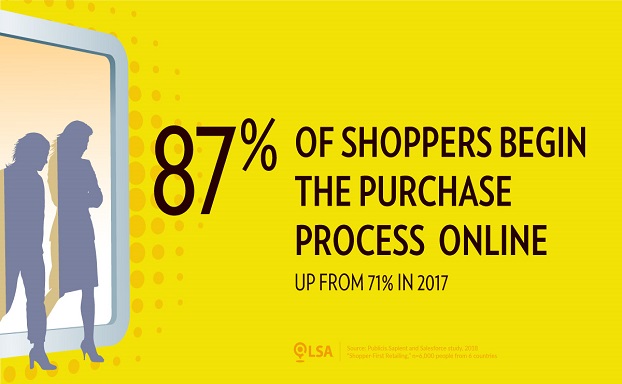
A recent study of 6,000 shoppers from Publicis.Sapient and Salesforce revealed that 87% begin the purchase process online, up from 71% in 2017. Additionally, 50% of shoppers conduct their first purchase via a retailer, but 47% of repeat purchases happen on marketplaces, like Amazon.

The data also revealed that 71% of shoppers prefer to leave a store with a product in-hand, suggesting an in-store customer is very likely to purchase. But once comfortable with a product, repeat purchases of the same or similar products tend to move online because of the ease and convenience enabled by online buying.

The data comes from a Publicis.Sapient and Salesforce study, 2018 “Shopper-First Retailing,” n=6,000 people from 6 countries. To access the graphic above, click here.


Share Article...

Follow Us...

Stay ahead of the curve and get the latest on Local straight to your inbox.

By submitting this form, you agree to receive communications from Localogy. You can unsubscribe at any time.

Leave a Reply

Related Resources

Long-Form Land Grab: Instagram Takes on YouTube

Long-Form Land Grab: Instagram Takes on YouTube

In the world of online long-form video, YouTube has always been king. Beyond user-generated-content, it’s become a place where AAA content is syndicated; and the primary home for influencers, product reviewers, and talking heads to monetize their content. But now there’s a new game in town: Instagram.

Amazon Surpasses Walmart: What the Milestone Means and Amazon Advertising

Agentic Commerce: A Tale of Two Cities

Amazon and Walmart continue to duke it out for dominance in the commerce realm. They represent fundamentally different approaches in online versus offline shopping, while their e-commerce platforms are increasingly competitive. Now the latest divergence is evident in their strategies: agentic shopping.

Is Muse a Sleeping Giant for Shopping?

After several swings and misses over the past half-decade (looking at you, metaverse), Meta has scored a win. It really needed one. Beyond the broader win in its ad business – now fueled by AI ad targeting – Muse has come out of nowhere. And it could be a consumer shopping powerhouse.