Location, location, location – an old saying, but still relevant for twenty-first century businesses. Your business’s real-world location data is equally as important as where you choose to set up shop. Consider this: 80% of all mobile searches are made by consumers looking to find goods and services near them. Over half of these searches result in a purchase within 24 hours – showing people research online but buy offline. This means location is important, and location data even more so for those looking for nearby goods and services.
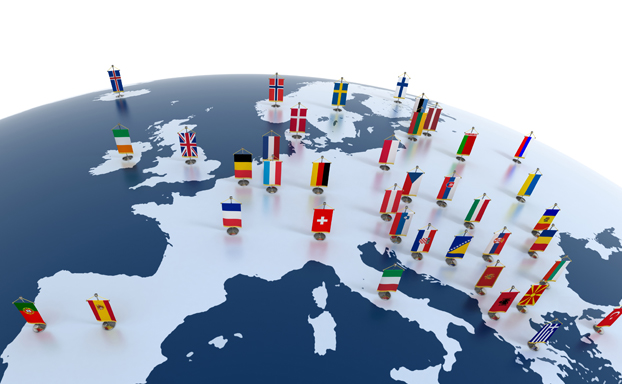
Having structured location data is therefore crucial to your business, wherever you are. Yet there are differences between Europe and the US – and if you’re looking to expand your operations from the US over to Europe, you need to understand a few key differences in the way location data is used and how consumers will interact with that information.
Listing Options Differ by Country
To make location data work effectively, a company needs to have its physical locations listed consistently and accurately across different platforms – for all locations. Consistent and accurate location listings give them increased findability in local search, meaning every detail about every location has to be correct across all networks, ranging from Google to Facebook, Yelp to the Yellow Pages, so local consumers can find them.
But the online world isn’t equal. Depending on where you are in the world, you will have a different number of directories to deal with. Both the US and Europe have many networks, making listings a tough task, but the difference is in the US, there are several big players operating throughout the entire country, which makes the job of getting listings relatively straightforward.
In Europe, however, there is more linguistic diversity and a far greater difference in the scope and quality of listings. In Germany, for example, the numerous listings networks tend to be comprehensive and detailed – however, due to the federal nature of the country, there are local, state-based networks to take into account as well.
In comparison, Slovenia might have many smaller networks but it doesn’t have the regional fragmentation that Germany does. Operating businesses in Europe therefore require a more flexible and detailed approach to listings than one needs to take in the US.
American vs. European Consumers
Speaking generally, there will be clear differences between the ways in which American and European consumers approach local shopping. The striking difference is that there is much more variety in large European cities than in American ones.
Eurostat shows that almost three-quarters of the UK market used the internet to buy something in 2016, whereas in Austria, there is comparable internet use, but only half of the population used the internet to buy a product. That already shows cultural and structural differences worth exploring: is the British environment more e-commerce friendly? Do Austrians tend to like shopping more in real-life, using the net only to research products? What is the listings quality in each market?
While such differences exist in the US too, having only a few big listings networks means the differences aren’t necessarily so complex. American businesses looking to expand to Europe cannot rely on the more homogeneous cultural structure of American cities – people buy products online and offline in a comparable way in New York, Austin and Seattle.
Find the Right Blend of Tools
We’ve heard a lot of talk about American retail reaching a tipping point – where physical shopping will be replaced by e-commerce. But the tipping point argument is flawed for a number of reasons:
- Consumers still want the real-world experience, and
- Physical locations are still vital, as you can see from Amazon opening their own stores.
People are still people, and they still want to enjoy the shopping experience, not just endless scrolling through pages for products. Another example could be the Canadian coffee company Tim Horton’s expanding to Europe: they’re doing so based on data that shows people still want the real-world coffee-going experience.
To compete with e-commerce, multi-location brands need their own blend of digital tools. Using tools which structure location data, keep your brand in touch with local customers and offer them discounts and incentives to come to your stores. You should offer experiences which the online world cannot match.
Some multi-location brands are already doing this, and turning their brands into linchpins for a certain kind of lifestyle. For example, everyone knows Starbucks offers customer free WiFi in its locations. By doing this they secure a certain type of traffic. But what about going further, and delivering unique experiences for customers? Look at Adidas, who opened a pop-up store in Berlin where scanners examine a shopper before delivering a custom-crafted sweater — in four hours.
The point is, brands need to find out what unique value they can offer to the customer. Why should someone visit you over your competition?