
Yesterday, the SMB panel complained pretty loudly about their inability to know whether digital ad spend was effective or being flushed down the drain. Attribution is a huge issue as illustrated by data shared by Dorothee Bergin from xAd – 90% of commerce is offline and 75% of mobile users convert offline.
Location data from smartphones is transforming the ability to measure online-to-offline attribution. Consumers check their phones 150 times a day and 47% of use is away from the home. Phones are always on (powered on), and always on (on your person). With more and more apps enabled with location awareness or tracking, location data is increasingly rich and of sufficient scale.
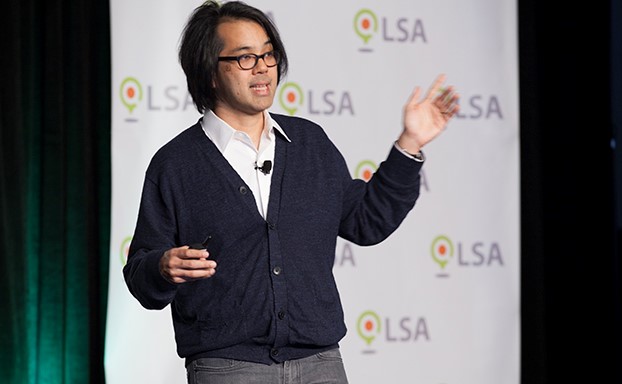
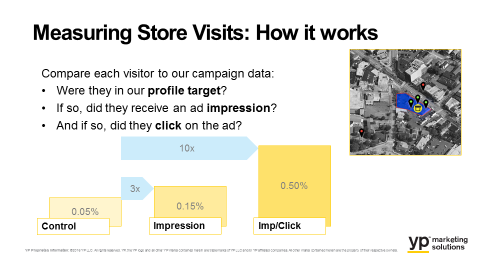
Jason Uechi is Director of Engineering for YP Mobile Labs, part of YP. He shared how location data collected after campaigns allows businesses to track the effectiveness of mobile ads. There are increasing numbers of ways to find out who is visiting the store. YP has 150 million profiles of users and matching GPS data from the campaign to those who visit the store allows true attribution of visits to ad exposure. The store visit can be captured by variety of methods: apps, background tracking, check-ins, beacon technology or even old fashioned surveys.
Those visits are compared to data on the profiles targeted, whether they received an ad impression, and whether the user clicked on the ad.
Each of the speakers, Jason, Dorothee, and Mike Harkey from Foursquare, shared case studies that illustrated demonstrable lift from mobile and digital ads targeted using location and measured using these attribution tactics. Based on the scale that Foursquare has, at 1 billion monthly check-ins, it was able to attribute store visits after advertisers saw Superbowl ads. Foursquare tracked a boost of 5% in traffic to Hyundai dealerships and a 10% boost in visits to Taco Bell in the week following the Superbowl.
All in all, the demand for attribution of online marketing to offline sales will continue to grow and location data from smartphones is the key to unlocking its potential.