Read AI is a startup that competes in the “remote tech” space that we sometimes write about here at Localogy Insider. The company has just rolled out a series of features and updates that build on capabilities the company rolled out in April.
Read uses AI to make online meetings more productive. It does this in several ways, including measuring engagement levels during online meetings, and creating meeting transcripts, for example. Ultimately Read collects data during meetings (and other comms channels like Slack and email) and uses the data to deliver insights to users that can make meetings more efficient and effective.
Read AI founder David Shim sat with me for a wide-ranging fireside chat at the recent L24 conference in Texas. That interview will be featured in next week’s This Week in Local podcast.
Earlier this year Read AI raised $21 million to scale its approach to improving online meetings.
Building on Readouts
Back in April, Real rolled out something called Readouts. This new report feature widened the aperture to include more communications inputs for Read AI to analyze. Instead of just online meeting transcripts these new reports “analyze and condense your emails and chat messages into concise updates, organized automatically by topic.”
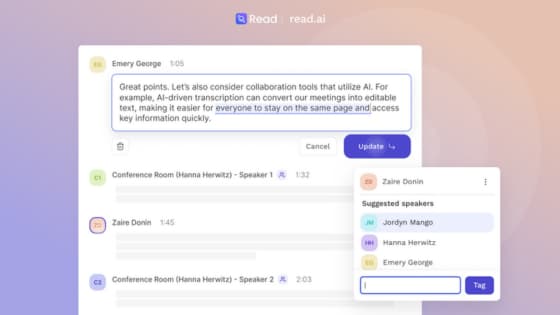
The new features and updates Read announced this week add a layer of organization to the existing product. For example, Redouts now summarize emails based on labels and folders in Gmail and Outlook. Read now offers multiple speaker detection for conference rooms. This latter point is a significant advancement, given online meeting recordings have always identified speakers based on their unique login.
When a group attends an online meeting together in a conference room, it is often nearly impossible to distinguish one individual speaker from another. Read has addressed this challenge by giving an identity to each voice in the room.
“Multiple speakers in the same room will now have their speech broken out into separate turns in the transcript,” Read says.
The new update also includes personalized coaching suggestions with video playback (this could be painful). And finally, Read has rolled out new editing features for meeting transcripts. Users can now edit transcripts without fear of losing any original text.
The updates allow users to have Readouts align more closely with how they organize their Gmail or Outlook – using folders, labels, etc. This should be music to the ears of those with well-organized sock drawers.
According to Read, “Users can now receive email Readouts based on the methods they already use to organize emails in Gmail or Outlook, namely labels and folders.”