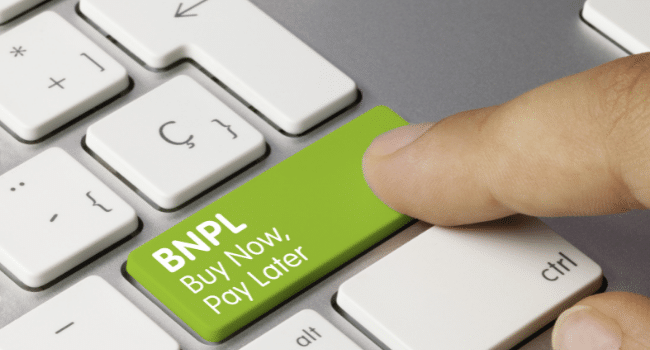
The chorus of voices warning that buy now, pay later is entering a dangerous phase continues to grow. The main focus of concern is that BNPL increasingly is being used to cover basic expenses.
This is the red flag that Marshall Lux, a fellow at the Mossavar-Rahmani Center for Business and Government at the Harvard Kennedy School raised in a recent CNBC interview.
“Three years ago, people talked about Peloton bikes, now people are buying sneakers, jeans, socks,” Lux said. “When people start buying household goods on credit, that signals a problem.”
Lux’s basic point is that BNPL has shifted from a useful tool for making big purchases to a crutch that strapped consumers are using to borrow from Peter to pay Paul. No good will come of this.
And on a recent Pivot podcast, Prof. Scott Galloway, once a BNPL bull, didn’t hold back on his warning that BNPL is a “train wreck.”
We agree that BNPL has, if not jumped the shark, certainly entered a concerning phase. That shark in need of jumping may not be far off in the distance.
A clear sign of this came back in March when we wrote about BNPL platforms like Klarna and Zip partnering with big oil (Texaco and Chevron) to offer “gas now, pay later” as an option at the pump.
This produced a chorus of moans that BNPL has gone too far. High gas prices notwithstanding.
The real concern is that if the tenor of the labor markets shift and consumers once confident in their employment security are suddenly laid off, it’s easy to see a cascade of defaults and possible the failure of one or more BNPL platforms.
Ticking Time Bomb?
The key challenge that underlies the growing concerns about BNPL is that, at least for now, there is no single view of the BNPL market, so a consumer could take out multiple BNPL accounts on multiple BNPL platforms and there is no mechanism to rein this in. Analysts are incresingly worried that this is a hidden debt bubble that could burst at any moment.
As evidence, analysts need only to point out signals from the major BNPL platforms that consumers are beginning to struggle to meet their BNPL obligations.
In April, for example, Block shared details of its acquisition Afterpay’s six-month results ending December 31, 2021.
The results including some harbingers of doom, or at least trouble ahead. One notable data point was that bad debt was up by 70% in the six months ending December 31, 2021. Afterpay’s late fees also spiked, another concerning signal.
However, there is also reason to believe that, barring a sharp economic downturn, BNPL adoption isn’t likely to slow down. At least not in the near term.
Merchants still love BNPL because it brings in conusmers at a much higher average order value. And will no risk, since the platforms pay upfront. And there is no immediate sign that consumer adoption is slowing. At least not yet.
According to a recept report from Checkout.com, for example, 54% of UK Millennials and 50% of UK GenZs have used BNPL. And even 12% of the “silent generation” — those born in the Depression, have used the service to pay for goods and services.