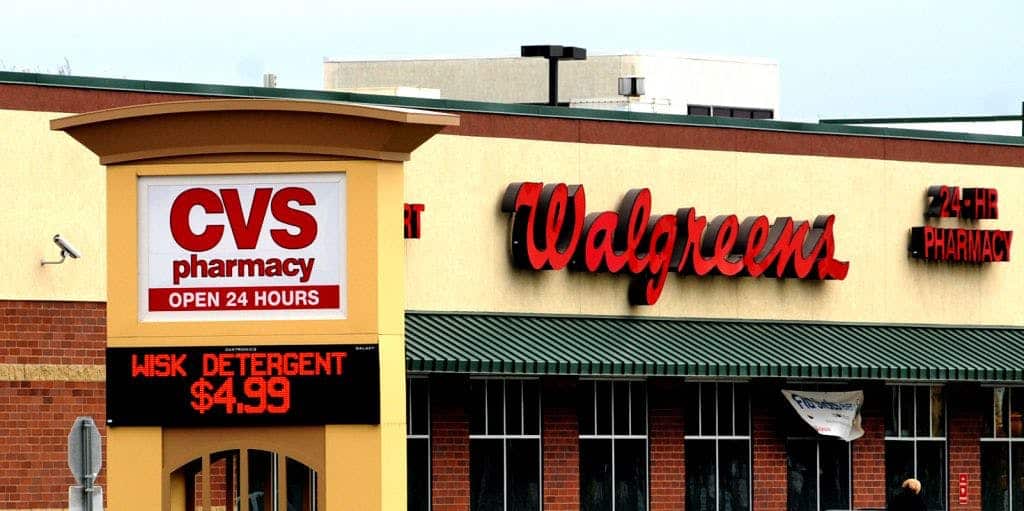
Last week DoorDash sealed a deal with Walgreens to offer “on-demand delivery of thousands of Walgreens items on DoorDash,” according to a DoorDash blog post. The Walgreens deal follows a similar arrangement with CVS announced last month involving about 3,000 grocery and other non-prescription inventory items.
Walgreens and CVS are top dogs in the retail pharmacy business, with more than 16,000 locations combined. But as we know, these are not really pharmacies as much as they are convenience stores that also fulfill prescriptions. Plus they provide clinics for things like flu shots, school check-ups, and bee stings at many locations.
Door Dash’s Walgreens partnership now covers Chicago, Atlanta, and Denver. It involves about 2,000 inventory items. DoorDash says it has plans to “expand throughout the country to offer more than 5,000 items on the DoorDash app starting with several major markets this summer including Cincinnati, Cleveland, Minneapolis, Oklahoma City, Phoenix, Sacramento, and Seattle.”
The CVS deal currently includes Dallas, Houston, Philadelphia, and New York City.
DoorDash positions these deals as an acceleration of the “convenience” vertical launched in April in response to COVID-related lockdowns. The company said the new vertical is designed to “provide customers with access to the grocery, convenience, wellness, and household supplies they need to care for themselves and their families.”
Chasing the Bigger Prize
So what’s really going on here? As my colleague Neal Polachek pointed out in a Localogy Insider blog post earlier this month examining the Uber Eats-Postmates pairing, we’re in the middle of a massive turf war for control of the last mile. And while the meal delivery space is large, it is nothing compared to the opportunity in grocery delivery.
As Neal wrote:
If every household chooses to order [prepared food] via a delivery app even 12 times a year — up from the current eight times a year — that would yield about 1.5 billion annual orders. At $7 per order, that translates into about $10 billion in revenue for the U.S. restaurant food delivery business.
That’s a lot of money. But when you think about the grocery delivery business, it’s chump change. A family of four probably needs at least $150 per week in food or $600 per month. If you assume grocery delivery is a semi-weekly event, that is 26 delivery orders per year.
The grocery space isn’t exactly a green field. Players like Amazon, Walmart, and Instacart are already well established. However, given the scale of groceries vs restaurants, DoorDash may see its “convenience” vertical as training wheels for entering groceries.
Dumpling: Instacart for Entrepreneurs
As the local delivery wars rage, Dumpling comes at the field from a different angle. The company, based in Berkeley and Seattle, offers personal shoppers a platform to exit Instacart and launch their own personal shopping businesses. It’s kind of a Shopify for personal shoppers.
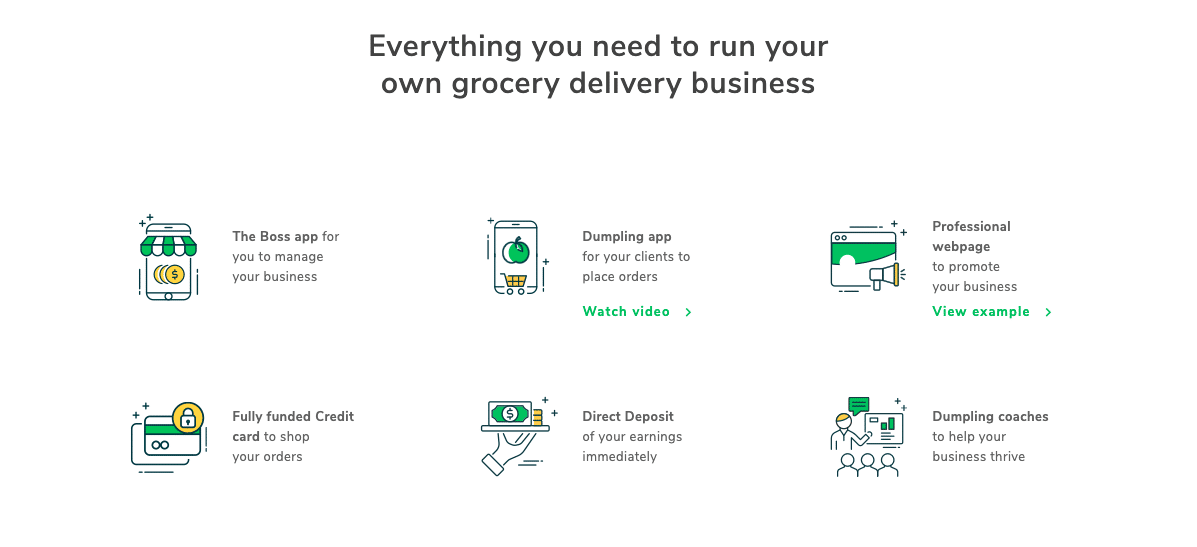
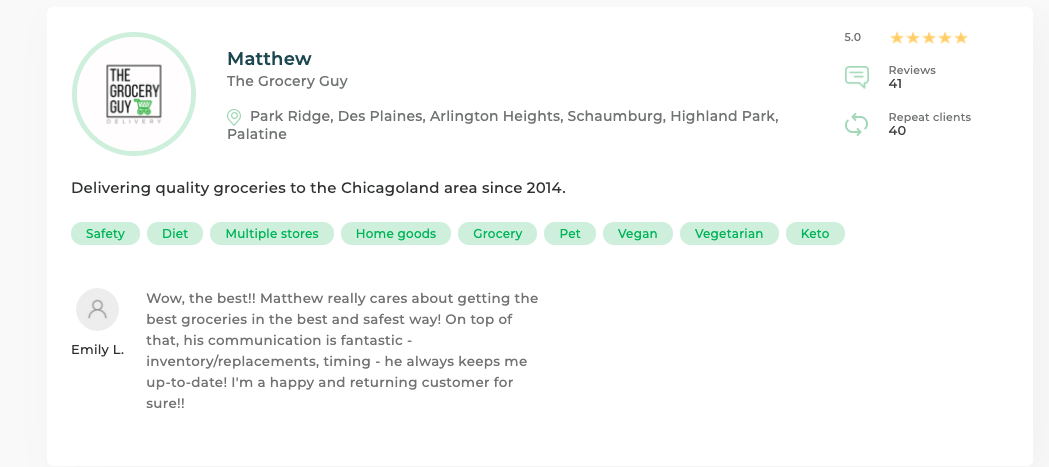
Dumpling charges a $9.99 set up fee to build the business basics. This includes the app set up, website, payments, and so on. Then Dumpling partners pick a plan that is either pay as you go at $5 an order or a Pro plan for $39/month. Otherwise, Dumpling partners are free to run the business as they choose and set their own rates. The key to success with Dumpling seems to be hanging onto repeat customers. In fact, when a consumer looks for a shopper on the Dumpling platform, the metrics they see are reviews and repeat customers.
Will Dumpling Work?
So how tasty is Dumpling for its “entrepreneurs”? At first glance, it seems like a fairly inexpensive way to set up a business. And the company promises on its website that its partners can earn three times per shop what they earn on Instacart.
However, high traffic areas are may fill up fast with personal shoppers. This may be extra so in an era of high unemployment where side hustles suddenly become main gigs. So it may be that Instacart pays less per shop, but it might provide more volume. We anticipate many Instacart shoppers will set up Dumplings accounts but stay in Instacart, at least initially, to make sure they get enough activity. Similar to how rideshare drivers are often on both Uber and Lyft.
We also can see why professional shoppers would rather set their own destiny on Dumpling.
As one Dumpling partner named Matthew Telles told TechCrunch, “Fighting Instacart is my hobby now. Dumpling is now my career.”
Related Localogy Coverage
The Battle for the Last Mile: A Jilted Uber Eats Pursues Runner Up Postmates
Restaurant Cooperative Chomps Back at High Delivery Commissions