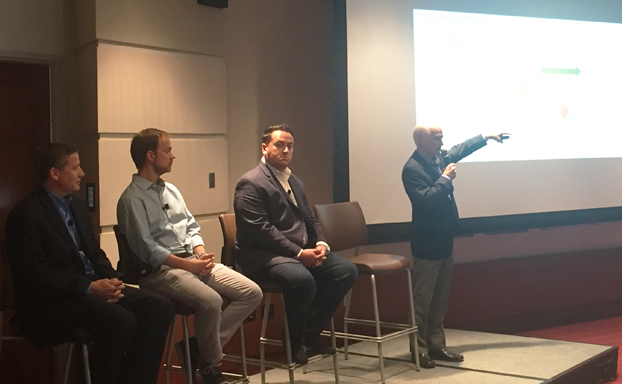
Kicking of the “Solving the Location Data Accuracy Problem” session at Place Conference, Google’s Frank van Diggelen shared some results of a study that looked to identify GPS location data accuracy. What the study found was in open spaces, GPS is accurate within 5 meters and in city environments GPS is accurate within 16.8 meters (the “urban canyon”).
After a quick review of the data, a panel with reps from PlaceIQ, Foursquare, Acuity Brands and Google discussed this issue of location data accuracy. The panel defined the problem as being two-fold: fraudulent data and misrepresented data.
As the study shows, misrepresented data is a result of the limitations of the technology that captures the data. Data fraud on the other hand, manifested as a result of increased demand for location data and therefore location monetization.
According to PlaceIQ’s Duncan McCall, the fraud issues is something that can be addressed today. He suggested the need for a consortium of sorts, to help protect location data vendors from those publishers who misrepresent data. What’s more, he recommended that the industry needs to standardize the process of location data gathering.
It is critical for brands and agencies to understand holistically how location data is gathered, its level of accuracy and how it can be utilized. PlaceIQ recently released a study into the issue of accuracy to help them do just that saying:
There is a large difference between the consumer who simply drives by the supermarket and one who visits on a weekly basis. Certain location technology methodologies will account for this variable better than others. Knowing the real capabilities of a location-based technology and how they account for accuracy variables is important when choosing a location partner to work with.