Millions of beacons are deployed globally and the number continues to grow. A new study found that that the most common use case for these beacons is for understanding how many customers visit locations (retail), their behavior while in-store, attribution and other insights derived from location analytics.
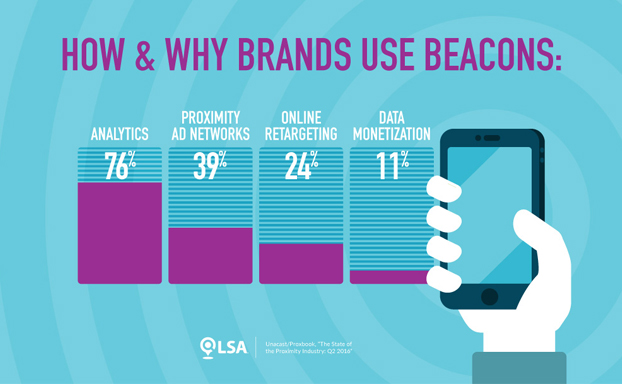
Specifically, 76% who have deployed beacons are using them for analytics, 39% are leveraging the data for proximity ad networks, 24% are using the data to improve online retargeting and 11% for data monetization.
As the data shows, many are realizing the power of location intelligence and data in understanding consumer behavior as well as for understanding which marketing channels are most effective. Location data present an important opportunity for agencies, publishers and advertisers in understanding the customer journey.
The data comes from the Unacast/Proxbook study titled, “The State of the Proximity Industry: Q2 2016.” To access the graphic above, click here.
The 2016 Place Conference will explore cross-platform proximity marketing, indoor experiences and location analytics. Multi-location brands, retailers and agencies can’t afford to miss it. Learn more.