
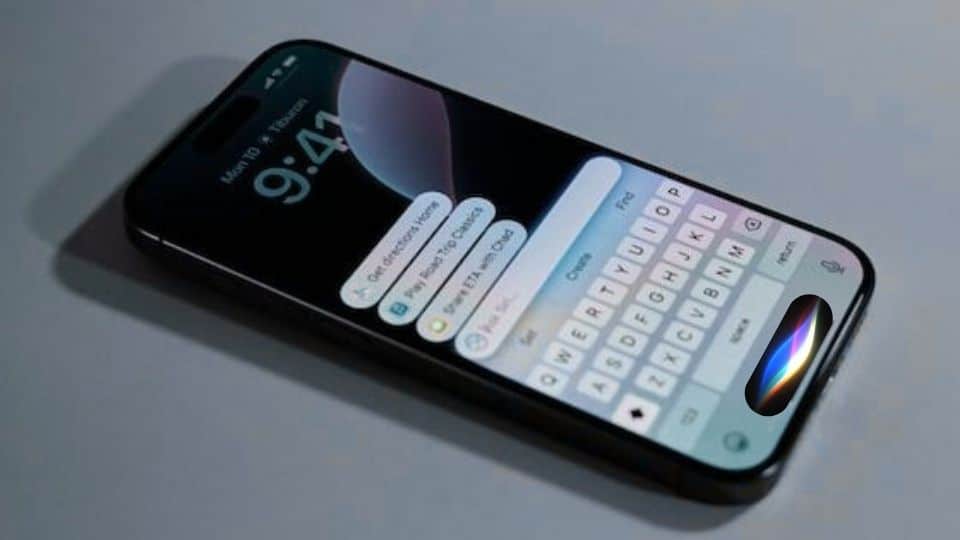
After lots of waiting, Siri AI is finally here. That is… it’s here in beta form. With iOS 27’s open beta, available for the first time this week, Siri AI can finally see the light of day. This will likely be downloaded by a handful of early adopters and AI enthusiasts, but it’s also time to anticipate the wider release.
Stepping back, where are we and how did we get here? After Apple’s splashy but unfulfilled demo for Apple Intelligence at WWDC in 2024, the product sat on the shelf for about two years. This caused much handwringing over the product itself, and Apple’s chances to compete in the new AI battleground.
During that 24-month period of several “oh crap” moments in Cupertino, Apple gradually came to the realization that it’s not an AI company… and this isn’t something you can patch together. Though it loves to own the full stack with vertically-integrated hardware and software, it couldn’t pull it off this time.
So it finally caved and outsourced the AI part, while it remains the hardware front end. That’s not a bad position to fall back on, given that Apple is the touchpoint to about 2.5 billion global users. It can play a part in the AI revolution without all the CapEx spending on data centers and fighting the AI wars.
Layer of Functionality
That brings us closer to the present, where Apple announced a partnership with Google to have Gemini be the brains of its AI endpoints. As it was finally unveiled at WWDC this year – again, two years after its premature and overhyped demo – these endpoints will involve Siri AI as well as Apple Intelligence.
Let’s pause to outline what that will look like, as Apple’s AI efforts will take shape in several places on your iThings. First and foremost is Siri AI (Siri, post-brain transplant) which will be welcome as Siri was laughably inept in its previous forms, especially given rising standards in conversational intelligence.
Beyond Siri AI, there is also the broader entity that is Apple Intelligence – a layer of functionality across Apple products. These include everything from Apple Maps to Wallet – making Apple’s high-scale usage the inputs for Apple Intelligence to process. This sheer scale will quickly ramp up its model training.
For example, you could create a calendar item for a birthday party by simply talking about your event objectives. An item will then be created on your Apple Calendar with the right people (from your contacts), place, and location details (from Apple Maps), and the invitations sent (via Messages or Mail).
Will it Work?
But the question that emerges from all the above is will it work? Will Siri AI and the broader infusion of Apple Intelligence be competitive in the escalating AI arms race? Can it go head-to-head with ChatGPT, Claude, and others? And if so, can it gain market share with such a late entrance to the AI party?
One answer to these questions is that it doesn’t matter… Apple could reach levels that meet its definition of success with AI. In other words, it only has to be good enough to work for billions of global users who will choose convenience over performance. For mainstream users, the former almost always wins.
Apple has that convenience edge because it will integrate AI in ways that users don’t have to think about or actively do anything. This is not only because Apple is already in your pocket, giving Siri AI an on-deck advantage, but because this is the Apple way. You’ll use AI in simple ways that you don’t even realize.
Combine these advantages with Apple’s training scale (as noted) and its privacy edge (as we recently examined). AI – plagued by trust issues – is better delivered by a trusted privacy-first player than one whose existence relies on advertising. Apple is always late to new markets… but it still dominates.