
We recently discovered that Yext has deprecated its Knowledge Assistant tool. These types of moves generally don’t get the fanfare and press attention that new product launches get, but can often represent strategic maneuvers that are worth shining a light on. What can we learn from this move?
Before answering that question, some background and context. In a recent Yext product update, it notified customers that it’s formally deprecating the Knowledge Assistant. For those unfamiliar, the tool allowed businesses to manage their listings through conversational and natural-language inputs.
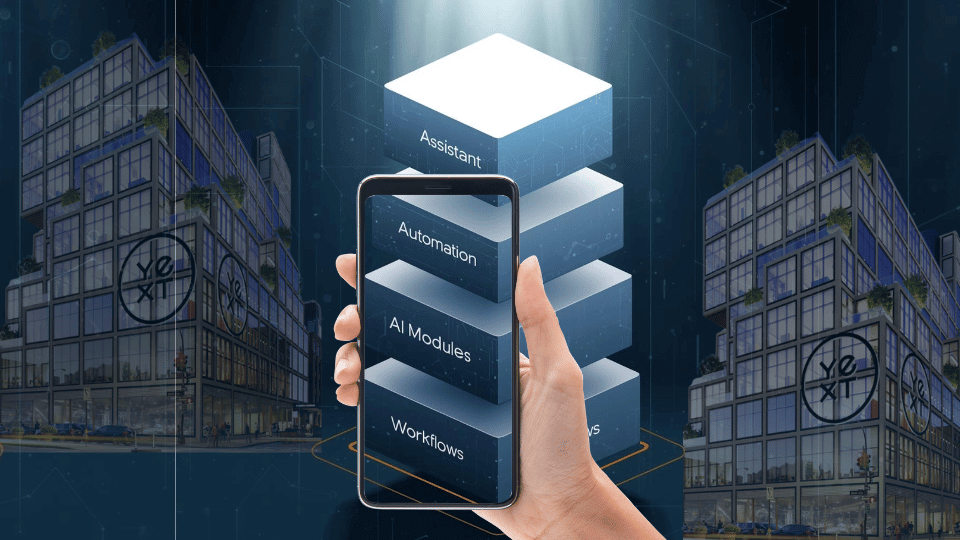
But in its place will be something better. Yext is rolling out several new features that have purpose-built functionality in the tasks that the Knowledge Assistant previously fulfilled. Atomizing these functions provides a sort of modularity that lets Yext users assemble targeted and customized workflows.
The modularity of these functions also makes them permeate Yext’s platform, rather than being siloed in one place. For example, functions include a user-editable schema for SEO, a starting location for map-based locator pages, and a customizable banner section for directory and locator modules.
Beyond the modularity that expands functionality throughout the platform, these atomized functions make it possible for each Yext customer to better customize the platform to their needs. Each can tap into their own customized mix of widgetized functions – leaning more on some than others, as needed.
Will AI Elevate or Eviscerate Search: The New Rules of Engagement
M-Word
In addition to modularity, Yext’s update focuses on another M-word: mobile. Specifically, it will have a mobile-optimized web architecture. This doesn’t just refer to consumers (Yext’s customers’ customers) but businesses (Yext’s customers) and their increasingly untethered touchpoints with the platform.
Put another way, businesses are increasingly managing operations on the go. And with the rise of AI and conversational agents, more and more businesses are expecting to speak commands. Because voice and mobile go together, it points to a world in which AI-driven SaaS products are more untethered.
“This evolution requires a new focus,” Yext SVP, Product, Chris Brownlee told Localogy Insider. “We’re sunsetting legacy tools to concentrate on a future that is AI-driven. Our new mobile app is a key part of this vision; it’s a new way to work, designed to put AI-powered insights and the ability to act on them directly into our customers’ hands, wherever they are.”
In that light, this move shows Yext adapting to an AI-first environment. And that adaptability is increasingly the name of the game for competitive differentiation in a fast-moving AI era. Yext has always possessed this speed and agility, so the move isn’t surprising… but still worth noting and modeling.
“We are at a generational shift in technology that is fundamentally changing the landscape for marketers; from how they connect with customers to the tools they need,” said Brownlee. “At Yext, we are evolving our platform to lead this change.”
Header image credit: Brett Jordan on Unsplash