

While it is very normal to encounter a plethora of opinions on optimization for a page to increase ranking and, therefore, revenue for clients in the local SEO space, providing data to support those opinions is something we seem to be lacking.
I’m not talking about a link to an article where John Mueller “said” it wasn’t necessary – I’m talking about sharing real-world applications and the visibility and leads that come from optimizing pages for “near you” or “nearby” phrases. I’m going to do just that today.
User Behavior & Intent: The Undeniable Foundation For “Near Me” Optimization
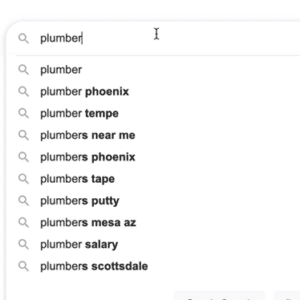
Google serves users “near me” queries via the search suggestions, or “autocomplete” feature, to users on mobile and desktop. They have been showing suggested searches containing near me since 2014, and users have adopted the vernacular and run with it. A Backlinko study found that users chose a query from the “autocomplete” dropdown for 23% of queries made. If you are searching for anything with local intent, you know that “near me” phrases are in nearly every autocomplete.
If we take a look at a few different “near me” queries in Google Trends, we can see that searches have grown exponentially. Searches for “electrician near me” rose from 0 to 100 a day since December 2014. This suggests that users continue to seek immediate solutions nearby for complex issues.
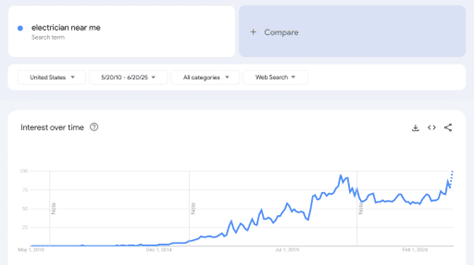
I read an article recently that indicated “near me” searches were trending downward. As you can see from Google Trends, that’s not really the case. It’ll ebb and flow, but as long as Google continues to include “near me” phrases in autocomplete suggestions, we can expect users to choose it, and businesses that prioritize near-me optimization will definitely benefit from it.
The Dismissal of Near Me Optimization
Many SEOs dismiss optimizing H-elements, content, and page titles for “near me” or “near you” as spammy. They believe that Google is smart enough to “get it,” and they can “figure it out.” In my opinion, this is a critical oversight. Google may know where you are, and they may see where the potential customer is located, but this does not automatically mean that they will connect all the dots and deliver the closest business to the searcher’s location in the organic results. Sometimes, we have too much faith in Google’s abilities.
If we’re really looking, Google itself is telling us that “near you” is definitely a phrase worth optimizing for – regardless of what they “say” or “publish.”.

Ignoring Organic Ranking? You’re Handing Money To The Competition
Any SEO that tells you they only worry about the map pack (yes, we see this quite frequently) is leaving out a critical element of ranking. The goal for every revenue-generating keyword should be to rank well in both the map pack and organic search results. If you want to dominate market share in your area, concentrating solely on “Maps” or “Map Pack” is leaving a large segment of opportunity for your competition to snatch up.
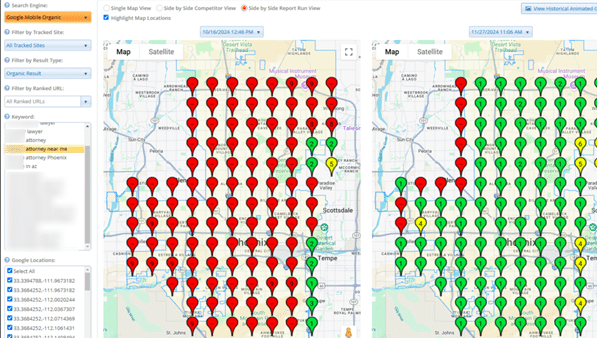
We have even seen some evidence of “near me” optimization impacting map pack rankings. This example is from an exterminator who had optimized location landing pages for near me phrases and linked their GBP to those location landing pages.
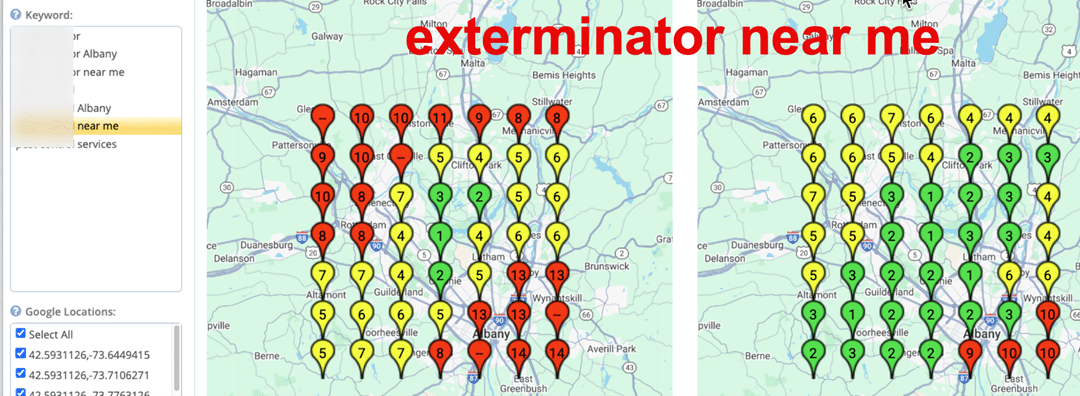
The takeaway here is – there’s honestly no downside to optimizing your website for those “near you” queries.
Case Study 1: Turning The C-Suite Into Raving Fans
A client I’ve been working with in the property management space was struggling with a downward trend in organic leads for nearly a year. I had suggested optimizing for “near you” from our first conversation. The website team encountered pushback from the company owner because it “looked spammy.”
Tired of hearing complaints about leads, the COO decided to implement “near you” optimization for one location. Traffic and leads increased almost immediately after the decision was made – guess when that happened?
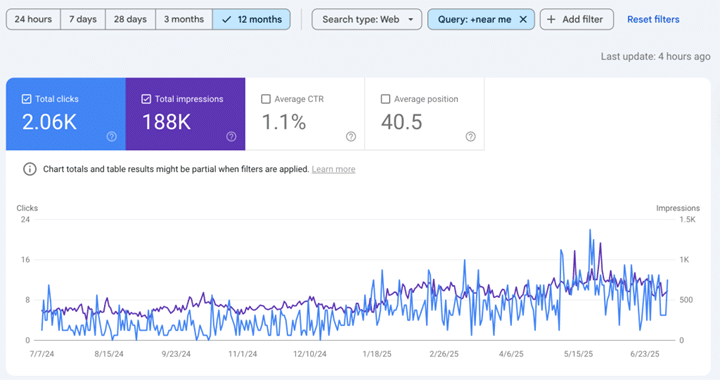
Before the end of December 2024, they were just letting Google “figure it out.” That’s a good amount of clicks they just left on the table – or handed to their direct competition.
Case Study 2: Home Services Contractors Increase Phone Leads with “Near Me” Optimization
One ongoing issue we have with “attribution” discussions is Google’s lack of transparency when it comes to keywords that drive organic traffic to a website, which then triggers a key event such as a form submission, phone call, etc.
Luckily, we have other tools that can help us understand what phrases drive calls that might convert. Enter call tracking. We reviewed some home services clients’ call tracking setups to see what organic queries were driving calls to the business that were likely “converting” calls. Our criteria for a “good” phone call are generally an answered call that is around 2 minutes or longer in duration.
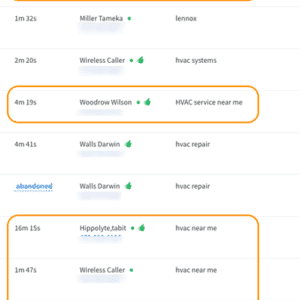
You can see here that “near me” organic queries are all driving quality leads via pages optimized for “near you” phrases. This strategy was the right move and worth giving the qualifier “real estate” on our clients’ pages.
The Real Cost of Inaction
Marketers and business owners who choose to ignore “near me” optimization are ceding market share directly to the competition. If optics are the concern, know that using “near you” works just as well as “near me” for these types of queries. Adding “near you” to any H1, Page Title, or keyword inserted within the content is easy, reads well, and satisfies the requirements to rank well in Google for “near me” queries. Remember our example from Google’s own on-site optimization above? “Near you’ works just as well in these instances.
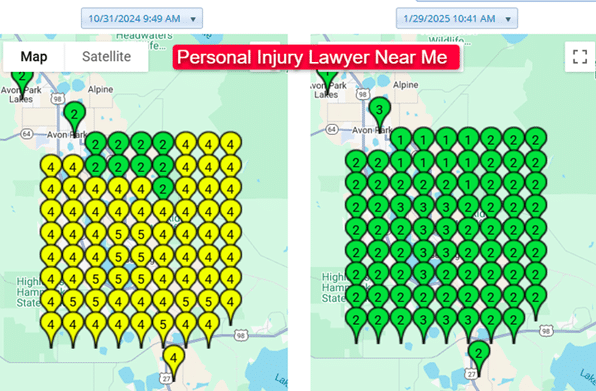
You can see here that when we added “near you” optimization to a personal injury lawyer’s website, they gained enough organic visibility for a query to move up into the 1-3 position organically – even just a few spaces on the first page can make a significant difference in lead volume.
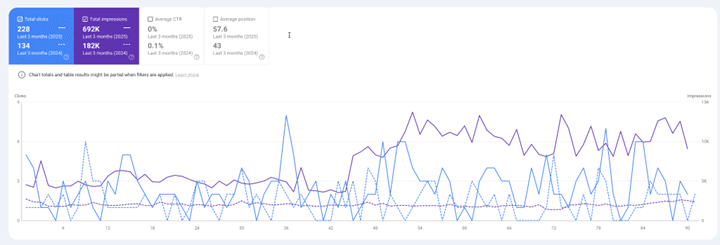
Another lawyer’s overall visibility for “near me” queries improved significantly – 2x more clicks and 5x more impressions for the first three months of 2025, compared to 2024.
If you’re not sure how to start implementing “near you” optimization on your website, we suggest starting with your page title, H1, and H2 elements on a page. Those may give you the biggest impact for your time investment. If you’re ready to graduate to more advanced implementation, try using those phrases as anchor text for internal or external links or optimizing office and local area images with “near you” phrases in alt text and image file names.
Honestly, I don’t want you to just take my word for it and point to this article as the gospel on “near me” optimization – use this strategy as a hypothesis to perform your tests. Did organic ranking for “near me” terms increase when you added it to the content on the page and the page title? I bet it will – and if it doesn’t work, I encourage you to reach out to me via social media (I’m @CarrieHill on Twitter) and let’s take a look.