
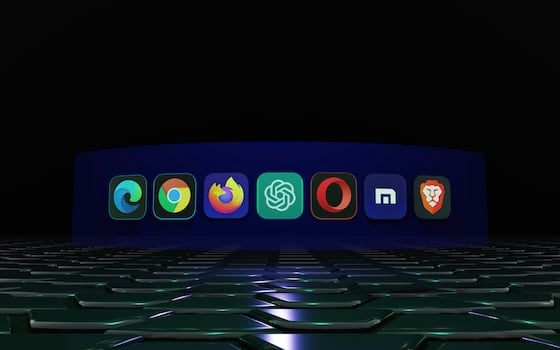
Following closely behind Perplexity’s new pricing tier that we covered yesterday, the company has teased its latest offering: the Comet AI browser. Then, in a matter of hours, Reuters reported that OpenAI – not to be outdone – has plans for a browser of its own. Welcome to the AI era’s browser wars.
But questions remain. What are these browsers, and what are they trying to accomplish? At this point, there’s more info about Perplexity’s browser that it deliberately announced (versus OpenAI’s press leak). Known as Comet, it’s available in Perplexity’s new $200 per-month premium tier, covered yesterday.
In both cases, the general idea is to rethink the role of the browser in an AI-first world. In other words, these are meant to be native AI browsers, as opposed to legacy browsers that retrofit themselves with some AI. That last part is Google’s playbook, and is what Chrome has already done to some degree.
One Giant funnel Opening
As for the native approach, it means replacing manual browsing with agentic AI functions that act on behalf of users. That could involve agents that are prompted to achieve an outcome, then complete multi-step workflows. Think: finding the best price on a pair of sunglasses or planning your vacation.
These things can already be done with AI engines, but not necessarily integrated at the browser level. That integration can mean a few things, such as unified workflows and convenience. Perplexity also notes that Comet’s model training can happen locally, which means that it’s (mostly) privacy-friendly.
Another advantage in owning the browser is customer acquisition. Freemium models from the likes of OpenAI and Perplexity are elevated with a greater top of the funnel. And a browser is basically one giant funnel opening to drive users towards paid products, including the $200/month power-user tiers of both.
Of course, they’ll have to be careful of that last part because it’s what got Google in trouble in an antitrust sense. Given that OpenAI and Perplexity are on pace to become tomorrow’s big-tech targets, the positioning moves they take towards growth and market share gains could come back to bite them.
Google Goes to Washington: A Conversation with Andrew Shotland
Time to Strike
But most of all, browsers allow Perplexity and OpenAI to circumvent Google as the user touchpoint. Given that they’re increasingly competitive with Google, they don’t want it to own and control the vessel through which they’re delivered. That logic could extend further down the stack, but it’s browsers today.
Speaking of Google, it comes into this story in another way. By launching their own browsers, Perplexity and OpenAI are taking the fight to the browser market share leader, which of course is Google. As such, it has the most to lose from new browser entrants, especially powerful ones like Perplexity and OpenAI.
The timing could also be right for these challengers to strike as Chrome is in a weakened position from the antitrust scrutiny noted above that zeroes in on Google’s ownership of the browser. This was likely timed strategically, and there’s a lot we don’t know. But so far, it’s a consequential development.
Header image credit: BoliviaInteligente on Unsplash