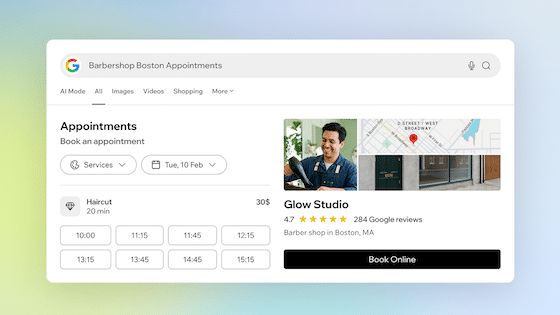

For years, local keyword targeting has followed a predictable formula. If you run a plumbing business in Seattle, you optimize for “plumber Seattle.” If you’re a personal injury lawyer in Chicago, you target “personal injury lawyer Chicago.”
These types of short, geographically-specific search terms have worked well for a long time because they reflect how people have traditionally searched and how Google has returned local results.
But now, AI-driven search is shaking up that formula. Tools like Google’s AI Overviews and ChatGPT are training users to search differently, using longer, more conversational queries that resemble real speech.
This shift toward natural language changes how we should think about local keyword targeting for SEO. It doesn’t mean traditional industry-related and geo-modified local keywords no longer matter, but to show up in AI-generated results, you need to think beyond two- or three-word phrases when it comes to optimizing.
How AI-Driven Search Behavior Is Changing Local Keyword Targeting
We’re currently seeing a growing preference for more natural, informational searches that reflect real-life situations. A user might now ask an AI assistant something like “What’s the best family dentist near me who takes nervous kids?” instead of searching Google for “family dentist near me.”
These types of queries, often called long-tail or conversational keywords, are highly specific, less competitive, and better aligned with the actual language people use when talking to AI.
The challenge is that, because of their relatively low traditional search volume, these conversational keywords don’t always show up in keyword research tools, so they aren’t on many local businesses’ radars. But they matter, and they’re starting to influence which businesses get featured in AI-generated responses.
Short Local Keywords Still Matter
Before going too far down the conversational keyword rabbit hole, it’s important to be clear: short, industry-specific and geographical keywords are still critical to local SEO. Terms like “electrician Brooklyn” or “family lawyer Vancouver” continue to drive map pack and organic search visibility and support your core local SEO strategy.
However, to adapt to AI-driven search, you need to build on that foundation, taking a more comprehensive approach to keyword targeting, especially when it comes to content.
How To Use Conversational Keywords To Boost Local AI Visibility
So, how do you actually use long-tail, natural language keywords in your local SEO strategy? The good news is that you don’t have to completely rewrite your website, and much of what you’re already doing can still help you appear in AI-generated search results. You just need to think about where natural language keywords fit into your existing content structure.
FAQs are a great place to start. For example, a landscaper might include a FAQ for “What should you do if your lawn has brown patches after a heat wave?” and provide a clear, conversational answer. These sections not only help customers, they also give search engines and large language models (LLMs), or AI tools, rich, context-aware content to draw from.
Blog posts and service pages also work well. For instance, a pest control company could write an article titled “How to Tell If You Have Carpenter Ants in Your Basement and What to Do About It.” That kind of title reflects a real-world concern and can surface in both organic and AI-based results.
Customer reviews matter to AI, too. A review that says “They fixed my leaking pipe in the middle of the night over the weekend.” is full of useful context that can help AI associate your business with emergency plumbing services. Encourage satisfied customers to leave detailed feedback, and make sure to diversify reviews across a variety of reputable sources, as AI responses frequently cite trusted platforms like Yelp and Tripadvisor.
The Importance of Tracking Your AI Visibility
One of the biggest challenges with optimizing for AI-driven search is that visibility is harder to track, making it more difficult to measure success. With AI, you don’t “rank” for queries in a traditional sense, and most rank trackers don’t show you the whole picture. For actionable insights, you’ll need a local SEO tool that specifically monitors local AI visibility.
It’s also important to start thinking of AI visibility as its own metric. Instead of focusing solely on traditional local rankings, pay attention to where your business is mentioned in AI-generated summaries and responses, which kinds of queries trigger those mentions, and what types of content, reviews, and other sources are getting cited by AI. Then, use these insights to optimize and increase your brand’s AI visibility.
Final Thoughts
Traditional local keyword targeting isn’t disappearing from local SEO, but it is expanding. Short-tail, geo-modified keywords still help businesses rank, and that’s not changing any time soon, but if you want to show up in AI Overviews, ChatGPT responses, and other types of AI-generated answers, you need to start thinking about how people are searching now through full sentences, real questions, and hyper-specific context.
Adapting to AI-driven local search doesn’t mean choosing between traditional local keyword targeting and AI-focused optimization, but rather implementing strategies that work for both. Build a strong base with classic local keyword optimization, then expand on it by reflecting the way your customers speak and search today.
AI is increasingly the first step in local discovery, and optimizing for the right long-tail phrase can be just as valuable as ensuring your Google Business Profile appears in the local pack!