
The figures are in: Cyber week has reached record consumer spending levels – a positive sign amidst a softened economy. Indeed, several predictions called for a dip in non-essential spending this holiday season. The evidence looks good so far, though there’s still time for declines (more on that in a bit).
Specifically, $9.8 billion was spent on Black Friday, which was up 7.5 percent from last year. Zooming out further, total holiday shopping to date – including Veterans Day, Thanksgiving Eve, Thanksgiving, and Black Friday – has reached $86.6 billion. Cyber Monday figures will be updated soon.
In fact, Cyber Monday (the day that this article publishes) is projected to reach $12 billion in spending. Shopping on this day accounts for a growing share of holiday spending each year, congruent with the general growth in eCommerce versus physical retail spending. Cyber Monday is all about eCommerce.
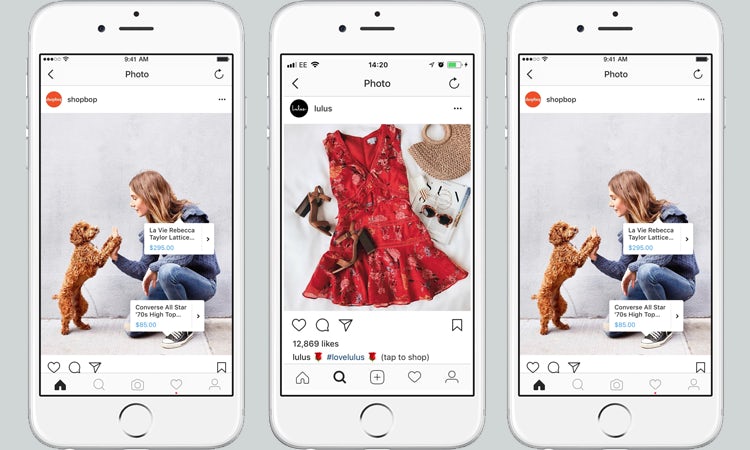
Reflecting a similar trend, mobile purchases continue to ratchet up. They now account for more than half of the $98 billion in Black Friday spending. This could reflect growing comfort levels with shopping and transacting on smartphones, as well as the state of consumer mobility last week (read: holiday travel).
Highlight Reel
All the above comes to us from Adobe, which tracks holiday consumer spending every year. And its figures are corroborated by Salesforce, which tracks the same spending levels but with a different methodology. It reports $71 billion in global Black Friday spending, 79 percent of which was mobile.
As for other findings from Adobe’s report, here’s our highlight reel.
– On the Thanksgiving holiday, U.S. consumers spent, $5.6 billion, up 5.5% year-over-year.
– Black Friday brought in $9.8 billion in revenue, $5.3 billion of which was through digital/eCommerce, including mobile.
– Buy Now, Pay Later (BNPL) spending accounted for $79 million in Black Friday transactions, a 47% increase over last year.
– When all is said and done, total e-commerce spending for the holiday season (including Cyber Week and the rest of the year) is projected to reach $221.8 billion.
– This is up 4.8% from the $210 billion last year and $205 billion in 2021.
— Deep discounts continue to drive much of the above in the current price-sensitive environment, with sales as high as 35% off MSRP.
— For the same reasons, consumers are choosing cheaper or free standard shipping more than in previous years, to the tune of 80.5% of all orders.
– This is not only aligned with a softer economy but also earlier shopping… there’s less need for rush orders.
The Bad News
Back to the part about uncertainty in the remainder of the holiday season, we could see declines. We say that because a softened economy could amplify price sensitivity across the board. If true, that would drive cyber-week discounted shopping – as shown in the above figures – but diminish other spending.
We say that simply because it’s a trend we observed last year. In a similarly-weak economy (with arguably greater uncertainty), last year likewise saw record cyber-week spending. But that was followed by weaker-than-average spending in the remainder of the holiday season as consumers held back.
We’ll have to wait and see if that bears out this year. Meanwhile, aside from the sheer numbers, a few notable trends emerge. For one, digital shopping (both shopping activity and transactions) continues to grow in share. That goes for mobile shopping and eCommerce more broadly – both Covid-accelerated.
As for methodology, Adobe works directly with hundreds of online retailers and bases its calculations on 1 trillion+ visits to retail sites, including 100 million+ SKUs and 18 product categories. Salesforce meanwhile utilizes its customer integrations to track spending data on about 1.5 billion transactions.