Henry Blodget once said that advertising on Google is like advertising in a store, while advertising on Facebook is like advertising at a party. Putting aside Facebook’s ad targeting strengths, Blodget’s main point is all about content and context. Brands and SMBs should advertise where user intent is aligned.
Though Facebook is the brunt of Blodget’s hot take, its sister network Instagram is having the last laugh. Though it has “party” vibes, Instagram has somehow conditioned its users to see it as a product discovery engine. Its feed is filled with fashion and food products… and users lap it up.
Instagram has done this by cultivating a use case around serendipitous discovery, which carries a sort of fashion and food lust. What are my favorite Instagram influencers doing, eating, and wearing? It has become an obsessive form of entertainment with commercial influence naturally baked in.
That magic formula goes beyond influencers. Sponsored posts follow in their wake to similarly hawk products. But to do so effectively, a set of standards has emerged for the most effective posts, usually involving entertaining clips and stories with fast-paced imagery or time-lapsed video.
Modern Equivalent
To wrap some numbers around all the above, data has come to light that validates Instagram’s strengths as a shopping channel. Specifically, Meta reports that more than 1 billion Instagram users actively engage with businesses. To put that in perspective, it’s about 1/7th of humans on the planet.
Of those 1 billion users, about 90 percent follow at least one company. 83 percent of users meanwhile discover products on Instagram. That discovery component is key, as it’s the result of the serendipitous food and fashion lust noted above. It’s the modern equivalent of flipping through a fashion magazine.
In terms of activity and frequency, Meta says that about 130 million Instagram users tap on shopping posts at least monthly. And one thing that makes these engagements so powerful is that they’re actionable. Like other social channels, posts on Instagram are increasingly transaction-enabled.
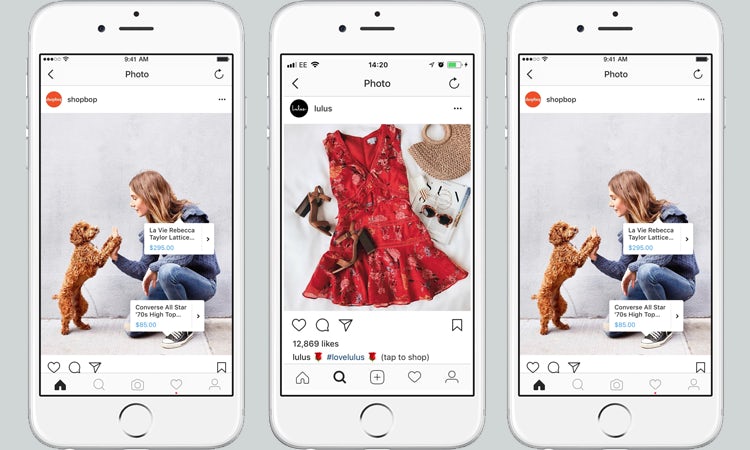
Add to that, the fact that Instagram has further stimulated commercial activity through its business-facing features. These include the ability to tag products in posts, make posts and stories more shoppable, and ways to interact directly with customers through messaging functions.
Conversational Commerce.
Zeroing in on that last point, direct messaging engagement with users has amplified the commercial prowess of Instagram. This of course is the ongoing opportunity around conversational commerce. Meta reports that almost half of its users who shop on Instagram have messaged businesses directly.
Among those, 40 percent of conversational-commerce users made their first purchase through chat. This can include a range of customer queries including pricing info, product details, or customer service on existing orders. 35 percent of Instagram users have DM’d a business to get a “quick resolution.”
All of this activity continues to knit messaging into the social commerce fabric. It engenders consumer confidence given the ability to easily reach out for questions or support. And smart brands have re-engineered their customer service infrastructure around conversational commerce.
Of course, all the above involves a combination of human and AI-driven conversational commerce. Chatbots are integrated to handle simple queries or to qualify inquiries before tapping human support. But given the rise of AI-fueled messaging like Chat GPT, this could all get a lot more interesting soon.