
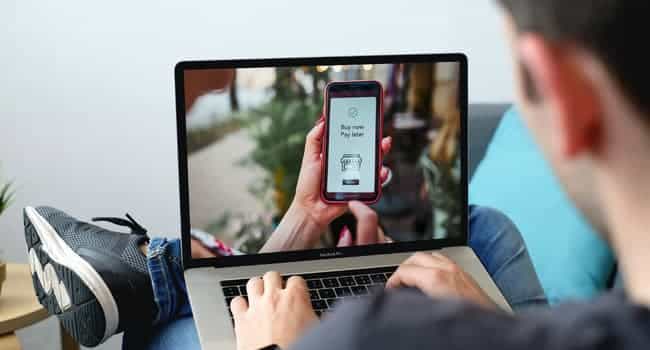
Most of us see buy now pay later as a tool that helps GenZ consumers buy handbags, home electronics, and other very consumer-oriented goods. And over the years, consumers have used BNPL to buy everything from travel to health care. And now, God help us all, even gasoline and groceries.
BNPL has attracted more scrutiny and criticism as its use has grown. Critics are especially alarmed that BNPL increases basket size. This means a consumer that would balk at buying a pair of $1000 shoes if they had to pay it all at once would jump at it if they can pay in four installments. This may not be a bad thing for the odd major purchase. But once consumers pile up multiple BNPL accounts, critics start tossing around phrases like “debt bubble”.
But perhaps the most consequential and least appreciated shift in the buy now, pay later space has been from B2C to B2B. Arguably, BNPL is as transformational for small businesses as it is toxic for consumers.
Investors seem to be wising up to the idea that B2B is the next B2C in BNPL.
Earlier this year, for example, we wrote about the UK-based B2B BNPL Playter raising a $55 million funding round. Its investors include one of the firms backing B2C BNPL unicorn Klarna.
“BNPL for business is a completely different concept to B2C BNPL. Right now, there are very few B2B purchases happening online,” Playter founder Jamie Beaumont said back in July.
“We’ve created a platform that gives total control to businesses to dictate what payment terms they want to have, helping them pay over 6 to 12 months, whilst their suppliers are still paid within 24 hours. With this superpower, we help businesses that want to scale regardless of the market conditions.”

BNPL is the New Trade Credit
This week we caught up with Brandon Spear CEO at TreviPay, a global B2B payments platform based near Kansas City. He had some interesting perspectives on BNPL’s place in the B2B payments ecosystem.
Spear’s firm also offers B2B BNPL as part of its suite of services. Many describe B2C BNPL as a digital version of layaway (which is kind of is but not really). Spear sees B2B BNPL as a digitized form of something just as old as layaway is in the B2B world — trade credit.
“Trade credit has been around for hundreds of years. I think what’s changing is the way buyers and sellers interact with one another,” Spear said. “And the velocity of that interaction is increasing the demands of how, you know, for example, 20 years ago, if you applied for trade credit for the customer that probably asked you to fill in a credit application and it would take two weeks. Now there’s an expectation that you will get underwritten in real-time, you will know what your credit line is, and you can check out with a trade credit option.”
No Frivolous B2B BNPL Purchases
Spear sees BNPL playing a vital role for businesses. In particular small businesses. And he notes that the B2B buyer’s perspective bears little resemblance to the consumer’s.
“The big difference with this, which I think is important to point out, is in most cases, what’s being bought care are not frivolous things,” Spear said. “It’s essentials, it’s stuff that you need to run your business. And so generally, when you see bad debt occurring in this space, it’s because something bad has happened to that customer. And so it’s less of buying something they couldn’t really afford. It’s probably because something catastrophic is going wrong in their business.”
And for small businesses, Spear echoes Beaumont’s point that B2B BNPL can become a real cash flow lifeline. Especially when few other credit sources are available to them. He said both enterprises and small businesses use BNPL, but for one it’s nice to have. For the other, it’s often a must-have.
“Enterprise cares more about the digitization of the process, ease of use, and customer experience. Those types of things,” Spear said.
“That’s really what they are buying from a provider like us. Small Business tends to be saying, ‘Yeah, that’s great. But I want the working capital.’ The enterprise has other working capital options. That’s the nub of the point, they can go borrow, and they can borrow at LIBOR plus 100 basis points, and that’s not available to the small business.”