Instagram is experiencing a bit of drama this week over UX updates that give it more of a TikTok vibe. But amidst all that, it’s also making quieter moves in its ongoing shoppability quest. Specifically, its latest feature will let shoppers buy products from merchants through Instagram direct messages.
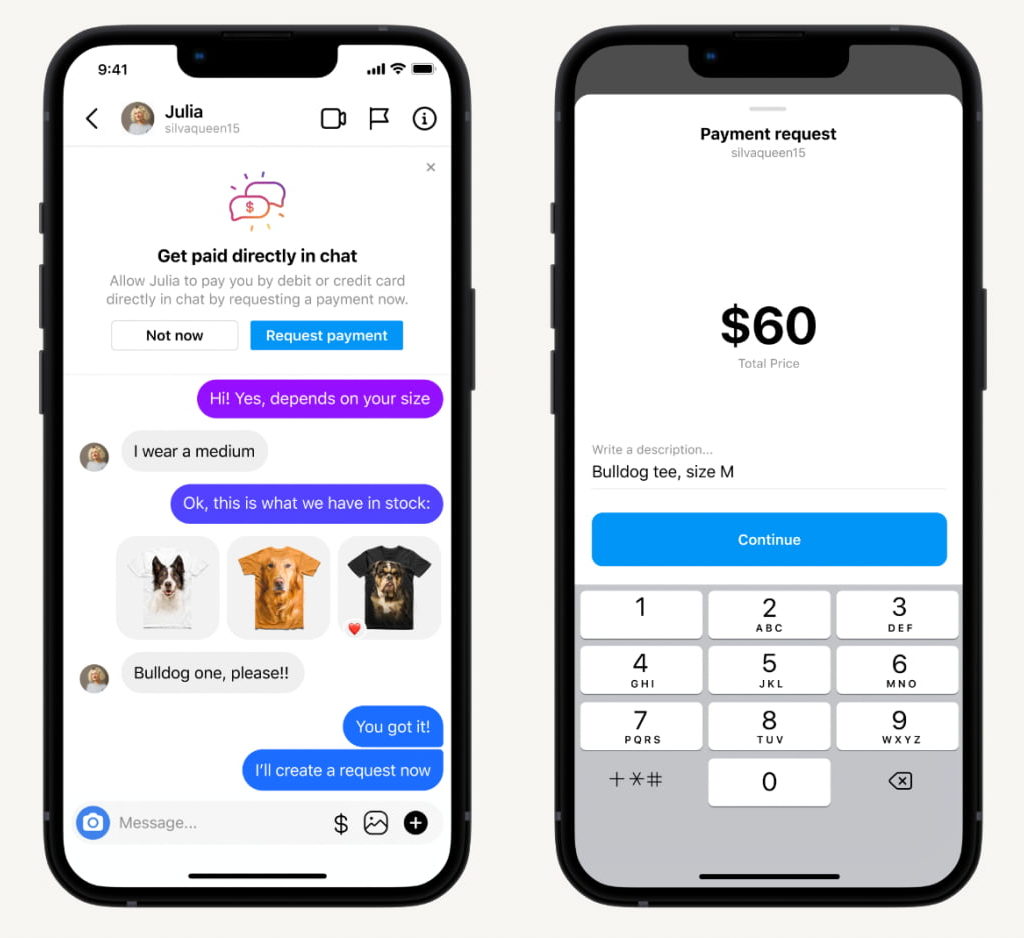
Known as “payments in chat” users will be able to purchase things directly from SMBs, and track order status, through the familiar DM format. Familiar is the key term, as messaging threads have become a comfortable place for users, especially the camera-native and increasingly buying-empowered Gen-Z.
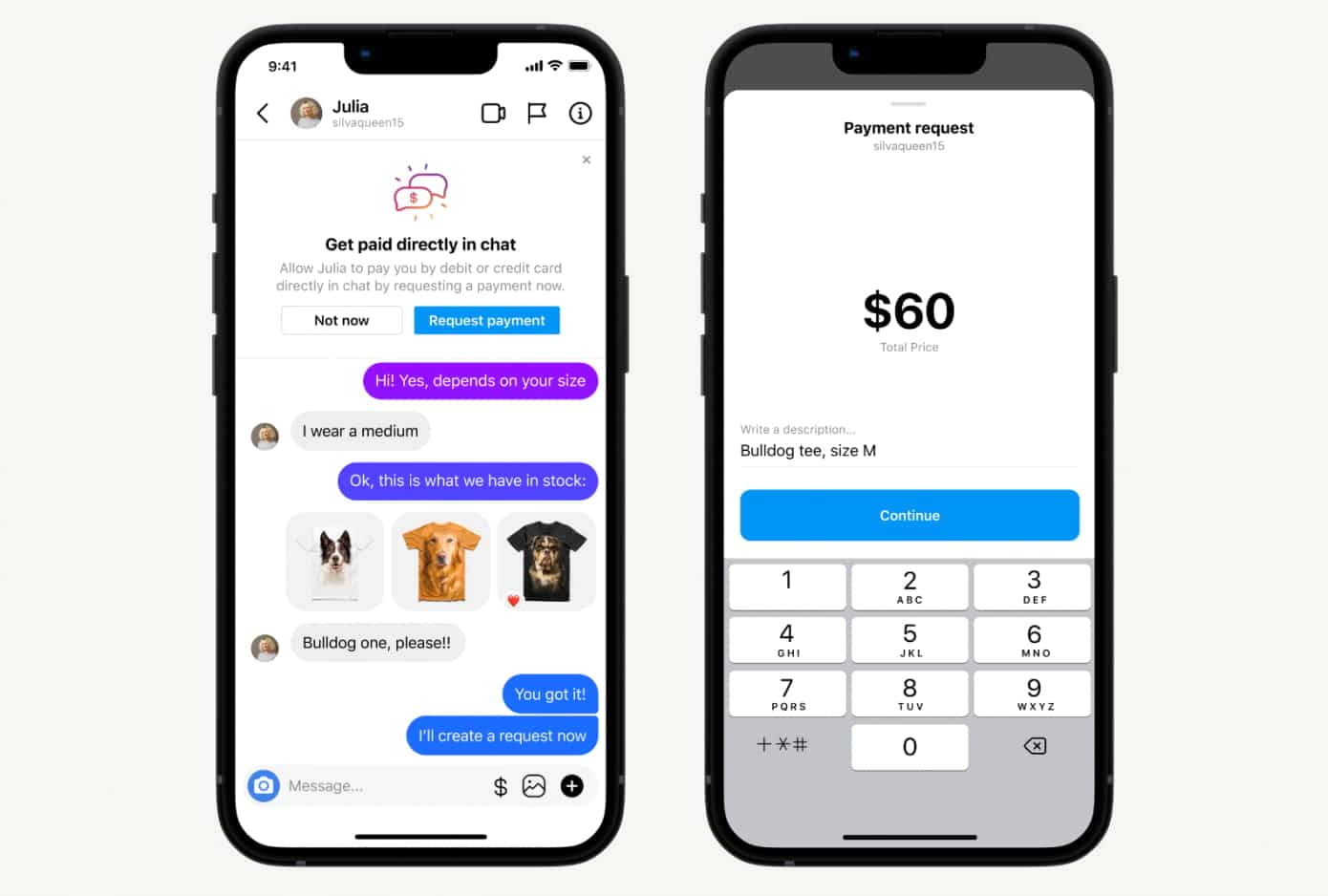
The way this works is that users can send a DM to a given merchant after seeing something they want to buy on Instagram (a growing use case… more on that in a bit). The seller can then create a payment request, which triggers a “pay” button that appears in the messaging thread to initiate the transaction.
Users can then enter their address and payment details (stored for future transactions so they only do it once) and finalize the transaction. They can then return to the same message thread to do things like check order status, shipping, questions or any other future customer service queries to the merchant.
That last part is notable. Given that messaging is inherently a communications format, it’s native to customer service. With orders and payments brought into the messaging environment, it becomes an elegant and self-contained place to contact a merchant about an order… all the details are already there.
Fashion & Food
Panning back, this move from Meta is notable in that it builds on a few trends: shoppability and conversational commerce. The former is all about making everything shoppable, including transactional functionality that invades several forms of media – from social feeds to streaming TV.
As noted, Instagram is increasingly a place to discover products. Meta has done a good job conditioning users to treat it as a place to discover products – especially in verticals like fashion and food. Like Pinterest, the benefit here is that buying intent is naturally high so monetization can be added naturally.
On to the second macro trend, conversational commerce, the prevalence of messaging has made it an opportune channel for B2C engagement. That includes asking businesses questions that might otherwise require a phone call, or – in this case – transactions that happen right within the thread.
Meta also sees “payments in chat” as a way to get more merchants on Instagram. The feature is currently available to merchants who don’t use its formal Shops program, but this could be a hook to get them to do so. By easing them in through frictionless transactions, they may decide to elevate their presence.
And speaking of other motives, this move also pushes Meta Pay forward. This is Meta’s native payment platform that can be used for transactions across its apps. Here it has economic advantages in having its own payment processing. So expect this to be offered and incentivized in the new pay/chat function.