

Earlier this month, Sequoia Capital partner and ex-PayPal CFO Roelof Botha and a few of his partners gave a 52-slide presentation called “Adapting to Endure” aimed at the VC’s portfolio companies.
The message was, essentially, that there may be some interesting times ahead. So here’s a playbook for how to get through it. You can look at the presentation here. We’ll also summarize its key messages in this post.
Sequoia is one of the legendary Silicon Valley VCs, having helped launch Zoom, DoorDash, Apple, Airbnb, Stripe, and countless others.
The items in quote marks below are verbatim from the presentation notes.
Botha kicked off the presentation by recalling that the dot.com crash of 2000 was a blessing for PayPal, in that it compelled the company to get serious about its costs, its products, and its path to scale and profitability.
“Given the market tumult of the last week and ongoing macroeconomic pressures, we felt it would be valuable to bring our community of founders together to share insight into what is happening and why, and more importantly, what it means for you about the road ahead,” Botha said.
“This is not a time to panic. It is a time to pause and reassess.”
Of course, it’s alarming whenever someone says that this is no time to panic. Those words are rarely uttered when there is nothing to panic about. But it’s also true that a bad situation is never made better by panicking.
Situation Report
Botha and other Sequoia partners first described the situation as they see it before prescribing measures companies should take to protect their position.
One input into the current situation was the Covid stimulus. This flooded the economy with cash, which in turn drove up asset prices — in particular “pandemic” stocks that support work from home or eCommerce.
Then, as the economy re-opened, “this liquidity creation manifested itself in bottlenecks and distortions throughout the real economy, leading to supply chain challenges and price pressures as demand overwhelmed supply.”
We’ve all had a front-row seat to this movie.
Now, as inflation rose, the Fed stepped in to quash inflation with interest rate hikes. This means that seemingly overnight capital went from being very cheap to very expensive.
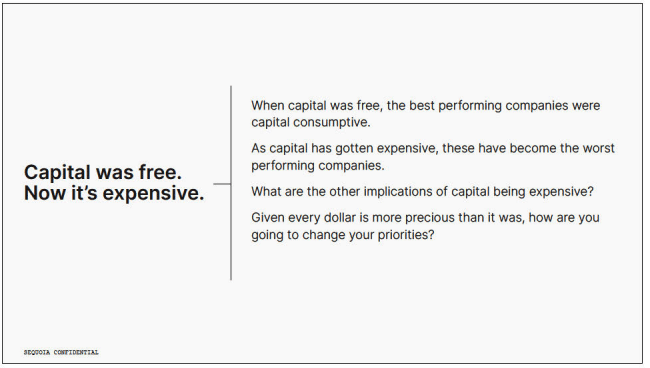
This led to the best-performing assets — particularly technology companies — suddenly becoming the worst-performing assets.
“Simply put, the world is reassessing how business models fare in a world where capital has a cost and reconsidering how much credit to give companies for profits many years into the future,” Botha said.
Ok, we’re with you so far Sequoia. So what should founders do now that the easy money spigot has been shut off?
The Sequoia message is something that tends to happen in cycles. Suddenly, growth at all costs stops being cool. While sustainable, profitable growth retakes the throne.
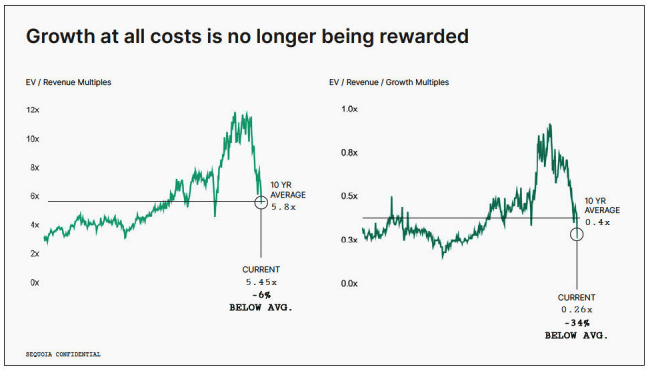
“investors are looking for companies that can produce near-term certainty,” the Sequoia partners said. “Capital is becoming more expensive while the macro is becoming less certain, leading to investors de-prioritizing and paying up less for growth.”
The partners add to the sober picture by emphasizing there will be no quick return of cheap capital. And the recovery will be a long one.
So again, what’s a founder to do? Sequoia offers some advice. And it is based largely on the experience of surviving previous tech blowouts in 2000 and 2008.
The Sequoia partners say the companies that will pull through this period will share the following qualities.
No 1. Adaptability
They even quote Darwin. “It is not the strongest of the species that survive, nor the most intelligent, but the one most responsive to change.”
No. 2. Quickness
Companies that are able to move fast will be in the best position to do what’s necessary to survive before it’s too late. This means taking on the tough decisions right now.
“Do the cut exercise [projects, R&D, marketing, other expenses]. It doesn’t mean you have to pull the trigger, but that you are ready to do it in the next 30 days if needed. In 2008 all companies that cut were efficient and better. Don’t view cuts as a negative, but as a way to conserve cash and run faster.”
No. 3 Focus
Sequoia recommends acting as if there are only six months worth of operating funds left in the bank.
“When you have just 6 months of cash left, focus becomes incredible. Get that focus now regardless of how much you have in the bank.”
No. 4 Opportunism
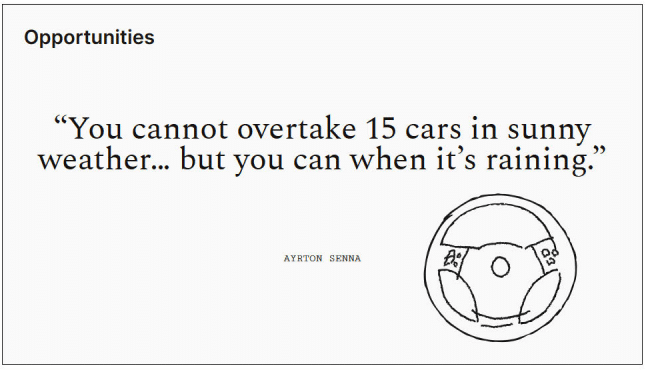
Crises tend to create opportunities. Founders should be tuned in to what opportunities they can extract from the current situation.
“There is opportunity ahead. Recognize it.”
So who thrives in these conditions?
“The founders/CEOs who face reality, adapt fast, have discipline rather than regret. It is a lot easier to preserve cash when you have more than six months left. Recruiting is about to get easier. All the FANG have hiring freezes. Look at this as a time of incredible opportunity. You play your cards right and you will come out as a strong entity.”