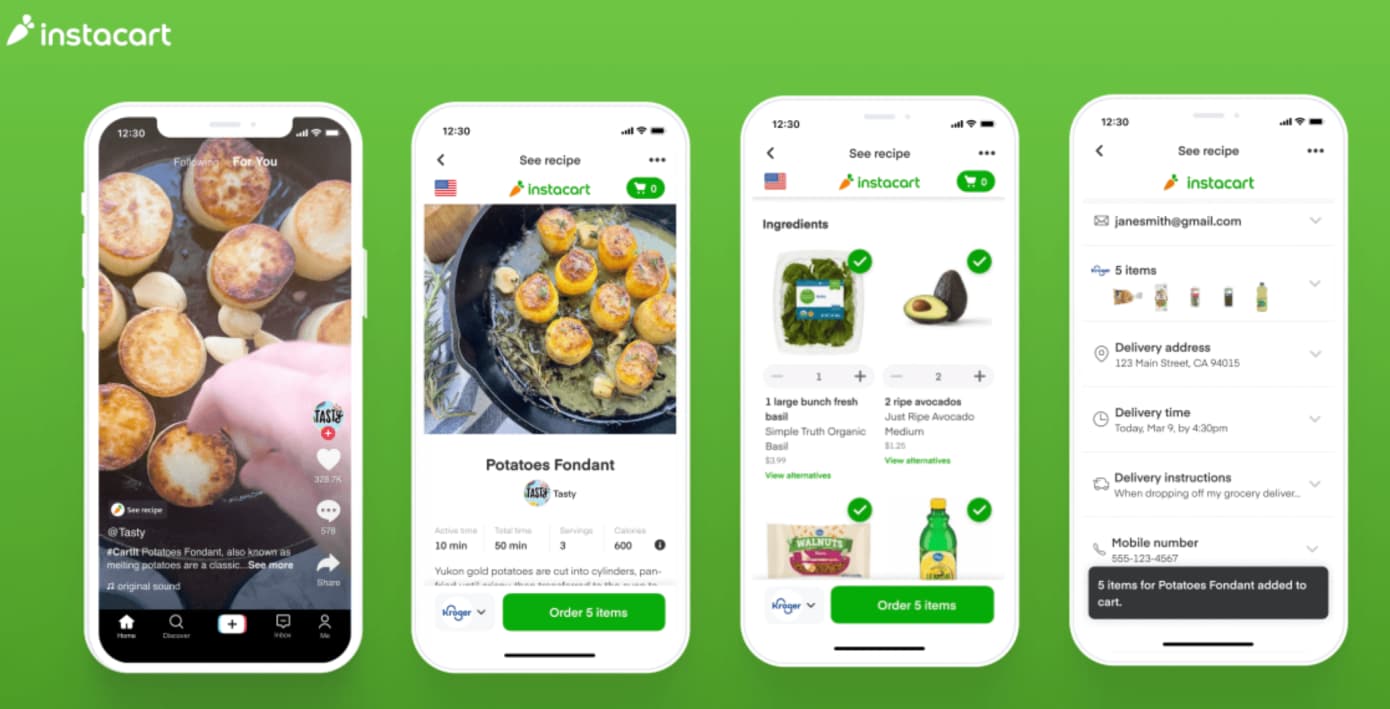
The shoppability trend rolls on. After covering Twitter’s integration of shoppable products in merchant feeds yesterday, TikTok is out with more shoppable content today. Its new integration lets foodie creators link their TikToks to Instacart so that inspired users can order ingredients on the spot.
Known as “Shoppable Recipes, the feature comes from Instacart, using TikTok’s Jump API for third-party integrations. It also involves a partnership with Hearst, which brings in brands like Delish and Country Living. These brands provide the content (dishes & recipes) that fuels the feature.
The way this might play out practice is that a given food creator makes TikTok videos where they prepare dishes for specific occasions (a big category on TikTok). They can then take the next step in making that content actionable with recipe information and an easy way to order ingredients.
Inspiration to Action
Going deeper, the way it works is that food creators can link shopping lists in their TikTok videos. That happens through buttons that add the required ingredients for a given dish to a user’s Instacart cart. Here, it’s all about making a more direct and frictionless path from inspiration to action.
On the creator end, friction is likewise lessened in their workflow as they can choose recipes from the Hearst-owned food brands noted above. In addition to shoppable buttons on each video, these creators can also link to their TikTok profiles where past recipes can be shopped all in one place.
This essentially sets up food creators as recipe curators, which is aligned with the growing creator economy. In fact, Instacart’s move converges two trends: online creators and shoppability. In that spirit, the next logical step is affiliate marketing programs from food brands so creators can monetize.
Meanwhile, Instacart is angling this move as a “way to make every recipe on the internet shoppable,” and to create ways for its retail partners to extend relationships and touchpoints with hungry consumers. It also says to expect more integrations with platforms that inspire food ideas.
Furniture to Fashion
Back to the broader shoppability trend, it marks the rise of buy buttons and transactional calls-to-action in everything from Instagram Stories to YouTube videos to real world items you point your phone at. The latter continues to emerge in visual search such as Google Lens and Snap Scan.
To be fair, this isn’t a new phenomenon given years of social media giants adding buy buttons to their feeds. This is a natural pairing as people like to share tastes and brand affinity, thus offering products a viral kick. But all of the above has accelerated as it piggybacks on Covid-driven eCommerce inflections.
So expect more shoppable content, especially from feed-based social players and anywhere product discovery and inspiration happen (think: Pinterest, Instagram, etc.). We also expect the trend to continue expanding into new verticals and product categories – from furniture to fashion.
Meanwhile, Instacart’s TikTok integration is in pilot phases with several top-tier food creators. It plans to gradually roll out the program to all TikTok creators. When that happens, we smell marketing and visibility opportunities for food-based SMBs like restaurants and caterers. We’ll be watching for that.