It’s not a new statement that local shopping has transformed over the past year. The question is if it stays that way or if consumer behavior gravitates back towards pre-pandemic habits. We’re talking high engagement with physical-world shopping versus digital-infused processes like curbside pickup and order-ahead.
With that backdrop, Google is out with new data that helps clarify what the local shopping future could look like. This is done through the lens of the consumer behavior that it has tracked over the past several months. Given Google’s operational scale, that’s at least a sizable sample from which to extract insights.
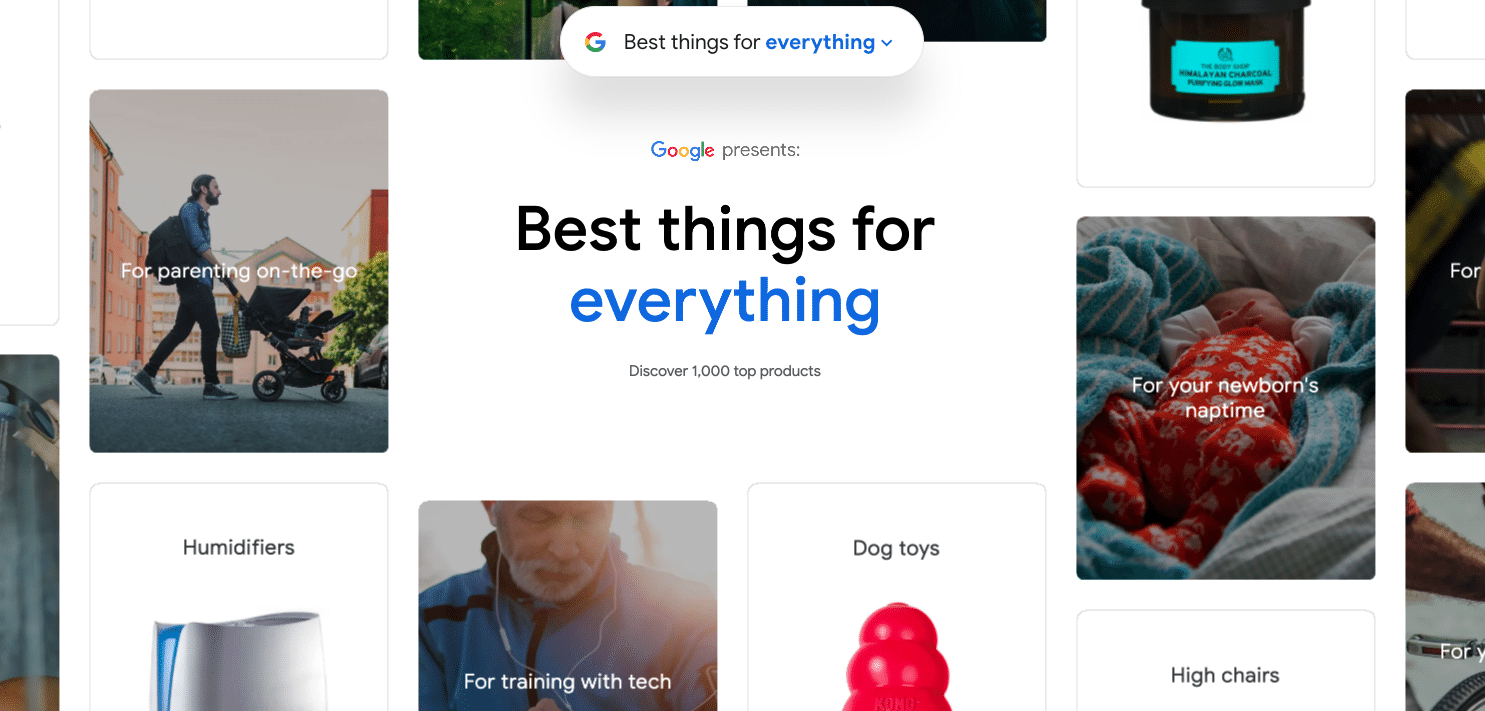
In total, Google says that it helped drive more than two billion direct connections to local businesses each month during 2020. By “local connections” it means phone calls, directions, messages, service bookings and reviews. It also continues to launch new experimental formats such as the Best things for Everything guide.
Same-Day Urgency
So what did Google find out? The report claims that local offline shopping is increasingly-reliant on search as a first step to qualify buying decisions (an admittedly Google-centric finding). Specifically, search interest for Pandemic-friendly fare like “best exercise bikes ” and “best ring lights” are up 100% in the past year.
But one key distinction Google makes is that search isn’t just a tool that’s used for online shopping: It sees increased activity for searches that have intent to find and purchase nearby products. Though this is counterintuitive to Covid-era demand signals, it aligns with same-day urgency to acquire things.
This uptick in offline-intent search notably goes beyond the usual suspects like core search and Google Maps: YouTube is likewise seeing ample local purchasing intent. To further break down the report’s findings for Localogy Insider readers, here’s a summary of the top takeaways in various categories.
Retail
— Searches for “local” + “business(es)” have grown by more than 80% year over year, including searches like “local businesses near me” and “support local businesses.”
— Searches for “who has” + “in stock” have grown by more than 8,000% year over, including searches like “who has Nintendo switch in stock” and “who has gym equipment in stock.”
Restaurants
— Two out of three dining consumers said they used search to find food and beverage information during the pandemic.
— Fifty-seven percent of dining consumers said they discovered food and beverage information during the pandemic via online ads.

You Tube
— Forty-five percent of viewers say they watch YouTube to see a product demo before buying.
— Viewers say they are 2x more likely to go in-store or online to buy something they saw on YouTube versus the competitive average.
Google Maps
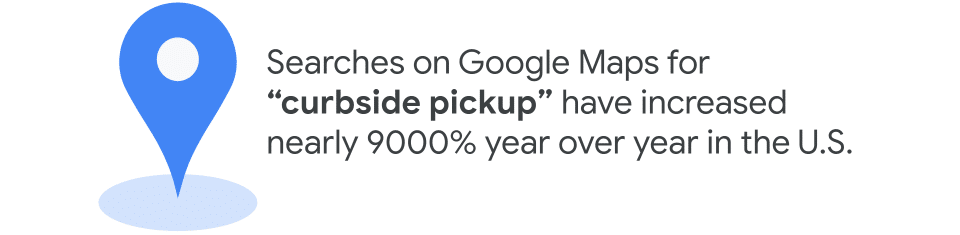
— Searches on Google Maps for “curbside pickup” have increased nearly 9000% year over year in the U.S.
— Searches on Google Maps for “discounts” have grown globally by more than 100% year over year.
— Searches on Google Maps for “gift shop” have grown globally by more than 60% year over year.
— Visits to local stores and restaurants continue to be top of mind in the new year:
Top Generic Searches on Google Maps:
restaurants
hotels
restaurants near me
gas
food
food near me
grocery store
gas station
coffee
pizza
Top Brands Searched on Google Maps:
walmart
starbucks
home depot
target
mcdonald’s
costco
chick fil a
walgreens
cvs
bank of america
Insights to Action
Much of the above is admittedly promotional for Google but it’s still valuable in its behavioral insights. Google’s scale, again, boosts that value through massive sample sizes. Turning these insights into action for SMBs is the bigger question. Google provides resources for that too, such as its Driving Offline Sales guide.
We’ll keep watching for signals of ongoing shopping behavior evolution… and Google’s moves to align with that moving target.