Data Scout is LSA’s series that curates and draws meaning from third-party data. Running semi-weekly, it adds an analytical layer to the industry data that we encounter in daily knowledge building. For LSA original data, see the separate Modern Commerce Monitor™️ series.
After recently examining the potential effects of iOS 13 location-tracking notifications, it appears they’re already having an impact. Since the firmware update, opt-out rates are as high as 80 percent according to Location Sciences. The Wall Street Journal reports that this amounts to “tens of millions” of opt-outs.
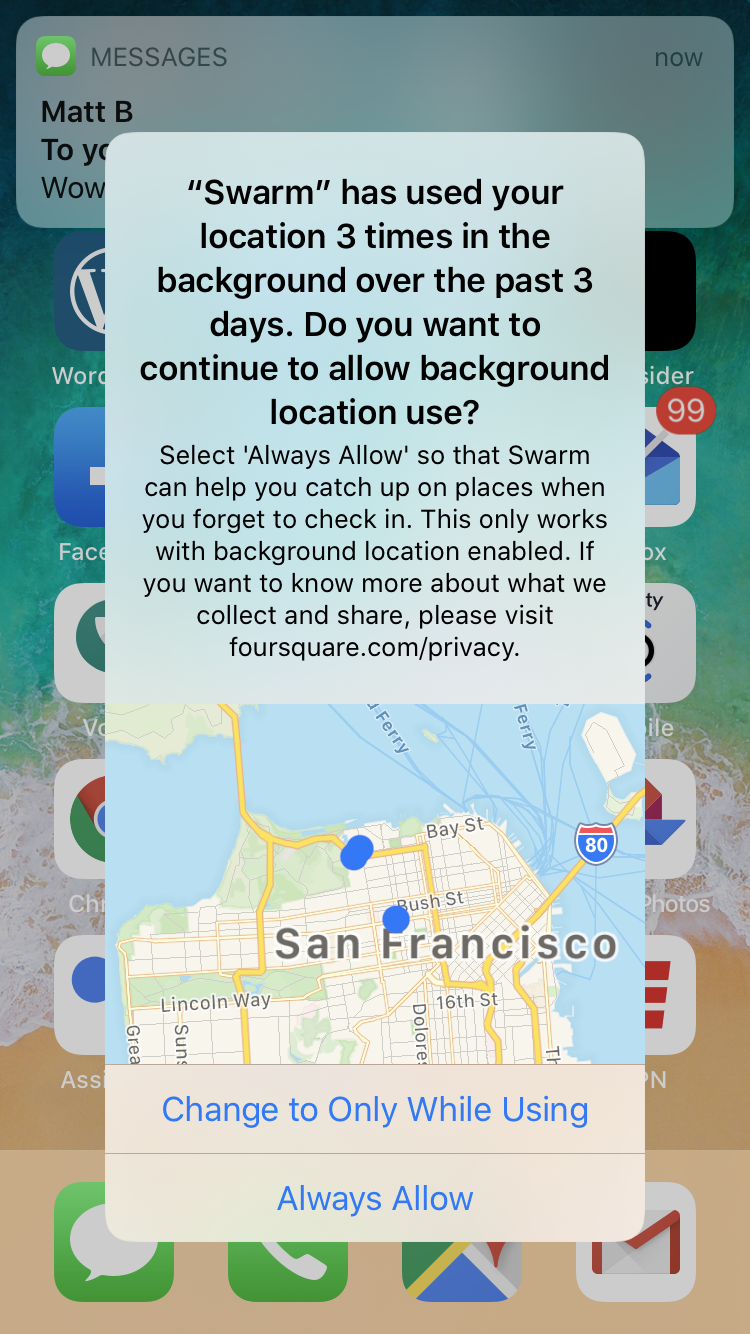
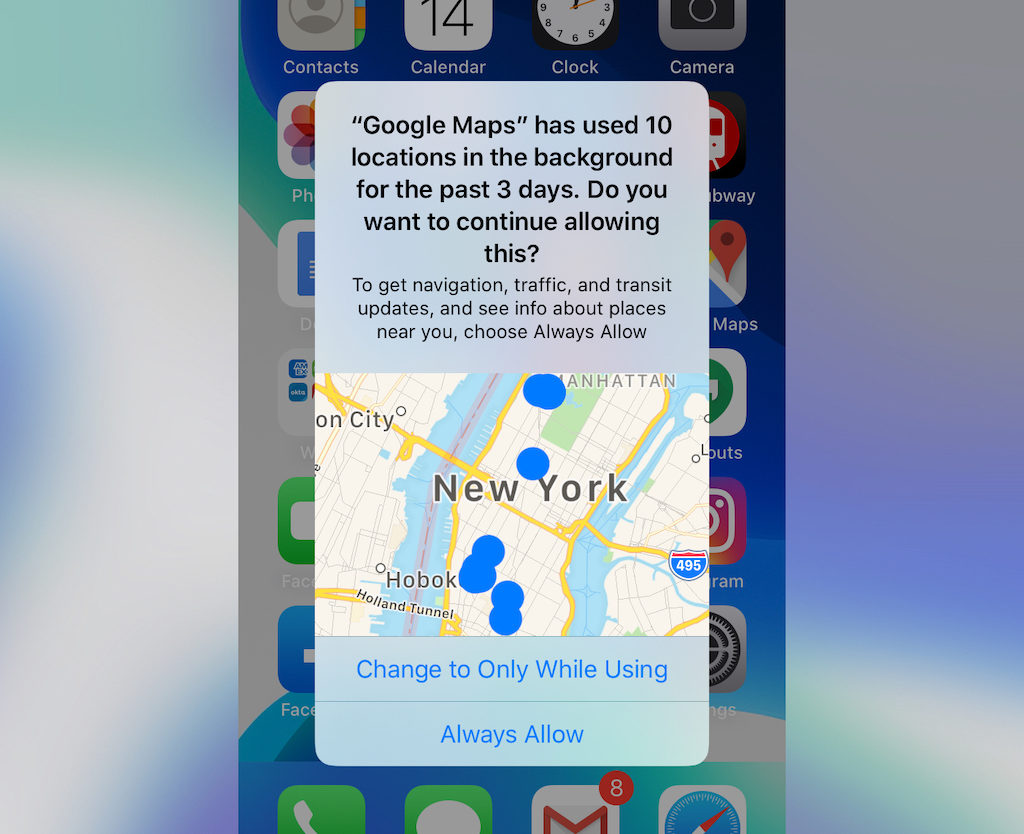
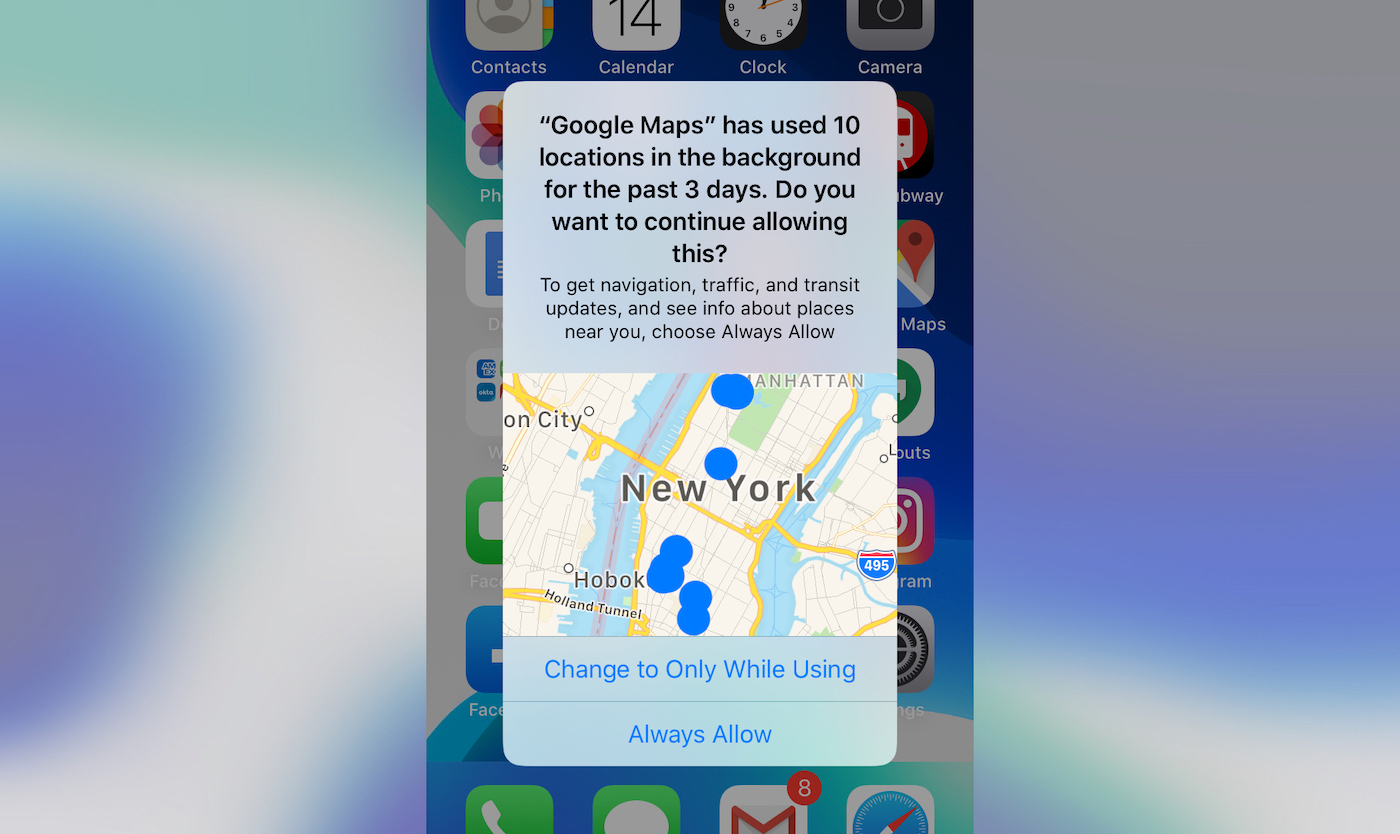
As quick background, iOS 13 — as well as previous updates to Android — proactively notify users when apps are tracking their location in the background. The notification offers an easy, and often “no-brainer” one-click option to downgrade app location tracking to “only while using” (see image below).
Apps use this background tracking for deeper and more dimensional data around where mobile users go. For example, Uber has used background location in the past to monitor spatial movement after your ride, pursuant to improving its logistical systems and drop-off points — a seemingly legitimate practice.
The issue is that many apps with less “organic” need to track your background location have abused the privilege. In a panel discussion with location intelligence leaders that I moderated at Localogy’s Place conference, we struggled to name an app for which background tracking provides tangible user value.
And that’s sort of the point… iOS 13’s transparency play will let users decide. Theoretically, if a given app provides a tangible value-tradeoff for background tracking, it should win the opt-in. But in the current FUD privacy environment, it could be a knee-jerk reaction for users to basically opt-out of everything.
That brings us back to the tens of millions of opt-outs so far. This trend will clearly handicap the ability to gather location signals. Apps will suffer directly from this, such as the Uber example above. Though it’s a legitimate use of background data, Uber’s other sins have probably eroded consumer trust.
But perhaps more notable, there will be a downstream impact on the location-intelligence sector. This includes companies like Location Sciences (mentioned above) that work with apps and other sources to ingest location data as inputs for their advertising and marketing-related location targeting platforms.
As we’ve examined, the resulting “privacy winter” could cause a bit of a shakeout in the location intelligence sector. Survivors will get innovative with alternative data sources, or have a diversified set of data sources (see Foursquare). We could also see consolidation to pool diminishing data sources.
The latter so far has been held back by lack of investor confidence in an uncertain environment. But that could soon change — as asserted by Place IQ’s Duncan McCall on the aforementioned panel — due to the stability brought by CCPA. This is the unsung factor where CCPA could have the greatest impact.
And that’s one underlying point in all of the above. After lots of handwringing over CCPA, it’s private sector measures that could end up moving the needle. That includes OS-level notifications from Apple and Google, as well as other tech-oriented restrictions we’ll continue to see. We’ll keep watching.