
On average, consumers spend nearly a third of their day engaging with digital content via various devices including smartphones, laptops, tablets, etc. Consumers turn to digital channels for more than just entertainment, conducting comprehensive actions like looking for jobs, monitoring the news and conducting research on potential product purchases.
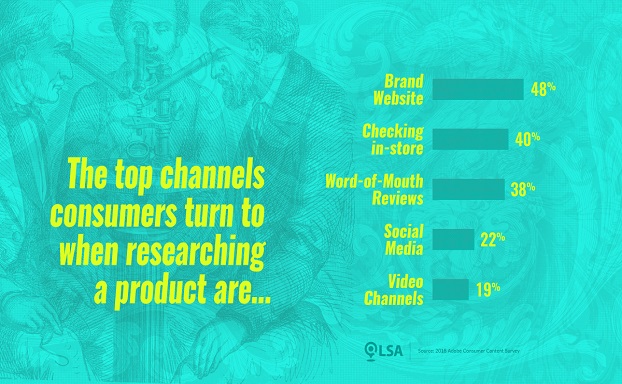
According to a survey of 1,011 U.S. adults who own a digital device, 48% visited a brand’s website when researching a product, 40% checked out the product in-store, and 38% relied on reviews from family and peers. Additionally, 59% of consumers used an online marketplace to make a purchase, while 49% purchased in-store.
The data reinforce the well-known impact of digital channels on the purchase process. For marketers, optimizing the entire customer experience both online and in-store is paramount. In today’s local market, online (websites, apps, listing sites, review sites, etc.) and offline (in-store experience, staff, etc.) tactics are critical pre, during and post purchase.
This data comes from a 2018 Adobe Consumer Content Survey. To access the graphic above, click here.