In the year since the release of ChatGPT, I’ve had a front-row seat to the meteoric rise of generative AI. Its impact on the digital landscape has been swift, as AI tools shattered tech adoption records.
Back in June, I published a blog post about the impact of AI on agencies and their clients. At that time, we were already seeing AI reshaping how SMBs operate, but we also saw the value of the agency remained as relevant as ever. To stay competitive, however, we anticipated that agencies would need to re-strategize the way they created value for their clients.
As the saying goes, “AI won’t replace you. Someone using AI will.”
2024 AI Outlook
Over the past few months, we set out to quantify the impact of AI on the web-building industry – and, especially, on digital agencies that offer web design and development services to SMBs.
In partnership with a third-party research firm Global Surveyz, we commissioned a survey of 200 agency owners across North America, Europe, and Australia to understand how agencies are using AI, how it is transforming their businesses, and their plans for AI in 2024.
Here are five key findings and takeaways…
1. Empowering Agency Growth
Based on survey responses, we found that AI usage was just as fast and widespread as it appeared to be. 100% of agency owners surveyed say they are already using AI in their web-building processes–leveraging generative AI tools for everything from content and image creation to SEO and personalization.
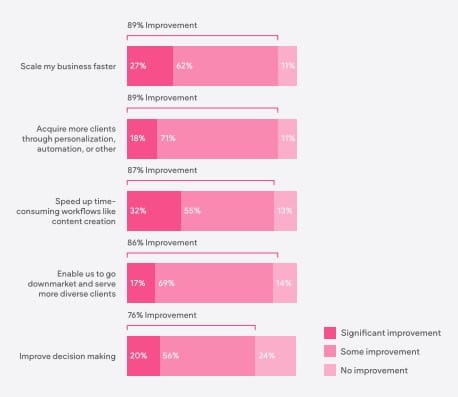
We also asked agency owners how they expect AI to change their business by the end of 2024. Perhaps unsurprisingly, 89% of agency owners believe AI will help them scale their businesses faster and acquire more clients, and 87% expect AI to help them speed up time-consuming workflows like content creation.
2. AI as a Catalyst for Market Expansion
Beyond increasing efficiency and driving growth, agency owners also say they anticipate AI to impact how they go to market, with 86% indicating they believe AI will enable them to go down market and serve more diverse clients by the end of 2024.
This is perhaps one of the most exciting findings of the survey: agency owners feel empowered by AI to expand their total addressable market (TAM), scale their processes to take on more clients, and ultimately, see revenue soar.
3. Where Agencies (and Their Clients) Are Seeing Results
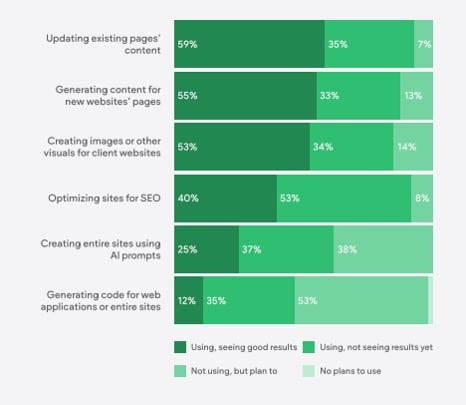
All of the agency owners we surveyed say that they are currently using AI to improve the efficiency and effectiveness of their client web-building processes. Many are already seeing promising results from using AI to update existing content, generate new content, create images, and even optimize sites for SEO.
It’s important to note that best practices involve using AI as a “copilot” for each of these areas. While generative AI can be a great starting point and can significantly speed up some of the most time-consuming aspects of digital marketing, there is no replacement for the human care, creativity, and expertise an agency brings to the equation.
For leading agencies, AI is another tool in the toolbelt that makes it possible to deliver better results for their clients, faster and more efficiently.
4. Measuring the Impact of AI
Agency owners are already seeing measurable impact on several key performance indicators (KPIs), including cost savings, operational efficiency, and client satisfaction. Cost savings is the top metric for evaluating AI success, and all of the agencies we surveyed report some level of AI-driven cost savings in 2023.
45% estimate annual cost savings between $1,001-$5,000 from AI-driven efficiencies, and 31% estimate savings between $5,001-$10,000. While these numbers are small, the future is promising. Agency owners are optimistic that their annual AI-driven savings will more than double YoY, increasing 134% in 2024.
5. Bridging the Strategy Gap
Overall, the results of the survey suggest a bright future, as agency leaders expect even greater value and positive business impact from AI in the upcoming year, despite some lingering challenges. However, 83% of our survey respondents expressed ongoing concern about keeping pace with the rate of change.
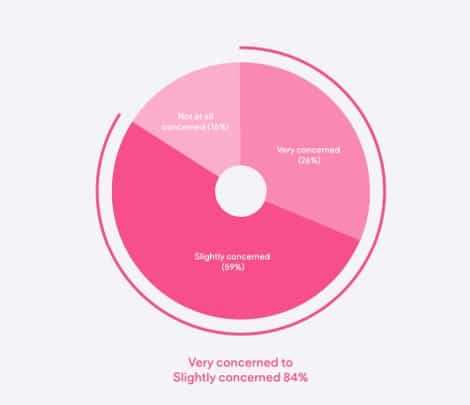
For agencies, staying up-to-date with best practices will be key to success. In addition, agencies will need to focus their efforts on formulating and delivering holistic digital marketing strategies based on a deep understanding of the unique business needs and opportunities. This strategy must then be executed using the right tools – including AI – to drive results.