The restaurant industry has been hit hard by the pandemic – between lockdowns, social distancing, restrictions around indoor dining, and mandated operating hours, many foodservice businesses have seen dwindling numbers. As a result, the need for data and insights that can help restaurants attract and retain customers has never been greater.
After examining foot traffic to restaurants across the U.S. from 2019 through 2021 year-to-date, we identified several key insights around consumers’ dining behaviors that can help restaurants navigate these difficult times.
Trend #1: Consumers are savoring afternoon snacks
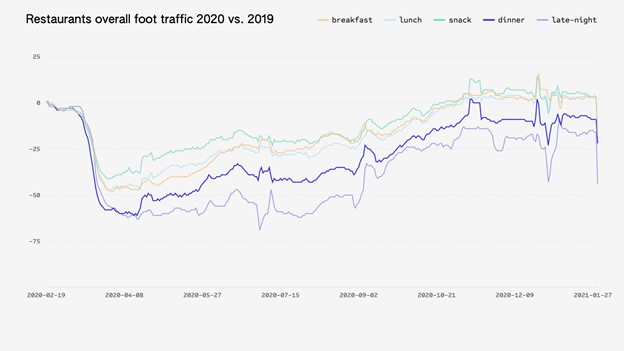
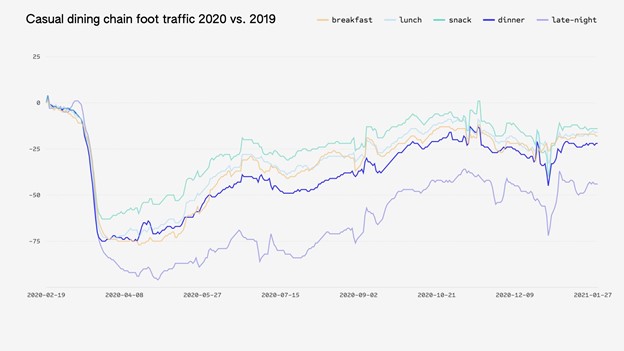
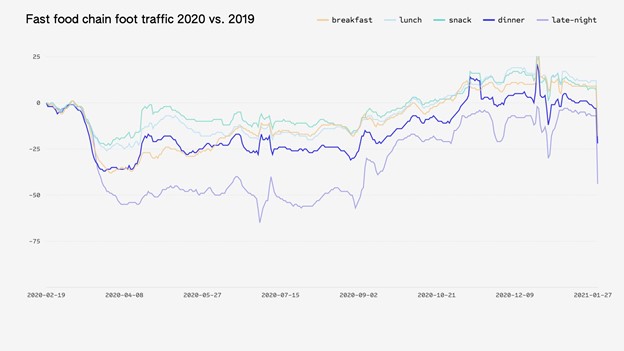
While restaurant traffic is still down across major dayparts (meaning the times of day people typically eat: breakfast, lunch, and dinner), visits to both casual dining restaurants (CDRs) and quick-service restaurants (QSRs) have picked back up the most during the ‘snack’ daypart (between 2pm and 5pm) in the late afternoon. This suggests that consumers may be looking to avoid crowds by dining outside of peak mealtimes, or perhaps they’re taking advantage of the flexibility of working from home. Also noteworthy, visits to QSRs also picked up during lunch hours starting around November, perhaps as consumers started to return to offices in some areas of the country.
Tip: Restaurant brands should consider highlighting happy hour or afternoon menu items and limited time offers, as consumers are more likely to dine out during this time frame.
Trend #2: Late night is trailing as other dayparts begin to recover
Visits to both CDRs and QSRs have been slowest to recover during late night hours (between 10PM and 6AM), likely due to reduced nightlife activity. Indeed, traffic to CSRs during late night hours is still down more than 50% compared to pre-pandemic levels. Similarly, while visits to QSRs are now above pre-pandemic levels during most dayparts, late night visits to QSRs are still down 10-12%.
Tip: With less people already out-and-about during late night hours, dining brands should consider highlighting delivery services in their messaging around evening meals, particularly for late night hours. Delivery apps should also consider sending push notifications to users during these time frames, when consumers are less likely to venture out for a bite and more likely to be interested in delivery.
Trend #3: Consumers tend to order for one
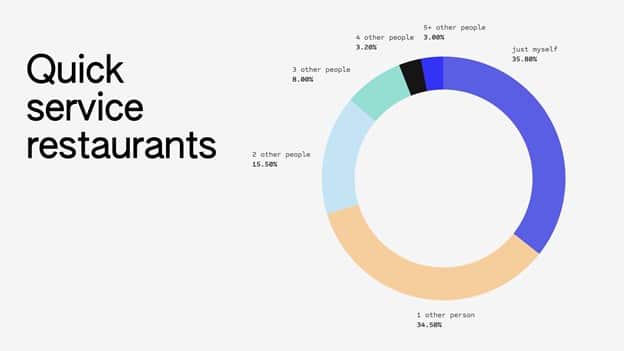
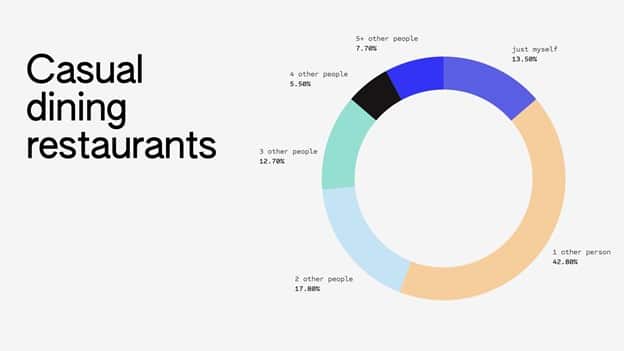
Most people visiting QSRs are ordering only for themselves (36%), or for one other person (35%), according to survey data of consumers in Foursquare’s always-on panel from January 2021. Similarly, most people visiting CDRs are ordering only for themselves (15%), or for one other person (43%), rather than for larger groups. This may indicate that families with children are more likely to be ordering delivery or cooking at home, rather than dining out.
Tip: To attract families, brands should consider offering deals that offer discounts or benefits to larger orders (such as “Buy-two-get-one-half-price”). Delivery apps can also make use of this strategy with promo codes tailored to families and groups.
It could be many months before restaurant foot traffic fully returns to pre-pandemic levels, and most restaurants cannot afford to wait until that day comes. By leveraging location data, these businesses can understand their consumers’ current behaviors better, deploy marketing tactics to fit consumer needs, and come up with creative ways to re-attract certain groups of consumers.